(
(


Apartments with paid utilities can be convenient for renters and useful for landlords. For landlords, apartments with utilities included can boost rental appeal, make leasing simpler, and attract tenants who want predictable monthly costs, but they can also raise operating expenses and cut into profits if pricing is not handled carefully. Many landlords offer an apartment with utilities paid to stand out, fill vacancies faster, and appeal to students, relocation renters, Section 8 tenants, and others who prefer one bundled payment, but rising utility rates, seasonal HVAC costs, and heavy tenant usage can quickly hurt cash flow.
In some cases, an apartment with utilities included creates stronger occupancy stability and higher perceived value, while in other situations, separate utility billing creates more predictable margins and lower financial risk for property owners.
In this blog post, I will break down the essential pros and cons of managing utilities included apartments so you can accurately determine if this strategy aligns with your specific investment goals. We will learn how landlords can calculate profitable all-inclusive rental rates so you can confidently decide whether utilities included in rent make financial sense for your rental property.
What Does ‘All Utilities Included’ Really Mean in a Lease?
When a rental agreement features the phrase “all utilities included”, it means the landlord has legally agreed to bundle the operational costs of the property’s core infrastructure directly into your fixed monthly rent payment. Instead of your tenant receiving separate invoices throughout the month from various municipal and private utility providers, you, as the property owner, maintain the primary utility accounts in your own name, pay those billing statements directly, and offset the expense by charging a premium, all-inclusive rental rate.
The exact meaning of utilities included in rent depends entirely on the lease agreement because not every apartment with all utilities paid covers the same services or usage limits. Some landlords include only water and trash, while other utilities, including apartments may also cover electricity, internet, gas, lawn care, or even basic cable service.
What Utilities Are Usually Included in All-Inclusive Rent?
In a standard all-inclusive rental arrangement, the landlord covers the foundational public utilities that are essential to making a residential property legally habitable under local housing codes. These typical structural utilities include:
- Water
- Sewer
- Trash pickup
- Electricity
- Natural gas
- Internet or Wi-Fi
- Lawn care
- Pest control
What Utilities Do Tenants Still Pay Separately?
Even in apartments for rent that include utilities, tenants may still pay for services not covered under the lease or for utility usage that exceeds landlord-defined limits. Unless a lease explicitly states otherwise, tenants are typically expected to set up private accounts, pay individual deposits, and directly handle the monthly bills for the following services: Many landlords exclude optional or individually metered services because separate billing reduces operating risk and prevents excessive consumption from affecting property profitability.
Utilities tenants commonly pay separately:
- Internet upgrades
- Premium cable packages
- Phone service
- Streaming subscriptions
- Excess electricity usage
- Portable AC units
- EV charging costs
Utility Bills, Average Cost, Fees, and More
The chart below represents the average ratings on apartments that pay all utilities per month.
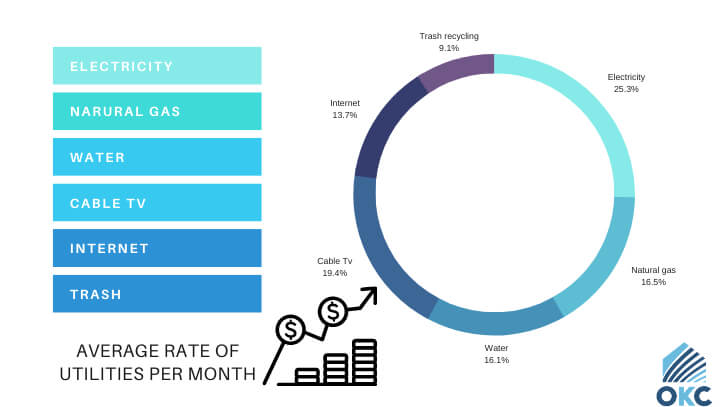
It’s important to plan your monthly budget around utility bills for electricity, gas, water, internet, and cable if you have just moved or are considering a move. People renting apartments in the US should expect to spend around $100-$150 a month on utilities, and we have discovered that homeowners should budget closer to $500 a month.
The chart below represents the average cost of utilities per month:

How Much Do Utilities Cost? State-by-State Comparison
Utility costs vary significantly by state because electricity rates, natural gas pricing, climate conditions, water infrastructure, and seasonal energy demand all affect monthly housing expenses. However, the average total monthly utility cost is $470 for the U.S. in 2026.
| STATE | UTILITIES | TOTAL RATE |
| Georgia | Electricity, gas, water, cable, internet | $676 |
| Oklahoma | Electricity, gas, water, cable, internet | $612 |
| Florida | Electricity, gas, water, cable, internet | $560 |
| South Carolina | Electricity, gas, water, cable, internet | $564 |
| Alabama | Electricity, gas, water, cable, internet | $656 |
| Ohio | Electricity, gas, water, cable, internet | $661 |
| North Carolina | Electricity, gas, water, cable, internet | $573 |
| New York | Electricity, gas, water, cable, internet | $612 |
| Vermont | Electricity, gas, water, cable, internet | $556 |
| Indiana | Electricity, gas, water, cable, internet | $600 |
| Connecticut | Electricity, gas, water, cable, internet | $638 |
| South Dakota | Electricity, gas, water, cable, internet | $504 |
| Oregon | Electricity, gas, water, cable, internet | $710 |
| North Dakota | Electricity, gas, water, cable, internet | $518 |
Source: https://www.rubyhome.com/
What Are the Benefits of Including Utilities in Rent?
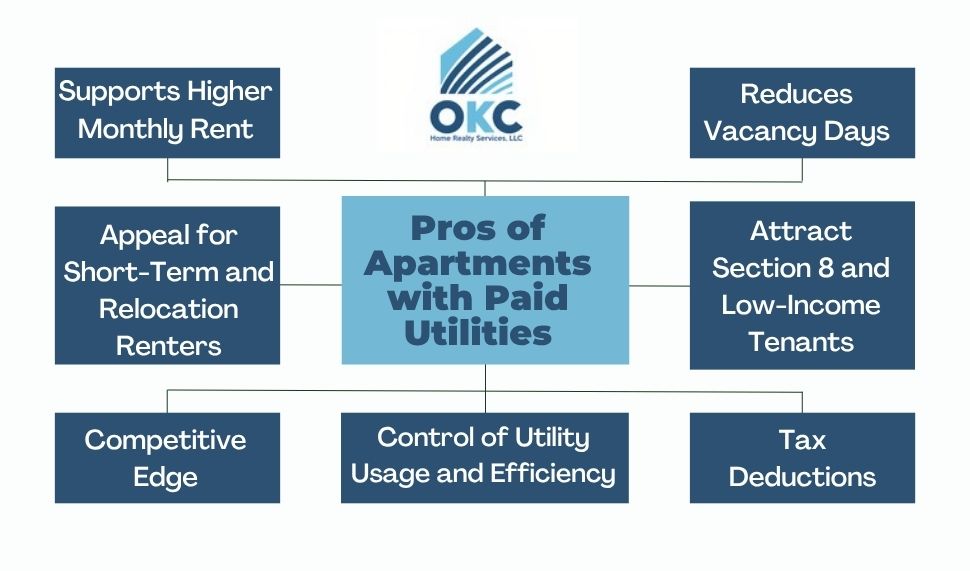
Including utilities in rent can help landlords simplify leasing, increase rental appeal, and create more predictable tenant demand in competitive housing markets. Utility-inclusive lease structures can also support occupancy stability, improve marketing performance, and create operational advantages in certain property types such as duplexes, older multifamily buildings, student housing, and short-term rentals.
Supports Higher Monthly Rent Than Comparable Non-Utility Units
Apartments with utilities included often justify higher monthly rent because tenants evaluate the total cost of living instead of focusing only on base rent pricing. Modern tenants place a remarkably high cash value on lifestyle convenience, predictability, and the elimination of administrative friction. A rental priced at $1,350 with electricity, water, trash, and internet included may appear more affordable and predictable than a $1,150 unit requiring separate utility accounts and fluctuating monthly bills.
Because you are saving the resident from the ongoing stress of managing multiple municipal accounts and paying upfront utility setup fees, you can safely include a 10% to 15% convenience markup into the asking price. This approach allows you to market a single, seamless lifestyle package rather than just a physical space. Over the course of a standard 12-month lease, this strategic structural premium effectively turns a standard, volatile property expense into an active, predictable revenue stream that directly boosts your asset’s monthly yields and long-term net operating income (NOI).
Attracts More Applicants and Reduces Vacancy Days
Utilities included apartments often attract more rental inquiries because many tenants value convenience, predictable expenses, and simplified move-in logistics when comparing housing options. Renters searching for apartments that include utilities in rent frequently want to avoid opening multiple utility accounts, paying deposits to service providers, and managing several monthly bills immediately after relocating. Apartments with utilities included also reduce friction during the leasing process because tenants can move into the property faster without coordinating electricity activation, water transfers, or internet installations.
Properties operating in slower leasing seasons or highly competitive apartment markets may use utility-included lease structures strategically to increase visibility and encourage faster leasing activity without immediately lowering rent pricing or offering large concessions. The surge in applicant volume creates a wider, more competitive pool of qualified prospects to screen from. Ultimately, shorter vacancy periods directly improve occupancy consistency, cash flow stability, and annual rental performance.
Competitive Edge in the Rental Market
Bundled pricing helps properties stand out in crowded rental markets where many listings offer similar floor plans, amenities, and locations. Tenants comparing apartments often focus on convenience and total monthly affordability instead of analyzing separate rent and utility expenses individually. Utility included rent pricing reduces uncertainty around monthly living costs and creates a simpler decision-making process for renters trying to compare multiple apartments quickly. In older buildings without luxury amenities or extensive renovations, utilities included apartments can increase perceived value and improve competitiveness without requiring immediate capital-intensive upgrades.
This becomes especially valuable during periods of rising electricity rates, inflation, and seasonal HVAC usage when utility bills fluctuate unpredictably, and renters prioritize financial stability over lower advertised rent pricing. For example, in mid-sized urban markets like Oklahoma City, where renters face highly volatile seasonal weather shifts, advertising a fixed cost of living provides immense peace of mind.
You Control Utility Usage and Efficiency in Your Property
When you manage utilities directly, you gain greater visibility into property-wide energy and water consumption patterns, which can help identify inefficiencies, maintenance issues, and abnormal usage before operating costs escalate significantly. Unexpected spikes in water bills may reveal hidden plumbing leaks, while rising electricity usage could indicate HVAC inefficiency, poor insulation, outdated appliances, or tenant misuse affecting overall building performance. This level of oversight allows landlords to make targeted improvements that reduce waste and improve operational efficiency across the property.
Landlords managing apartments with utilities included often invest in upgrades such as smart thermostats, LED lighting, low-flow plumbing fixtures, insulation improvements, and energy-efficient HVAC systems to reduce consumption and stabilize costs. Over time, a well-managed utilities-included property with smart efficiency upgrades can actually cost you less to operate than an inefficient property.
Utility Bills Can Qualify for Tax Deductions
Utility expenses paid directly by landlords for rental properties are generally considered operating expenses and may qualify as tax-deductible business costs when properly documented and reported under applicable tax regulations. Every utility check written to a provider can be tracked and written off on Schedule E of your federal tax return. Electricity, gas, water, sewer, trash collection, internet service, and other utility-related expenses connected to property operations can often reduce taxable rental income depending on ownership structure and accounting practices. If you’re covering $300 to $400 per month in utilities on a single unit, that’s $3,600 to $4,800 per year in potential deductions you wouldn’t have access to under a standard lease.
Keeping organized records of utility payments, invoices, and property-related expenses becomes important for maximizing allowable deductions and maintaining accurate financial reporting. Landlords managing multiple units often work with accountants or property management professionals to track utility expenses separately from capital improvements and maintenance costs.
Easier to Attract Section 8 and Low-Income Tenants
Apartments for rent that include utilities often appeal strongly to Section 8 voucher holders, fixed-income households, and budget-conscious renters because predictable monthly housing costs simplify financial planning and reduce unexpected living expenses. Many renters prioritize a utility include apartments and homes because they eliminate the need for separate utility deposits, credit checks from utility providers, and fluctuating monthly electricity or gas bills during extreme weather seasons.
When a Section 8 housing landlord includes the utilities within the base rent, the government’s designated utility allowance is wrapped directly into the primary housing assistance payment. This drastically simplifies the local authority’s lease approval process, removes financial hurdles for lower-income applicants who may struggle with steep utility deposits, and ensures that a significant portion of your monthly rent check is securely subsidized and paid on time.
Increases Appeal for Short-Term and Relocation Renters
Short-term renters, traveling professionals, students, and relocation tenants often prefer apartments with utilities included because bundled services reduce administrative work and simplify the moving process. Many relocation renters do not want to open temporary utility accounts, manage multiple service providers, or pay connection fees for housing they may only occupy for several months. Utility-inclusive apartments provide convenience, predictable monthly expenses, and faster move-in readiness, which makes them highly attractive in furnished rentals, corporate housing, and temporary living arrangements.
Properties located near universities, hospitals, military installations, or business districts often benefit from offering apartments with utilities included in lease structures because these tenant groups prioritize flexibility and convenience over long-term utility savings. In a market like Oklahoma City, this strategy gives you an immediate competitive edge with incoming aerospace professionals at Tinker Air Force Base or traveling healthcare workers at the OU Health Center.
What Are the Drawbacks of Apartments That Include Utilities?
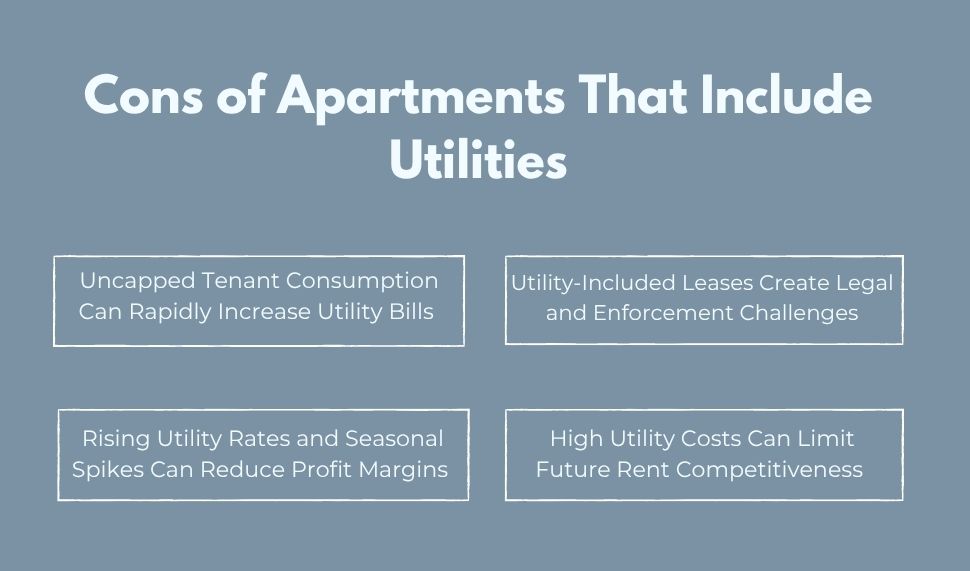
Apartments with utilities included can improve rental appeal and occupancy rates, but they also expose landlords to higher operational risk, unpredictable expenses, and long-term pricing challenges when utility costs are not controlled carefully.
Uncapped Tenant Consumption Can Rapidly Increase Utility Bills
Tenants often consume more electricity, water, and HVAC usage when utility costs are not tied directly to their personal spending. Continuous air conditioning during summer months, excessive heating in winter, long showers, and heavy appliance usage can significantly increase monthly operating expenses. Because the billing statements are sent directly to your desk rather than to the property’s occupants, you are entirely forced to absorb the financial hit of these unchecked consumption habits.
In multifamily properties with shared meters, you may struggle to identify which tenants are responsible for abnormal utility spikes, making cost control even more difficult. Uncontrolled utility usage can reduce profitability quickly, especially in older buildings with poor insulation, outdated HVAC systems, or inefficient appliances. Over the course of a seasonal cycle, a single wasteful household can easily run up massive, multi-hundred-dollar energy bill spikes that completely wipe out your projected baseline profits.
Rising Utility Rates and Seasonal Spikes Can Reduce Profit Margins
A standard residential lease locks your gross rental revenue completely in place for a solid 12-month period. However, municipal and private investor-owned utility rates are highly volatile and change frequently. Electricity prices, water fees, sewer charges, and natural gas costs often rise gradually each year, while extreme weather conditions can create sudden seasonal spikes in operating expenses. There’s no mechanism to pass that increase to the tenant, the way you might adjust rent at renewal. Seasonal spikes are especially dangerous in states with extreme weather patterns like Oklahoma City. Summer cooling costs and winter heating bills can be two to three times higher than your spring and fall averages.
These fluctuating costs can create pricing mismatches when rent remains fixed under long-term lease agreements. A rental priced profitably during one season may become less profitable after utility inflation or severe seasonal weather increases monthly operating costs. Without careful forecasting, rising utility expenses can slowly reduce cash flow, operating margins, and long-term rental profitability across multiple units.
Utility-Included Leases Create Legal and Enforcement Challenges
Utility-inclusive lease agreements require clear language defining which utilities are included, what usage limits apply, and how landlords handle excessive consumption or utility-related disputes. Without detailed lease terms, disagreements may occur when tenants assume certain services are covered or when utility costs increase unexpectedly during the lease period. Enforcing utility usage limits may become difficult if the lease does not clearly outline overage fees, utility caps, or tenant responsibilities.
Some states and municipalities also regulate how landlords bill tenants for utilities, especially in properties using shared meters or ratio utility billing systems. If you are offering apartments for rent with utilities included, you need to review local landlord-tenant laws carefully to ensure lease agreements comply with utility disclosure requirements, billing regulations, and consumer protection standards before implementing utility-inclusive rental structures.
High Utility Costs Can Limit Future Rent Competitiveness
To successfully offset the steep financial risks of absorbing uncapped usage and unpredictable local rate changes, landlords are forced to inflate their total asking prices significantly higher than neighboring properties. However, if your market’s local utility rates skyrocket over time, the high all-inclusive rent price required to cover your rising overhead expenses can eventually price your property completely out of the local market.
For instance, a comparable non-utility unit is renting for $1,100, and your utilities-included unit is at $1,400; that premium made sense when utilities averaged $250 per month. But if utility costs climb to $350 per month, your effective margin shrinks at the same time your asking rent starts losing its appeal to prospective tenants who are doing their own math. If a sudden economic downturn or a local supply surge shifts tenant demand, your property will struggle to compete against traditional, lower-priced units where tenants simply control their own utility bills, leaving you with the painful choice of either slashing your margins or enduring extended, costly vacancies.
How Do Landlords Calculate Rent for Apartments with Utilities Included?
You can calculate rent for apartments with all paid utilities by combining estimated utility expenses with the property’s base rental value while accounting for seasonal usage, maintenance costs, and profit margins. The goal is to create a rental price that remains competitive while protecting profitability when electricity, water, gas, and other utility costs increase over time.
Step 1: Calculate Average Utility Costs
Begin by reviewing 12 months of utility bills to determine the property’s average monthly utility expenses. This usually includes electricity, water, sewer, gas, trash, and internet if those services are included in rent. Reviewing a full year helps capture seasonal heating and cooling spikes that may not appear in a single month’s bill. Then divide the total annual utility cost by the number of rental units to estimate average monthly utility expenses per apartment. This creates the baseline amount used to build utility-inclusive rent pricing for the property.
Step 2: Estimate Tenant Usage and Property Efficiency
Estimate how much utility use the average tenant is likely to create based on the unit size, number of occupants, appliance efficiency, insulation, HVAC condition, and local weather. A newer, well-maintained property with efficient systems will usually cost less to operate than an older unit with drafty windows or outdated equipment. It also helps to think about tenant behavior, since heavier water, cooling, or heating use can push costs higher. This step gives landlords a more realistic number to build into rent without underpricing the unit.
Step 3: Add Utility Buffers and Market Pricing Adjustments
After estimating average utility expenses, landlords usually add a financial buffer to protect against rising utility rates, inflation, and seasonal cost spikes. Many property owners increase estimated utility costs by 10% to 25% before adding them to the monthly rent. You also need to compare nearby apartments with utilities included and tenant-paid rentals to ensure pricing remains competitive within the local market. If utility-inclusive rent is too high compared to similar properties, the apartment may attract fewer applicants. The goal is to build in enough margin to cover actual expenses while keeping the apartment attractive enough to fill quickly.
Are Utility-Included Apartments Common in Oklahoma City?
Yes, utility-included apartments are fairly common in Oklahoma City, especially in older multifamily buildings, duplexes, garage apartments, student housing, and short-term rental properties where separate utility metering may not exist. They are highly concentrated in historic neighborhoods like the Paseo, Midtown, and the Plaza District, where vintage homes were converted into multi-family flat networks that share a single master meter. They also thrive around high-mobility workforce corridors like Tinker Air Force Base and the OU Health Sciences Center, where nomadic professionals aggressively favor a hassle-free living setup.
The neighborhoods where utilities-included rentals tend to perform best in OKC include Midwest City, Del City, Moore, and areas in the broader metro with strong working-class rental demand and lower average utility baselines, which keep your cost exposure manageable while still allowing you to charge a meaningful premium over standard market rent. Because Oklahoma experiences hot summers and seasonal HVAC demand, many landlords carefully calculate utility-inclusive rent pricing to offset rising electricity usage during peak cooling months.
If you are comparing available rentals, this list of apartments for rent in OKC can help you explore different neighborhoods, pricing structures, and rental options, including properties that may offer utilities included in rent, depending on the lease terms and property type.
Utilities Included Vs. Tenant-Paid Utilities: Which Is Cheaper in the Long Run?
Tenant-paid utilities are usually cheaper in the long run for landlords because the tenant becomes responsible for fluctuating electricity, water, gas, and internet costs instead of the property owner absorbing those expenses directly. Apartments with utilities included can still generate higher rent and stronger occupancy rates, but long-term profitability depends heavily on utility pricing accuracy, tenant consumption habits, and property efficiency. For renters, the cheaper option depends on lifestyle, energy usage, and whether predictable monthly costs matter more than minimizing total annual expenses.
| Factor | Utilities Included | Tenant-Paid Utilities |
| Monthly Rent | Higher | Lower |
| Utility Responsibility | Landlord | Tenant |
| Budget Predictability for Tenants | Higher | Lower |
| Landlord Operating Risk | Higher | Lower |
| Tenant Utility Conservation | Lower | Higher |
| Vacancy Reduction Potential | Higher | Moderate |
| Seasonal Cost Exposure | Landlord absorbs spikes | Tenant absorbs spikes |
| Ease of Move-In | Easier | More setup required |
| Long-Term Profit Stability | Less predictable | More predictable |
| Best For | Short-term renters, students, and relocations | Long-term tenants, low-usage renters |
OKC Home Realty Services Helps Manage Utility-Included Rentals
Apartments with utilities included can be worth it for landlords when the rent structure properly accounts for average utility usage, seasonal cost increases, tenant behavior, and long-term operating expenses. Utility-inclusive rentals often attract more applicants, reduce vacancy periods, and create a stronger appeal for tenants looking for predictable monthly housing costs, but they also require careful pricing, clear lease terms, and efficient property management to prevent rising utility expenses from reducing profitability over time.
If managing fluctuating municipal accounts, tracking down tenant overage fees, and drafting specialized lease agreements feels like an overwhelming addition to your workload, let OKC Home Realty Services put your portfolio on autopilot. From rental pricing strategies and tenant placement to property maintenance and operational oversight, our team helps property owners manage apartments with utilities included more efficiently while protecting long-term rental performance and occupancy stability.
Contact us today and schedule a free owner consultation to build a rental strategy that actually works for your property.
FAQs on Apartments With Utilities Included in Rent
What utilities do landlords pay?
In a standard, traditional lease agreement, landlords typically cover the foundational, property-wide municipal utilities that keep the building legally habitable. This almost always includes water, sewer, and trash removal services, as multi-family units and historical properties often share a single master meter that makes tracking individual tenant usage impossible. However, unless the property is explicitly marketed as an all-bills-paid unit, landlords do not cover electricity or natural gas, leaving those accounts entirely to the renter.
What utilities are included in the apartment lease?
The landlords of an apartment with utilities included are responsible for trash and recycling bills along with electric and water bill. Some landlords offer free WiFi to renters. You need to make sure you have every utility listed clearly on your lease agreement.
Do you pay water bills in apartments?
Renters will be responsible for paying electricity, gas, and internet/cable bills. Landlords will cover the water, sewage, and garbage. The cost of this is combined with your monthly rent.
Who pays for the utility when you rent the house?
If you’re getting a property that already includes utilities then a landlord should be paying for all the costs. But, if you prefer to include your own properties then you should be the one paying for your utilities.
Is it okay to include utilities in the rent?
Yes, it is okay to include utilities in monthly rent as it saves a lot of time as a renter and you do not have to invest more of your time in providing utilities to your property.
Is an all-inclusive utility apartment better for college students on a fixed budget?
Yes, it is often highly beneficial. For students living away from home, such as those attending Oklahoma City University (OCU) or OU, an all-inclusive apartment eliminates the anxiety of seasonal billing shocks, like high summer cooling costs. It provides a single, predictable number that aligns perfectly with fixed monthly allowances, financial aid disbursements, or part-time income. Additionally, it saves students from having to pay steep upfront utility deposits, pass multiple credit checks, or navigate arguments with roommates over how to split up variable monthly bills.
Do properties come with electricity and water?
Although these are not really considered utilities by most individuals, it is not unusual for them to be included in rental units where the landlord pays for all the other utilities on the list including water and electricity.
Are there hidden fees in apartments with utilities included?
Yes, they can occasionally surprise you if you don’t read the lease fine print. While the core services are covered, many property managers tack on separate mandatory non-utility costs that are not advertised in the base rent price. Common hidden extras include valet trash fees, monthly pest control charges, parking passes, and amenity fees for pools or fitness centers. Furthermore, some all-inclusive agreements contain hidden utility consumption caps (or fair-use clauses), meaning that if you exceed a predetermined limit of electricity or water, the landlord can legally bill you for the overage.
Can landlords legally profit from included utilities?
Yes, but only when it is structured as a premium, flat-rate rent price. Landlords can analyze market data, look at historical averages, and safely bundle a 10% to 15% convenience premium directly into the gross monthly rent. However, the legality shifts dramatically if a landlord attempts to back-bill or sub-meter. Under various state housing codes, a landlord cannot act as an unregulated utility company; they are legally prohibited from purchasing utilities at a standard rate and reselling them to a tenant via sub-meters at an inflated, marked-up price to generate a direct utility profit margin.
Do most apartments include utilities?
Some apartments require you to pay for utilities separately, while others offer utilities included. The rent for apartments with utilities included is higher compared to similar options since you only have to pay a monthly fee to the landlord or the management company.