(
(

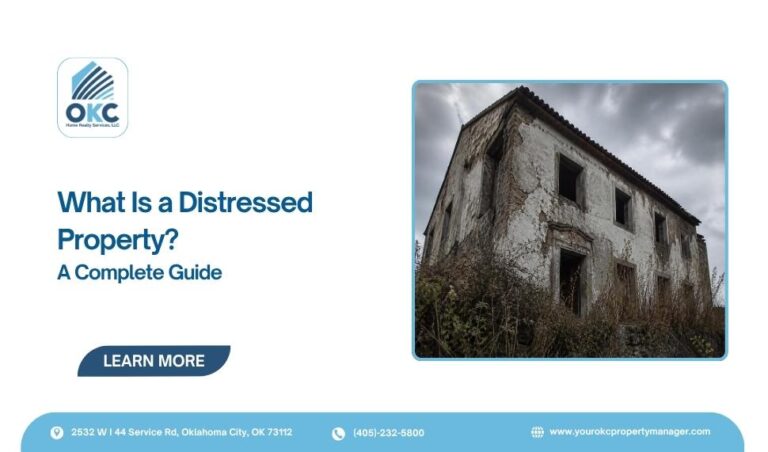

A distressed property is a property facing serious financial, physical, legal, or ownership problems that can reduce its value, limit its use, or make it difficult to operate as a rental. A property may be considered distressed because it needs substantial repairs, has been neglected, is facing foreclosure, has serious code issues, or is producing too little income to support its expenses.
A distressed property does not necessarily mean an abandoned or severely damaged house. A rental property can become distressed while it is still occupied and generating income if maintenance problems, vacancies, unpaid expenses, or financial pressure continue for too long.
For rental owners, the important question is not simply whether a property looks distressed. It is what caused the distress, how serious it is, and what it will take to stabilize the property.
Maximize Your Rental Income with Hassle-Free Property Management
Request a Service →What Does Distressed Property Mean?
There is no single definition of “distressed property” that applies to every real estate transaction. The term is used differently depending on the lender, government agency, local authority, or real estate professional involved.
For example, Freddie Mac currently describes a distressed property in its servicing guidance as mortgaged real property that requires substantial repairs, has significant physical deterioration, or has been condemned by a local authority. (Freddie Mac Guide)
In the broader real estate market, the term can also refer to properties experiencing financial or ownership pressure, including properties approaching foreclosure or properties where the owner needs to sell because of financial circumstances.
In practical terms, a property is distressed when a significant problem is affecting the property’s condition, finances, ownership, or ability to operate normally.
A property can be distressed because of:
- Serious deferred maintenance
- Structural or exterior damage
- Long-term vacancy
- Major water, plumbing, electrical, or HVAC problems
- Unpaid property expenses
- Mortgage delinquency or foreclosure
- Tax-related financial problems
- Code violations
- Property damage that has not been addressed
- An owner who can no longer afford necessary repairs
- Rental income that is no longer sufficient to cover operating costs
The distinction matters because the solution depends on the type of distress. A house with a failing roof needs a different response from a rental that is financially underwater despite being in good physical condition.
Does a Distressed Property Have to Be Abandoned?
No. A distressed property does not have to be abandoned.
Abandonment is one possible sign of a property’s problems, but it is not a requirement.
A tenant may still be living in a property that has significant deferred maintenance. The owner may still be collecting rent while allowing major repairs to accumulate. Likewise, a property can be vacant because of a financial or operational problem without being physically damaged.
This distinction is important for rental owners because distress can develop gradually.
For example, consider a rental house where:
- The HVAC system needs replacement.
- The owner postpones the repair.
- The next tenant moves out.
- The property remains vacant for several months.
- Landscaping and exterior maintenance are neglected.
- Additional repairs are discovered.
- Mortgage, insurance, taxes, and utilities continue during the vacancy.
The property may still be standing and technically usable, but the combination of deferred maintenance, vacancy, and carrying costs can create a financially distressed situation.
What Causes a Property to Become Distressed?
A property can become distressed because of physical deterioration, financial pressure, legal or code problems, or ownership and management issues. These problems can occur individually, but they often overlap. For example, a prolonged vacancy can reduce rental income, which may make it harder for an owner to pay for repairs, allowing the property’s condition to decline further.
The important distinction is that one repair, one vacancy, or one missed payment does not automatically make a property distressed. Distress usually involves a significant problem or a combination of problems that begins to affect the property’s condition, finances, legal status, or ability to operate as a rental.
Physical Deterioration
A property can become distressed when necessary maintenance is delayed for too long or when major damage is left unresolved. This can include roof problems, water intrusion, plumbing failures, electrical issues, failing HVAC equipment, structural concerns, or serious exterior deterioration.
The warning signs are often visible or recurring. An owner may notice repeated maintenance requests, water stains, damaged flooring or walls, failing systems, unsafe areas, or repairs that continue to get pushed back.
Not every older property with a list of repairs is distressed. The bigger concern is when the property’s condition is deteriorating faster than the owner is able or willing to address it.
Financial Pressure
A property can also become distressed even when the house itself is in reasonable physical condition.
Financial distress can occur when rental income is no longer sufficient to cover the property’s expenses, when a property remains vacant for an extended period, when major repairs cannot be funded, or when the owner falls behind on mortgage payments or other property-related obligations.
Some financial warning signs are easy to miss because they are not visible from the outside. A rental may look perfectly maintained while consistently losing money or accumulating unpaid expenses.
If mortgage payments become delinquent, the situation can eventually progress toward foreclosure. However, financial distress and foreclosure are not the same thing. A property can be financially distressed without being in foreclosure.
Legal or Code Problems
Legal and regulatory problems can also contribute to property distress. These may include unresolved code violations, unsafe conditions, unpermitted work, liens, or other issues that affect the property’s use or ownership.
For Oklahoma City properties, local code requirements are particularly relevant. The City of Oklahoma City addresses issues such as exterior property maintenance, high grass and weeds, junk and debris, and dilapidated or unsecured structures through its code-enforcement process.
These problems can become more serious when an owner receives notices or required corrections but does not address them. What started as a maintenance issue can eventually become a legal or financial problem as well.
Ownership and Management Problems
Sometimes the underlying problem is not the property itself but the owner’s ability to manage it.
An owner may relocate, inherit a property they did not intend to manage, acquire more rentals than they can handle, experience financial difficulties, or simply lack the time to stay on top of repairs, tenants, and ongoing property expenses.
In practice, this can create a cycle of neglect. Maintenance gets postponed, tenant issues take longer to resolve, vacancies last longer, and expenses continue to accumulate.
A property does not have to be abandoned for this to happen. An occupied rental can gradually become distressed when its problems are repeatedly left unresolved.
When Do These Problems Become Distress?
The presence of a single problem does not necessarily mean a property is distressed.
A rental with an aging water heater, for example, is not automatically a distressed property. Neither is a house that is vacant for a few weeks between tenants.
The situation becomes more concerning when the problems are significant, persistent, or begin affecting one another.
Some warning signs include:
- Major repairs continue to be postponed.
- The property has prolonged or recurring vacancies.
- Repair and maintenance costs are increasing.
- Rental income no longer covers the property’s operating expenses.
- The property’s physical condition is declining.
- Code violations or required corrections remain unresolved.
- The owner is unable to keep up with property-related bills.
- Multiple maintenance, financial, or management problems are occurring at the same time.
For rental owners, the key is to look at the property as a whole. A single repair may simply be part of normal ownership. A pattern of deferred maintenance, lost rental income, rising expenses, and unresolved problems is much more likely to indicate that the property has become distressed.
Distressed Property vs. Abandoned Property
These terms are sometimes used interchangeably, but they are not the same.
| Distressed property | Abandoned property |
| Can be occupied or vacant | Generally associated with a property that has been left without proper care or occupancy |
| May have financial, physical, legal, or operational problems | The defining concern is abandonment or lack of responsible occupancy/maintenance |
| May still generate rental income | Often produces little or no income |
| Owner may still actively manage it | Owner involvement may be limited or absent |
| Does not necessarily look severely damaged | Often shows visible signs of neglect |
A vacant property is not automatically distressed, and a distressed property is not automatically abandoned.
That distinction becomes particularly important when evaluating rental properties. A vacancy may be temporary and completely manageable. A vacancy combined with significant deferred maintenance, mounting expenses, and unresolved problems is a different situation.
Distressed Property vs. Foreclosure
Foreclosure is one possible form of financial distress, but the terms are not interchangeable.
A property can be distressed without being in foreclosure.
For example, an owner may have a rental with major repair needs and several months of vacancy but remain current on the mortgage. That property could reasonably be described as distressed from an investment or property-condition perspective.
Conversely, foreclosure specifically relates to the lender’s process for enforcing its rights after a mortgage borrower defaults.
The Consumer Financial Protection Bureau notes that foreclosure procedures differ by state and that borrowers generally receive notice as the process moves forward. (Consumer Financial Protection Bureau)
If a property is actually facing foreclosure, the owner should seek advice from the lender and an appropriately qualified legal or financial professional rather than treating the situation as an ordinary property-management problem.
Maximize Your Rental Income with Hassle-Free Property Management
Request a Service →Why Do Distressed Properties Matter to Rental Owners?
For a rental owner, distress matters because problems can affect more than the property’s appearance.
A distressed rental can lead to:
- Longer vacancies
- Lower rental income
- Higher repair costs
- Tenant dissatisfaction
- More frequent turnover
- Increased operating expenses
- Code-enforcement problems
- Greater risk of property damage
- Difficulty refinancing or selling
- Lower overall investment returns
The biggest issue is often compounding problems.
A vacant rental does not just lose rent. The owner may still have a mortgage, taxes, insurance, utilities, lawn care, and other expenses. If repairs are also being postponed, the property can become more expensive to stabilize as time passes.
How Does a Property Become Distressed?
Distress often develops gradually rather than from one single event.
A typical pattern might look like this:
Maintenance problem → deferred repair → tenant or vacancy issue → lost income → growing expenses → additional deferred maintenance
For example, an owner might postpone a major HVAC replacement because the property is already producing a low return. The next tenant leaves, and the owner decides to wait before making the repair. During the vacancy, additional issues are discovered.
The owner is now dealing with both a repair bill and lost rental income.
This is why identifying problems early can be more useful than waiting until a property is visibly run down.
How Is a Distressed Rental Property Evaluated?
If you own a property that may be distressed, start by separating the problem into categories.
1. Evaluate the physical condition
Determine what actually needs to be repaired.
A useful assessment should distinguish between:
- Immediate safety issues
- Repairs required for habitability
- Repairs needed to prevent further damage
- Routine maintenance
- Cosmetic improvements
- Larger capital projects
Not every problem needs to be solved at once, but safety and damage-prevention issues generally deserve priority.
2. Review the property’s finances
Look at:
- Current rent
- Market rent
- Vacancy history
- Mortgage payment
- Property taxes
- Insurance
- Utilities paid by the owner
- Routine maintenance
- Larger repair expenses
- Property-management costs
- Other recurring expenses
The objective is to understand whether the property is actually producing an acceptable return or simply accumulating costs.
3. Identify legal or code issues
Check for outstanding notices, violations, permits, liens, or other issues that could affect the property.
For Oklahoma City properties, local code requirements matter. The city identifies exterior property maintenance, high grass and weeds, debris, and unsafe or dilapidated structures among the issues it can enforce. (Oklahoma City Government)
4. Determine the best path forward
Depending on the circumstances, the appropriate solution may be:
- Repair and continue renting
- Renovate before finding a new tenant
- Change the property’s operating strategy
- Address the financial structure
- Sell the property
- Seek professional legal or financial advice
There is no single solution for every distressed property.
What Should an OKC Rental Owner Do With a Distressed Property?
For property owners in Oklahoma City, the first step is to understand the source of the distress before spending money on improvements.
A property that needs $20,000 in repairs does not automatically justify spending $20,000. The owner needs to understand what those repairs accomplish.
For example:
- Does the repair make the property safe?
- Does it prevent further damage?
- Is it required before the property can be rented?
- Does it address a code issue?
- Does it materially improve the property’s rental appeal?
- Will the expected rent support the investment?
- Is the property likely to remain profitable after the work?
Oklahoma City has adopted specific building and safety codes, including residential, plumbing, electrical, mechanical, fire, and existing-building codes. (Oklahoma City Government)
That means an owner evaluating a distressed property should not rely solely on appearance or a contractor’s estimate. The property’s actual requirements and applicable local rules should also be considered.
A Practical Example of a Distressed Rental
Imagine an Oklahoma City rental house that has been occupied for several years.
The tenant moves out, and the owner discovers:
- An aging HVAC system
- Roof damage
- Water staining
- Damaged flooring
- Overgrown landscaping
- Several smaller maintenance issues
At the same time, the property has been vacant for two months.
The property is not necessarily abandoned. It may not be in foreclosure. But the combination of physical deterioration, vacancy, repair costs, and lost rental income can make it a distressed rental property.
The right response is not simply to make the house look better. The owner needs to determine which repairs are necessary, what the property can realistically rent for after stabilization, how long the work will take, and whether continuing to operate the property makes financial sense.
Are Distressed Properties a Good Investment?
They can be, but a lower purchase price does not automatically make a distressed property a good investment.
Distressed properties can sometimes provide an opportunity because the property’s condition or financial situation may create room for improvement. But the discount needs to be large enough to account for the work, risk, carrying costs, and uncertainty involved.
Before buying one, an investor should consider:
| Factor | What to evaluate |
| Purchase price | Is the price appropriate for the property’s actual condition? |
| Repairs | What work is required immediately and later? |
| Financing | Are there additional financing or lending considerations? |
| Vacancy | How long could the property remain unrented? |
| Rental income | What can it realistically rent for after repairs? |
| Operating costs | Taxes, insurance, maintenance, utilities and management |
| Code issues | Are there outstanding violations or required corrections? |
| Timeline | How long before the property can produce income? |
| Resale | What would the property realistically be worth after stabilization? |
| Risk | What problems have not yet been discovered? |
The key is to evaluate the total cost of stabilization, not just the purchase price.
Common Mistakes With Distressed Properties
Assuming every distressed property is a bargain
A low asking price can be misleading when the property requires extensive repairs or has unresolved legal or financial problems.
Focusing only on cosmetic repairs
New paint and flooring may make a property look better, but they do not solve foundation problems, roof leaks, failing HVAC systems, plumbing issues, or code violations.
Ignoring carrying costs
Every month a rental remains vacant, it can create additional expenses. Owners should include those costs when calculating the real cost of a renovation or turnaround.
Delaying necessary repairs
Putting off a problem because it is expensive can sometimes make the eventual repair more expensive.
Treating every distressed property the same
A financially distressed property, a physically distressed property, and a property with legal problems require different approaches.
Assuming local rules are the same everywhere
Property requirements can vary by jurisdiction. Oklahoma City has its own adopted codes and municipal requirements, so owners should verify the rules that apply to the specific property. (Oklahoma City Government)
What Is the Difference Between a Distressed Property and a Normal Fixer-Upper?
A fixer-upper generally needs improvements, while a distressed property has a more significant underlying problem affecting its condition, finances, ownership, or ability to operate.
The two categories can overlap.
A house that needs new flooring, paint, and updated fixtures may simply be a fixer-upper. A house with major deferred maintenance, prolonged vacancy, serious financial pressure, or unresolved code problems may be better described as distressed.
The distinction is useful because the level of uncertainty is usually different.
When Should a Property Owner Get Professional Help?
Professional help can be valuable when the problem goes beyond routine maintenance.
Depending on the situation, an owner may need input from:
- A property manager
- Licensed contractors
- Home inspectors
- Real estate professionals
- Insurance professionals
- Attorneys
- Accountants or tax professionals
- Mortgage lenders or loan servicers
A property manager can help with the operational side: evaluating the rental condition, coordinating repairs, assessing tenant-readiness, reviewing rental performance, and creating a plan to return the property to productive use.
Legal, tax, financing, and structural questions should be handled by the appropriate licensed professional.
How OKC Home Realty Services Looks at Distressed Rental Properties
For an Oklahoma City rental owner, the goal should not simply be to make a distressed property look presentable.
The more useful question is:
What is preventing this property from performing properly, and what needs to happen to fix it?
In our experience working with rental owners, the problems that cause the most frustration are often connected. A maintenance issue can contribute to a vacancy, a vacancy can create financial pressure, and financial pressure can make it harder for an owner to address the next repair.
That is why we would look at the property as a rental investment rather than evaluating each problem in isolation.
The practical priorities are usually:
- Identify urgent safety or property-condition issues.
- Determine what repairs are actually necessary.
- Understand the property’s current rental potential.
- Calculate the cost of getting it rent-ready.
- Account for vacancy and ongoing carrying costs.
- Create a realistic plan for stabilizing the property.
- Monitor whether the property is performing after the work is completed.
The goal is not to recommend spending money simply because a property needs work. It is to understand which work makes sense for the property’s condition, rental potential, and long-term financial performance. For guidance and property management services in Oklahoma, contact us.
Conclusion
A distressed property is not simply a house that looks run-down. It is a property facing significant problems that affect its condition, finances, legal status, ownership, or ability to operate effectively.
For rental owners, recognizing distress early can make it easier to address problems before they compound. The right solution depends on the cause: some properties need a focused repair plan, while others require a broader financial, legal, or investment decision.
For an Oklahoma City rental, the most useful approach is to evaluate the property’s condition, rental performance, required repairs, local requirements, and overall costs together rather than treating each problem separately.
Maximize Your Rental Income with Hassle-Free Property Management
Request a Service →Frequently Asked Questions About Distressed Properties
Is a vacant property automatically distressed?
No. A property can be vacant temporarily for normal reasons, such as tenant turnover or renovation. Vacancy becomes more concerning when it continues alongside significant repair needs, mounting expenses, or other unresolved problems.
Can an occupied rental property be distressed?
Yes. Occupancy does not prevent a property from being distressed. A rental can remain occupied while experiencing serious deferred maintenance, financial problems, or code issues.
Are distressed properties cheaper?
They can be, but there is no guarantee. A distressed property may sell below what a comparable property in better condition would command, but repair costs, financing, carrying costs, legal issues, and uncertainty can reduce or eliminate the apparent discount.
Is buying a distressed property risky?
It can be. The risks depend on why the property is distressed. Physical problems, uncertain repair costs, prolonged vacancy, financing issues, code violations, and title or legal problems can all affect the investment.
What should a rental owner do if their property is becoming distressed?
Start by identifying the cause of the problem. Separate urgent repairs from cosmetic improvements, review the property’s income and expenses, check for outstanding property or code issues, and determine whether repairing and continuing to rent the property makes financial sense.

Author
Scott Nachatilo is a licensed real estate broker and Certified Property Manager with over 27+ years of experience in Oklahoma’s real estate market. He holds a Master’s Degree in Geology from the University of Missouri and is a proud NARPM member. He is also a co-author of Weekend Warriors Guide to Real Estate (2006). Scott founded OKC Home Realty Services to help landlords and investors across Oklahoma City maximize their returns and enjoy a stress-free property ownership experience.