(
(


If you are a landlord or want to become one, it’s crucial to understand the dynamics of the rental market. According to Redfin, 34.4% of households in the USA are renter households, which grows by 1.9% year over year. A property owner might have much power over tenants. But in truth, both landlords and tenants have to abide by state landlord-tenant laws. While some state laws provide additional rights to one party over another, both parties must follow the rules and regulations.
With over 15 years of experience managing rental properties in Oklahoma City and nearby metro areas, I’ve seen how essential a well-drafted rental agreement is. It not only creates a legally binding relationship between landlords and tenants but also ensures compliance with state laws and promotes harmonious landlord-tenant dynamics.
The things landlords cannot do are clearly outlined in each state’s landlord-tenant laws. Successful rental management requires a fair, mutually beneficial environment where both landlords and tenants share rights and responsibilities. In this article, I’ll discuss what a landlord cannot do, highlight common illegal landlord actions, and share practical steps as a landlord, you can take to protect your investments and stay compliant.
What are Landlords Not Allowed to Do? 12 Things Landlords Can’t Do
The purpose of signing a lease agreement with a tenant is to acknowledge that, as a landlord, you agree to fulfill your specific responsibilities. The lease agreement grants certain rights to both the landlord and the tenant, as required by landlord-tenant law. As a landlord, you should always remember that, although you own the property, the tenant has the right to live in the property undisturbed during the tenancy.
Whether you are a new or experienced landlord, there are certain things that a landlord can and cannot do. You have the right to dictate the rent, the tenancy period, rules, care expectations, and several other factors. On the other hand, tenants have the expectation of not being harassed, disturbed, or discriminated against, and the right to enjoy the property as they please. Get a detailed understanding of renter’s rights in Oklahoma to be free from creating errors by you as a landlord.
Here are 12 illegal things that landlords absolutely cannot do:
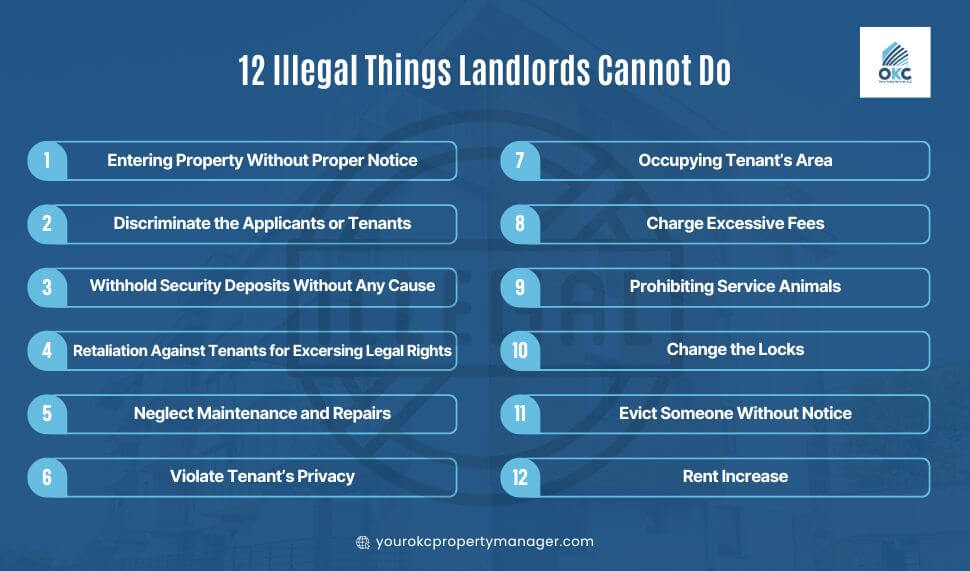
1. Entering Property Without Proper Notice
Even though the property owners have rights to their property, they are strictly prohibited from entering the tenant’s house with their will at any time. The tenant’s approval is compulsorily needed. Landlords must deliver the proper notice to tenants before inspecting their property. The visiting hours should be within business hours- 9 AM to 5 PM. If there is no delivery of 24-hour notice, the landlord’s actions are declared illegal by the state’s landlord-tenant laws. Landlords can be penalized as a punishment for violating the renter’s rights. But this is not applicable in case of emergency circumstances.
As a property owner, you must check the lease agreement clearly stating the terms and conditions of visiting the property. This will prevent disputes between tenants and landlords. The tenants cannot refuse the landlord’s visit to the home if it is properly notified and done in a reasonable time.
2. Discriminate the Applicants or Tenants
The Fair Housing Act prohibits landlords from discriminating against their tenants or potential tenants applying for rent. The act was introduced to create a fair environment and provide housing support for marginalized communities in the rental industry. Therefore, when selecting tenants, it is illegal for landlords to discriminate against applicants based on:
- Race or color
- Nationality
- Sex or gender
- Family status
- Disability
- Religion
Discrimination is a serious offense and is not taken lightly. According to housingcenter.org, the percentages of complaints filed nationally in 2022 are as follows: Disability: 53.26%; Race: 17.63%; Sex: 7.54%; Familial Status: 6.5%; National Origin: 4.95%; Color: 1.85%; Religion: 1.07%. Therefore, when reviewing applications and working with tenants, ensure that you make decisions without unintentional bias related to these categories. Breaking any terms of the Fair Housing Act can result in severe fines and legal action. Additionally, it is not permissible to change any policies based on changes in a tenant’s status in any of these categories.
3. Withhold Security Deposits Without Any Cause
Almost all landlords collect a security deposit when tenants move in. However, they can not charge more than 1 to 3 times the monthly rent. The purpose of the security deposit is to cover any kind of damages caused by the tenant during the tenancy period and must be returned when the tenant moves out.
Normal wear and tear of the property cannot be considered property damage. Also, the security deposit can’t be used for repairing normal wear and tear. Landlords must return the security deposit within a specified timeframe, usually 30 days, after the tenant moves out. This ensures that tenants are not unfairly burdened and that landlords adhere to state laws regarding security deposits. Keeping the security deposit without any solid proof of damages is considered illegal and tenants may take the issue to small claims court to recover the amount. Learn more about can a landlord keep security deposit to understand your rights.
4. Retaliation Against Tenants for Excersing Legal Rights
No matter the reason, a landlord cannot retaliate against the tenants for exercising their legal rights under federal and state laws. When tenants exercise their legal rights for reporting code violations or requesting repairs, the landlords are prohibited from retaliating against them by taking actions like eviction, raising the rent, decreasing services, or harassing them.
Thus, landlords must adhere to specific legal requirements when they evict a tenant, ensuring that the eviction process is lawful and that tenant’s rights are protected.
Retaliation is a violation of the implied warranty of habitability which is a legal obligation of landlords to provide tenants with a safe and livable rental property. It is also considered a violation of the Fair Housing Act which prohibits discrimination against tenants who exercise their fair housing rights.
So, landlords cannot retaliate against tenants for exercising their legal rights, as it violates their rights and landlord responsibilities. If you show retaliatory behavior, then the tenant can file a complaint with the local housing authority or file a lawsuit against you.
👉 Read our guide on common reasons landlords cannot evict a tenant to stay informed and avoid legal pitfalls.
5. Neglect Maintenance and Repairs
One of the most important landlord’s responsibilities is to make sure that the rental property is safe and livable. So, the landlord must carry out maintenance and repairs job in time. Refusing or neglecting maintenance and repairs could end in legal action against the landlord under property law.
The landlords must have to make repairs by removing mold or lead paint or fixing the utilities. These things could endanger the tenant. Also, it is illegal for the landlord to ask tenants to make major repairs such as fixing the balconies or stairs.
6. Violate Tenant’s Privacy
A landlord cannot do anything that might violate a tenant’s privacy rights, such as installing surveillance cameras without permission or entering the rental property without notice of permission.
The landlord also cannot share tenants’ personal information without their consent, such as social security numbers or financial information. Thus, violating tenant privacy is against rental laws.
7. Occupying Tenant’s Area
Once a property is rented, landlords cannot use the tenant’s space for personal reasons. Even asking to store personal belongings or utilities in the unit is unprofessional, and potentially illegal. Under landlord-tenant laws, tenants have the legal right to exclusive possession and use of the rental unit for the entire lease term. That means landlords must respect their privacy and cannot interfere with how the space is used, as long as it’s within the lease terms.
8. Charge Excessive Fees
Charging excessive fees that are not allowed by the law is illegal such as excessive late fees, charging for normal wear and tear, charging for illegal pet fees, etc. The landlords also can’t charge tenants for basic services that are required by the law or necessary to make the rental unit habitable such as heating or hot water.
If a landlord charges any illegal fees, the tenants may be able to take legal action to recover the fees and in some cases, may be able to collect damages as well. To stay compliant and avoid disputes, you should understand how much can you legally charge for late fees in Oklahoma.
9. Prohibiting Service Animals
Though some landlords strictly prohibit pet animals on their rental property, tenants having service animals are allowed to rent under the Americans with Disabilities Act of 1990. The landlords can request proper tenant documentation about the service animal’s status. But landlords are legally prohibited from prohibiting service animals with tenants setting a “no pet” rule. To learn more, visit our detailed guide on Oklahoma service dog law.
According to the 2021 Pet-Inclusive Housing Initiative (PIHI) Report, approximately 72% of renters reported that finding pet-friendly housing is challenging, while 59% stated that it is too costly.
For more information, get into the detailed guide on pet screening for rentals.
10. Change the Locks
The landlord is not allowed to change the locks without letting you know. If the purpose of changing the lock is to remove the tenant from the property, then the landlord must still go through legal channels to do so. Changing the locks without notice is a serious offense and could lead to a lawsuit against the landlord.
Also Read: Can a landlord change the locks?
11. Evict Someone Without Notice
No matter the reason, a landlord cannot evict someone without a court order or following proper legal channels. This is considered illegal eviction. The landlord must give the tenant an eviction notice first. In Oklahoma, generally, a 30-day notice to quit is provided to the tenant to vacate the property. There are also 10/15/5 day Oklahoma eviction notices to quit.
If the landlord unlawfully evicts tenants without the court system, they can face serious consequences. Also, they cannot turn off tenants’ utilities without proper notice. They need to ensure that the rented property is accessible throughout the tenancy and to maintain it in the condition specified in the contract.
Also Read: Can Police Remove Squatters?
12. Rent Increase
Landlords cannot increase rent without proper notice on rented property. The notice period varies by state, but landlords generally must provide at least 30 days’ notice before increasing rent. Landlords cannot increase rent during a long-term lease, except in case of a lease renewal, as it’s a legally binding contract. Rent control laws may apply in certain areas, where landlords cannot raise the rent more than 5% plus the local rate of inflation in one year. Adhering to these regulations helps maintain a fair and transparent landlord-tenant relationship. Get to know more about the guidelines for increasing the rent.
Related Read: Knowingly or unknowingly, you might be harassing your tenant, thus to learn thoroughly check out What is Landlord Harassment?.
What Happens If Landlord Breaks Tenant Rules And Regulations?
If a landlord breaks tenant rules and regulations, the tenant may have legal recourse depending on the situation. Tenants have the right to “quiet enjoyment” in the rental property. This means landlords cannot evict them without a reasonable cause or disturb their right to live in peace and quiet. The best solution is maintaining open communication with both parties and resolving issues before involving legal action. But, landlords should be aware of their rights and follow them effectively.
Here’s what can happen if a landlord violates rules and regulations governing the landlord-tenant relationship:
- The tenant can file an official complaint with a state or local government body that may trigger an investigation and fines against the landlord.
- Tenants can withhold rent payments until the landlord legally corrects the violation. Withholding rent improperly can risk eviction, so legal guidance is recommended.
- The tenant could sue the landlord in civil court for damages related to violations like personal injury or lost rental value during repairs.
- If the landlord enters an occupied property without notice or shuts off utilities, the tenant may be able to file trespassing or harassment charges.
- If the landlord attempts an illegal lockout or eviction, the tenant can call the police to stop the improper eviction.
- The tenant may legally break the lease without penalty if the landlord breaches the warranty of habitability or constructive eviction occurs.
- If discrimination or tenant privacy rights are violated, government agencies can impose fines and mandate training for the landlord.
- If rent is withheld improperly, the landlord can fight eviction and sue the tenant for current rent due plus legal fees.
Recommended Article: Section 8 Rules and Regulations for Landlords
What a Landlord Can Do: Screen Tenants
Above we talked a lot about the things that a landlord cannot do as a property owner. But there is one important thing that a landlord can do to improve the overall management experience. And that is tenant screening. Screening tenants is a crucial part of the rental business. If you could ensure that the tenants are responsible and good then it prevent many other issues.
To avoid breaking any kind of rules while screening tenants or in the overall management cycle, the best way is to work with a property management company. A property management company will make sure not to break any kind of rules and regulations which can lead to legal action.
Conclusion on things a landlord can’t do
Being a property owner comes with rights and responsibilities in managing rental properties. Tenants’ rights must be respected. So, understanding illegal landlord action is important for maintaining a healthy landlord-tenant relationship. This is ethical and crucial for a harmonious living arrangement.
Contact OKC Home Realty Services for any kind of queries regarding real estate and property management services. Call today 4052325800
FAQs About What Landlords Cannot Do
Can a landlord enter a property without permission?
No, a landlord cannot enter a rental property without getting permission. There are specific situations in which the landlord can enter allowed by the law. The landlord must provide a reasonable notice before entering typically 24-48 hours.
Can tenants refuse to allow viewings?
It depends upon what the lease says. There may be penalties for refusing to allow a property manager to show the property prior to the end of a tenant’s stay in a property.
How often can landlords inspect a property?
Generally, the landlords are allowed to inspect the rental property periodically to ensure it is maintained properly and to identify if any repairs or maintenance are required. The frequency of inspections is generally governed by state and local laws, as well as terms of the lease agreement.
Can I call the police if my landlord enters without permission?
Note: I am not a lawyer, but I can provide some general information.
If a landlord enters a rental property without proper notice or permission, it may be considered a violation of your privacy rights. In Oklahoma, whether or not you can call the police may depend on various factors including specific circumstances and applicable local ordinances.
My landlord wants me out what are my rights?
In Oklahoma, if your landlord wants you to vacate the property, here are some important rights you have as a tenant:
1. Receive written notice stating the reason for eviction and the timeframe.
2. The opportunity to participate in the legal process and present your case.
3. The right to contest the eviction if it is unjust or has not followed proper procedures.
4. Protection against retaliatory evictions if you exercise your legal rights.
Can a landlord increase rent at any time?
No, landlords must follow local laws and rental agreements when increasing rent. Sudden and excessive rent hikes may be illegal.
Can a landlord refuse to make necessary repairs?
Landlords are legally obligated to maintain rental properties in a habitable condition. They cannot ignore requests for necessary repairs, especially those related to health and safety.
What if a landlord violates these rules?
Tenants can report landlord violations to local housing authorities, obtain legal advice, and file lawsuits in small claim court for damages or to enforce their rights.
Can a landlord change the terms of a lease agreement?
A landlord cannot change the terms of a lease agreement unilaterally. Any changes must be mutually agreed upon and documented in writing.
What practice that landlords sometimes use is illegal in most states?
One common illegal practice is self-help eviction where landlords try to force tenants out without going through the proper legal process. This includes actions like changing the locks, shutting off utilities, or removing a tenant’s belongings without a court order. In most states, including Oklahoma, these actions are prohibited and can lead to legal penalties for the landlord.