(
(


If you own a rental property, maintenance is one of the most consistent and often underestimated expenses you will face. Maintenance costs like repairs, system upkeep, and unexpected fixes directly impact your cash flow and long-term returns. Hence, landlords need to know how to reduce rental property maintenance costs by using preventive maintenance, screening tenants carefully, responding to repair requests early, and conducting thorough inspections before every tenancy. Furthermore, to achieve significant maintenance cost reduction, you need to build a reliable vendor network, upgrade systems, and utilize a home warranty for major appliances.
With over 27+ years of managing rentals across Oklahoma City, I have practically used these strategies to reduce property maintenance burden for landlords. In this guide, I’ll walk you through what maintenance expenses landlords typically pay, what drives costs up, how to budget effectively, and seven proven strategies to reduce your property maintenance costs without compromising the quality of your rental.
What Maintenance Expenses Do Landlords Typically Pay?
As a landlord, you are legally and practically responsible for keeping your rental property safe, functional, and habitable for your tenants. While renters handle minor day-to-day upkeep, the majority of maintenance expenses fall on the property owner. Understanding exactly what those expenses are is the first step toward building a realistic budget and finding ways to reduce your overall maintenance costs.
HVAC Systems Maintenance
Heating, ventilation, and air conditioning systems generate recurring maintenance costs due to heating and cooling cycles, component wear, and seasonal demand. Landlords typically pay for inspections, filter replacements, refrigerant refills, thermostat issues, and full system repairs or replacements when units fail. In regions with extreme temperatures like Oklahoma City, systems run longer cycles, which accelerates degradation and increases service frequency, making HVAC one of the most consistent contributors to total maintenance costs for rental property.
Plumbing Repairs and Water Systems
Plumbing systems create both minor and major maintenance costs through leaks, clogs, fixture replacements, pipe corrosion, and water heater failures. Landlords often face unpredictable repair frequency due to hidden pipe issues or tenant usage patterns. Costs include labor, material replacement, water damage remediation, and sometimes structural repairs, which makes plumbing one of the most volatile components within rental property maintenance costs.
Electrical System Repairs
Electrical systems generate maintenance costs through panel upgrades, wiring repairs, outlet replacements, lighting fixtures, and code compliance updates, which increase as properties age or when systems no longer meet safety standards. Landlords typically pay for troubleshooting, licensed electrician services, and component replacements, and these costs vary based on system complexity and property size.
Roofing and Structural Maintenance
Roofing and structural components create high-cost maintenance events due to material wear, weather exposure, and aging, and landlords pay for shingle replacement, leak repairs, flashing fixes, gutter maintenance, and structural inspections. Especially in storm-prone areas like Oklahoma City, costs increase after storms, wind damage, or prolonged neglect, and structural repairs may extend beyond roofing into framing and insulation.
Appliances and Interior Systems
Appliances and interior systems generate ongoing maintenance costs due to usage cycles, mechanical wear, and limited lifespans. Landlords typically pay for repairs or replacements of water heaters, refrigerators, dishwashers, ovens, and laundry units. Costs include parts, labor, and full unit replacement when repairs exceed value, which occur intermittently but consistently across rental property lifecycles.
Pest Control
In most states, including in Oklahoma, landlords are required by law to provide a pest-free living environment, making routine pest control one of those maintenance expenses that is both a legal obligation and a smart investment. Landlords should handle pest control by scheduling regular preventive treatments, particularly in older properties or in regions with known pest activity. This is a relatively low-cost measure that can prevent far more expensive structural damage caused by termites, rodents, or other pests that go undetected for extended periods.
Landscaping and Exterior Maintenance
Landscaping and exterior areas create recurring maintenance costs through lawn care, tree trimming, irrigation repairs, pest control, and seasonal cleanup. Landlords pay for both routine upkeep and corrective work when neglect leads to overgrowth or drainage issues. Exterior maintenance also includes siding repairs, painting, walkway fixes, and fence maintenance, which directly impact curb appeal and tenant perception.
Rental Maintenance Cost Breakdown
| Category | Typical Annual Cost (% of Budget) | Average Repair/Replacement |
| HVAC Systems | 10-15% | $100-7,000 |
| Plumbing Repairs | 15-20% | $200-2,500 |
| Electrical Systems | 5-10% | $150-2,000+ |
| Roofing/Structural | 15-25% | $100-15,000 |
| Appliances/Interior | 10-15% | $200-2,000 |
| Pest Control | 5-10% | $50-1,000 |
| Landscaping/Exterior | 5-10% | $50-1,000 |
What are the Common Causes of High Rental Maintenance Costs?
While some maintenance expenses are simply unavoidable, consistently high maintenance costs are usually a sign that something specific is driving them up, and in most cases, that something is identifiable and fixable. Understanding these root causes helps prioritize strategies to reduce rental property maintenance costs effectively.
Deferred Maintenance and Delayed Repairs
Deferred maintenance, which is the practice of postponing repairs and routine upkeep to save money in the short term, turns a small, inexpensive problem into a large and costly one over time. Small issues expand into larger failures when landlords delay action, and minor leaks, cracks, or system inefficiencies often develop into structural damage or full system replacements. Costs rise due to emergency labor rates, material replacement, and secondary damage, all of which could have been avoided with a timely and relatively inexpensive repair.
Aging Property Systems and Components
Aging systems increase maintenance costs for rental property because older HVAC units, plumbing lines, roofing materials, and electrical systems experience higher failure rates and reduced efficiency, which leads to frequent repairs and replacements. NHSCA notes that major systems like HVAC last 10–15 years on average, and failure probability increases after that period. Older properties require more frequent service calls, higher labor input, and replacement parts that may be harder to source, which directly raises annual rental property maintenance costs.
Poor Tenant Behavior and Misuse
Tenant behavior significantly inflates rental property maintenance costs when everyday misuse, like flushing wipes, overloading circuits, or ignoring small leaks, escalates minor issues into emergencies requiring urgent fixes. Poorly screened tenants generate higher maintenance requests and damage-related expenses as costs increase through repeated repairs, emergency calls, and replacement of damaged fixtures.
Extreme Weather and Location Factors
Weather events spike maintenance costs for rentals exposed to storms, floods, or temperature extremes that damage exteriors and systems faster than normal wear. In 2026, climate-driven wear and tear has become a critical concern for 93% of U.S. homeowners, which shortens the replacement cycles for roofs and HVAC units. For instance, properties in high-humidity coastal areas face accelerated corrosion of metal fixtures, while homes in regions like Oklahoma must contend with hail damage and the rapid expansion and contraction of foundations due to soil moisture shifts.
High Tenant Turnover Rates
Every time a tenant moves out, a landlord faces a concentrated period of maintenance and make-ready expenses like cleaning, painting, carpet replacement, minor repairs, and any damage remediation. Frequent turnover also leads to the constant movement of furniture and heavy foot traffic, which increases the wear and tear on flooring, walls, and appliances. This cycle not only spikes short-term costs but also accelerates overall property degradation, as rushed vacates hide issues like clogged vents or scratched surfaces until the next tenant complains.
Lack of Preventive Maintenance Planning
Absence of structured maintenance plans increases rental property maintenance costs because systems operate without routine inspections or servicing, which leads to unexpected failures and emergency repairs. Costs increase due to reactive repairs, higher labor charges, and shortened equipment lifespan, which collectively reduce maintenance cost control and increase overall expense volatility.
What are the Top 7 Ways to Reduce Rental Property Maintenance Costs?
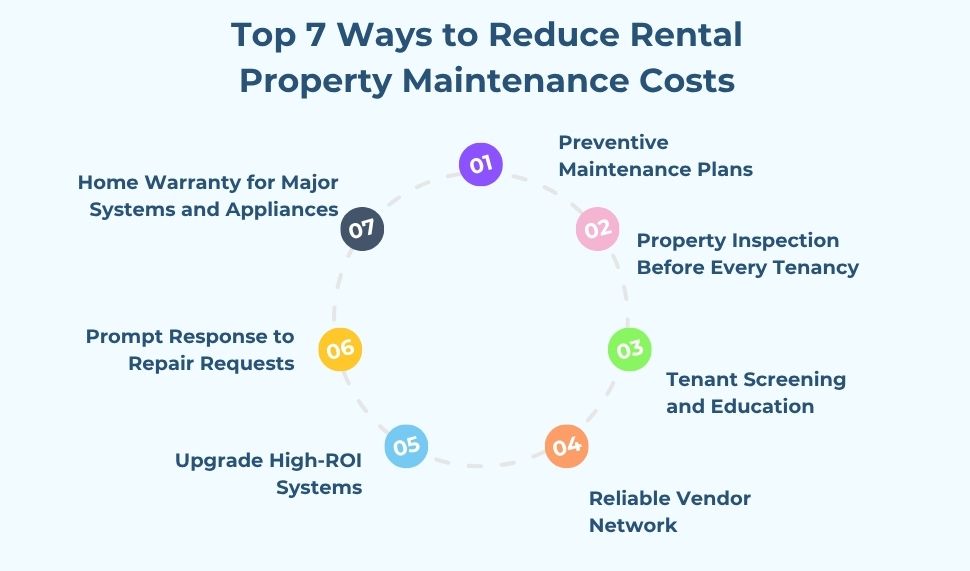
Implementing a proactive strategy is the most effective way to ensure that rental property maintenance costs do not erode your monthly cash flow. By shifting your mindset from reactive repairs to long-term property maintenance strategies, you can significantly extend the lifespan of your appliances, keep your tenants satisfied, and ultimately increase the resale value of your home.
1. Preventive Maintenance Plans
A preventive maintenance plan is one of the most effective and underused tools available to reduce rental property maintenance costs in a sustainable and predictable way. Preventive maintenance plans reduce maintenance costs by replacing reactive repairs with scheduled servicing across all major systems, which lowers the probability of sudden failures and stabilizes maintenance costs for rental property over time. Regular servicing identifies worn components early and resolves minor issues before they expand into expensive repairs, which supports maintenance cost control and improves cost predictability.
Preventive systems also extend equipment lifespan and reduce system strain, which directly contributes to maintenance cost reduction. Over time, this approach becomes one of the most effective strategies to reduce property maintenance burden for landlords because it reduces repair frequency, avoids emergency labor costs, and maintains consistent property performance.
Preventive maintenance checklist for landlords:
| Task | Frequency |
| Replace HVAC filters | Every 1–3 months |
| Service HVAC system professionally | Annually |
| Inspect roof and gutters | Every 6 months |
| Test smoke and carbon monoxide detectors | Monthly |
| Check plumbing fixtures for leaks | Every 6 months |
| Inspect water heater for corrosion/sediment | Annually |
| Schedule pest control treatment | Quarterly |
| Check window and door seals | Annually |
| Inspect electrical outlets and panels | Annually |
| Clean dryer vents | Annually |
| Service garbage disposal/kitchen appliances | Annually |
| Check exterior for cracks/paint/damage | Every 6 months |
2. Property Inspection Before Every Tenancy
Property inspection before every tenancy helps identify damage, wear, and system issues before a new lease begins, preventing unresolved problems from turning into recurring rental property maintenance requests. Professional property inspection services evaluate HVAC, plumbing, electrical systems, appliances, and structural elements, and ensure the property starts each tenancy in stable condition. This reduces unexpected repairs during occupancy and supports maintenance cost control through early issue detection.
Inspections also improve planning and budgeting because landlords gain a clear understanding of property condition before tenants move in, which allows for better scheduling of repairs and upgrades. When combined with documented reports, it becomes a critical reference point at the end of the tenancy, making it much easier to distinguish between normal wear and tear and damage caused by the tenant.
3. Tenant Screening and Education
Tenant behavior directly impacts repair frequency, damage levels, and how quickly issues are reported, which affects overall maintenance costs for rental property. Screening tenants using professional services identifies tenants with strong rental histories and responsible behavior, which reduces misuse of appliances, plumbing systems, and property features. Better tenants generate fewer maintenance requests and contribute to long-term maintenance cost reduction.
Tenant education strengthens maintenance cost control by setting clear expectations for property use and maintenance reporting. When tenants understand how to handle minor issues and when to report problems, they prevent small concerns from escalating into major repairs. This reduces unnecessary service calls and supports efficient handling of rental property maintenance requests. Together, screening and education form practical property maintenance strategies that reduce maintenance costs while improving overall property condition.
4. Reliable Vendor Network
Building relationships with reliable plumbers, electricians, HVAC technicians, and general handymen who know your properties, charge fair rates, and show up when they say they will makes every repair faster, cheaper, and less stressful. When landlords have a dependable network of vetted, fairly priced contractors before needing them, it ensures faster response time and higher-quality repairs, which lowers repeat work and reduces maintenance costs for rental property. When you work with trusted contractors, you also avoid inflated emergency pricing and inconsistent service outcomes while also maintaining scheduling efficiency.
Vendor consistency also supports maintenance cost control because experienced contractors understand your property standards and recurring issues, which leads to faster diagnostics and accurate fixes. Furthermore, established relationships ensure your rental property maintenance requests are prioritized during peak seasons, such as the first freezing night of winter in Oklahoma City, when HVAC technicians are in high demand.
5. Upgrade High-ROI Systems
Upgrading high-ROI systems reduces maintenance costs by replacing outdated components that require frequent repairs with modern, energy-efficient systems that operate more reliably and require less servicing. Systems such as HVAC units, water heaters, roofing materials, and appliances create ongoing maintenance costs when they age, and replacing them at the right time reduces repair frequency and improves performance. Modern systems like smart thermostats also improve efficiency and durability, which lowers strain and extends operational lifespan, directly reducing maintenance costs for rental property.
Replacing an HVAC system that has been repaired multiple times, re-piping a property with chronically problematic plumbing, or upgrading an outdated electrical panel are all examples of improvements that reduce ongoing maintenance costs meaningfully over time. Other high-return upgrades include installing quality door locks and hardware to reduce wear-related replacements, fitting low-maintenance flooring in high-traffic areas, and replacing aging water heaters before they fail. These improvements support budget property maintenance plans by converting unpredictable repair costs into planned investments.
6. Prompt Response to Repair Requests
Responding to rental property maintenance requests quickly helps to address issues before they escalate into larger and more expensive problems, which prevents secondary damages. Small issues such as leaks, electrical faults, or minor HVAC inefficiencies become costly repairs when delayed, and immediate action limits the scope of damage and repair complexity. Fast response systems also reduce emergency repair situations, which typically involve higher labor costs and urgent scheduling.
Being responsive is a key tenant retention tool as the residents see that you prioritize their comfort, and they are more likely to stay long-term and treat the property with more care. Landlords need to encourage tenants to report repairs promptly and address them quickly to maintain better property condition and reduce tenant-related damage caused by prolonged issues or the compounded cost of deferred repairs.
7. Home Warranty for Major Systems and Appliances
A home warranty is a service contract that covers the repair and replacement of major systems like HVAC, electrical, and plumbing, as well as appliances, when they fail due to normal wear and use for a fixed annual fee plus a small service call deductible. Annual home warranty plans for rental properties typically range from $400 to $700 per year, depending on the level of coverage, which is often considerably less than the cost of a single major appliance replacement or an emergency repair.
Warranties also simplify maintenance management because they provide access to pre-approved service vendors and standardized repair processes, which reduces the need to source contractors independently. This structure supports affordable property maintenance plans by limiting large, unexpected expenses and improving cost predictability. While not eliminating all maintenance costs, home warranties function as a financial buffer within broader maintenance cost reduction strategies, especially for older properties with higher repair risk.
How Much Should You Budget for Rental Property Maintenance?
Determining the exact amount to set aside for rental property maintenance costs is a common concern for landlords. The amount should be a reliable baseline for maintenance cost control, which helps you handle both expected repairs and unexpected maintenance requests without disrupting cash flow.
What is the 1% Rule for Rental Property Maintenance?
The 1% rule is the most commonly referenced budgeting guideline in residential real estate, where a landlord should set aside approximately 1% of the property’s total value each year to cover maintenance and repair costs. For a property worth $150,000, that means budgeting around $1,500 per year; for a $250,000 property, closer to $2,500. This rule creates a simple baseline for budget property maintenance plans and supports consistent maintenance cost control across different property types. It works best for properties in average condition and stable rental markets, and landlords often adjust upward for older properties or those with higher wear.
What is the $1 Per Square Foot Rule?
The $1 per square foot rule estimates annual maintenance costs by assigning $1 per square foot of property size. For a 1,200 square foot rental home, this method suggests a maintenance budget of between $1,200 per year. This method focuses on property size rather than value, which makes it useful when comparing maintenance costs across multiple properties of different sizes within the same portfolio. Larger properties typically contain more systems, fixtures, and surfaces, which increases repair needs, and this rule reflects that relationship in a simple, scalable format.
What is the 50% Rule in Rental Property?
The 50% rule estimates that 50% of rental income goes toward total operating expenses, including maintenance costs for rental property, taxes, insurance, and management fees. For a rental that brings in $1,350 per month, you would expect $675 to go toward these expenses. While not all goes to repairs, landlords typically allocate 15-20% of gross rent specifically to a repair reserve fund; $200-270 monthly in this example to handle routine upkeep and unexpected issues without straining cash flow.
Lower Maintenance Cost with OKC Home Realty Services
Landlords can reduce rental property maintenance costs by applying preventive maintenance, responding to rental property maintenance requests early, screening tenants carefully, and using structured property maintenance strategies that control repair frequency and prevent costly system failures. When you combine proactive inspections, reliable vendors, and smart upgrades, you create consistent maintenance cost reduction and avoid emergency repairs that increase total maintenance costs for rental property over time.
If you want to reduce maintenance costs without managing everything yourself, professional support simplifies the process and improves results. OKC Home Realty Services helps landlords implement affordable property maintenance plans, coordinate reliable vendors, and handle maintenance requests efficiently to maintain property condition and control costs. Whether you own one rental or a growing portfolio, our systems focus on maintenance cost control and long-term performance.
Ready to reduce your maintenance burden and protect your investment? Contact us today to schedule a free consultation and customized budget property maintenance plans.
FAQs: Reducing Maintenance Costs on Rental Property
What is the average maintenance cost for rental properties?
Average maintenance costs for rental properties range from 1-2% of the property’s value annually or 8-12% of gross rent, equating to $2,000-4,000 yearly for a $200,000 home or $160-240 monthly on $2,000 rent. Older properties or those in harsh climates push toward the higher end.
How to incentivize tenants to take care of the property?
Landlord can incentivize tenants with rent discounts (5-10% for issue-free years), security deposit bonuses returned early for good condition, or referral rewards for long-term stays. Provide clear care guides and quick-response repairs to build trust, reducing misuse and turnover.
How much does it cost to maintain a 2000 sq ft house?
Maintaining a 2,000 sq ft rental house costs $2,000-4,000 yearly using the $1 per sq ft rule ($1.00-2.00/sq ft), covering HVAC ($500), plumbing ($600), and exteriors ($800) based on average U.S. data for single-family homes. Adjust for age and location.
What is the 30 60 90 maintenance schedule?
The 30-60-90 schedule is a tiered maintenance cost control system that breaks tasks into 30-day, 60-day, and 90-day intervals:
30 Days: High-frequency tasks like testing smoke detectors and checking for plumbing leaks under sinks.
60 Days: Medium-term care, such as exterior debris removal and checking window seals.
90 Days: Quarterly deep tasks like replacing HVAC filters, inspecting the roof, and professional pest control treatments.
What is the 10 rule of preventive maintenance?
The 10% rule of preventive maintenance states that to be effective, any scheduled task must be completed within 10% of its planned interval. For example, if you have a quarterly HVAC inspection due every 90 days, it must be performed within 9 days of that due date. This consistency ensures reliability and is one of the best property maintenance strategies to prevent maintenance drift, where small delays eventually lead to system failures.
What happens if I skip maintenance?
Skipping maintenance leads to 2-3x higher emergency costs due to deferred maintenance and shortened system life (e.g., HVAC fails 5 years early). Beyond the physical damage, neglecting rental property maintenance requests leads to high tenant turnover, lower rental rates, and potential legal liabilities under the “implied warranty of habitability” laws in the USA.