(
(


An emergency repair is any maintenance issue that poses an immediate threat to a tenant’s health and safety or risks significant structural damage to the rental property. Whether it’s a gas leak or a burst pipe, these critical issues require your immediate attention to protect both lives and assets. But are all the maintenance requests from your tenant considered emergencies? Should you respond immediately to all their requests, even at midnight?
You need to distinguish between an urgent request and a true emergency to maintain your ROI. Addressing a dripping faucet during business hours is routine, but mistaking it for an emergency leads to expensive after-hours technician surcharges. Correctly identifying these differences helps you avoid unnecessary overhead while still prioritizing essential maintenance for your rental portfolio.
Beyond the financial implications, addressing emergencies promptly fulfills the “Implied Warranty of Habitability.” This legal standard, recognized across all 50 US states, including Oklahoma, mandates that landlords provide a safe, sanitary, and livable environment. Failing to address these critical issues can lead to legal liabilities, rent withholding, or lease terminations.
What Are the Criteria for Maintenance Emergencies in a Rental Property?
To manage your maintenance budget effectively and ensure your rental remains legally compliant, you need a reliable framework for decision-making. In the property management industry, urgent maintenance requests are categorized based on the “3 pillars of a maintenance emergency.” By applying these three criteria, you can instantly determine if a repair requires a 2:00 AM dispatch or if it can wait until the next business morning.
Pillar 1: Threat to Life or Safety
This pillar covers any situation where the tenant’s physical well-being is in immediate danger. These are non-negotiable emergencies that often require the involvement of emergency services (911) or utility companies alongside your maintenance team.
- Fire or Smoke: Any active fire or evidence of electrical scorching.
- Natural Gas Leaks: Gas leaks and smells of gas.
- Structural Collapse: Issues like a caving ceiling or a fallen tree on the roof.
Pillar 2: Immediate Property Damage
This pillar focuses on asset protection. These emergencies may not always threaten a life immediately, but if left unaddressed for even a few hours, they will cause thousands of dollars in damage to your investment.
- Main Line Burst: An uncontrollable flow of water inside the home.
- Sewage Back-up: Raw sewage entering the home through drains or toilets.
- Roof Failures: Significant active leaks during a rainstorm that threaten the interior.
Pillar 3: Loss of Essential Services
This pillar relates directly to the legal “Implied Warranty of Habitability.” If a tenant loses access to necessities that make a home livable, it is considered an emergency. Note that state laws, including those in Oklahoma, often have specific temperature or time thresholds for these.
- Total Loss of Water: No running water for hygiene or sanitation.
- Loss of Heat in Winter: Generally defined as an emergency if the outside temperature is below 40°F (4°C).
- Total Power Outage: Complete electrical failure (provided it is not a widespread utility grid issue).
What Is Considered an Emergency Repair for a Rental Property?
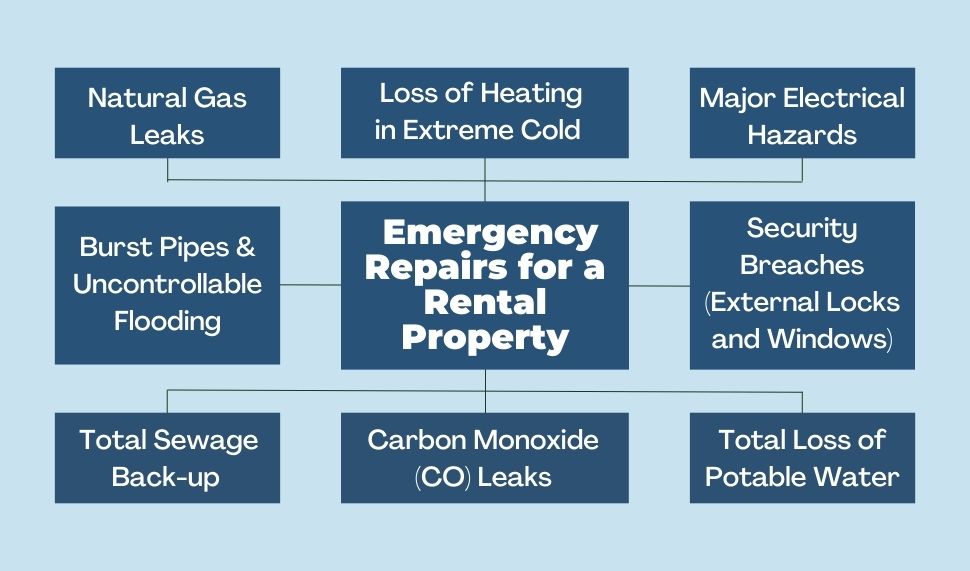
Based on industry standards from the National Apartment Association (NAA) and leading property management practices, here are the most common emergency repairs in rental houses and apartments that demand an immediate response:
Natural Gas Leaks
A gas leak is a high-priority, life-safety emergency. Because natural gas is highly combustible, even a small spark from a light switch can trigger an explosion. Most utility companies add mercaptan to the gas, giving it a distinctive “rotten egg” smell to alert residents.
- Instruct tenants to evacuate immediately, leave the door open, and call 911 or the local utility provider from outside the building.
- Do not attempt to find the leak yourself; wait for a certified technician or the fire department to clear the area.
Burst Pipes and Uncontrollable Flooding
Uncontrollable water flow can destroy flooring, cabinetry, and drywall within minutes. This typically involves a main line break or a failed water heater.
- Instruct tenants to use the main shut-off valve while you dispatch a 24-hour plumber to mitigate structural damage and prevent long-term mold colonization.
Total Sewage Back-up
When raw sewage enters the home through floor drains, toilets, or bathtubs, the rental unit becomes a biohazard. This is a direct violation of sanitation standards and the “Implied Warranty of Habitability.” A home with a sewage back-up is legally “unfit for human habitation” until the line is cleared and the area is professionally sanitized.
- Clear the obstruction immediately to restore a hygienic environment and prevent the spread of harmful pathogens.
Loss of Heating in Extreme Cold
In most US jurisdictions, a lack of heat is a legal emergency if the furnace fails and the outdoor temperature drops below a specific threshold (often 40°F–50°F). Without functional heating, your pipes may freeze and burst, and tenants face significant health risks like hypothermia. A rapid HVAC response is required to maintain a livable indoor climate.
Major Electrical Hazards
Arcing wires, smoking outlets, or “popping” sounds from a breaker panel are imminent fire hazards. Electrical malfunctions can ignite wall insulation in seconds. If a tenant reports a burning smell or sparking, you must act immediately.
- Disconnect power to the affected circuit and dispatch a licensed electrician immediately to prevent a total loss of the structure due to fire.
Security Breaches (External Locks and Windows)
If a front door lock fails or a ground-floor window is shattered, the property is no longer secure. As a landlord, you are responsible for the physical safety of your tenants.
- Immediately send emergency board-up services or a locksmith to restore the property’s security and the tenant’s safety.
Total Loss of Potable Water
A complete lack of running water prevents tenants from basic hygiene and sanitation. While a single dripping faucet is a routine repair, a total outage, not caused by the city, requires emergency plumbing intervention. Access to water is a fundamental requirement for a rental property to be considered legally habitable.
Carbon Monoxide (CO) Leaks
Often referred to as the “silent killer,” a carbon monoxide leak is perhaps the most dangerous emergency a landlord can face. Because CO is colorless, odorless, and tasteless, a tenant can’t detect it without a functioning alarm. This is a life-safety emergency that requires an immediate evacuation of the premises.
CO is a byproduct of incomplete combustion. It typically originates from malfunctioning gas furnaces, water heaters, stoves, or blocked chimney flues. If a carbon monoxide detector sounds, it must be treated as a confirmed leak until cleared by the fire department or the gas company. In many states, including Oklahoma, landlords are legally required to install and maintain CO detectors in any rental unit that uses gas or has an attached garage.
What is Not a Repair Emergency in Rental Properties?
Effective property management is as much about knowing what not to fix at 2:00 AM as it is about responding to crises. Categorizing a request as “non-emergency” allows you to schedule repairs during standard business hours, avoiding the 2x or 3x “emergency dispatch” premiums charged by contractors.
Here is a breakdown of common maintenance issues that, while requiring attention, do not qualify as emergencies under the Implied Warranty of Habitability or standard USA lease agreements.
1. Cosmetic and Aesthetic Repairs
Issues that only affect the appearance of the home are never emergencies. While these should be tracked for long-term property value, they do not impact the tenant’s safety or the home’s functionality.
- Peeling Paint or Wallpaper: Aesthetic wear and tear that can be addressed during routine turnovers or scheduled maintenance.
- Cracked Floor Tiles or Torn Carpeting: Unless the damage creates a significant “trip hazard,” these are considered cosmetic.
- Torn Window Screens: These are secondary to the window’s security and do not compromise the building envelope’s integrity.
2. Non-Essential Appliance Malfunctions
In the USA, most high-end appliances are classified as “amenities” rather than “essentials” for habitability. Unless an appliance is actively leaking water or sparking, its failure is a routine repair.
3. Minor Plumbing and Drains
The key distinction here is controllability. If a leak can be contained by a bucket or by turning off a local shut-off valve (like the one under a sink), it is not an emergency.
- Dripping Faucets: A slow drip wastes water but does not threaten the property structure.
- Clogged Sinks or Slow Drains: As long as water eventually drains and there is no “blackwater” back-up, you can handle it the next business day.
- Clogged Toilet (with multiple bathrooms): If the unit has a second functioning bathroom, a single clogged toilet is a routine repair.
4. Climate Control in Moderate Weather
HVAC failures are only emergencies during extreme temperatures. If the local weather is mild, the repair is high-priority but not an emergency.
- No Air Conditioning (Below 90°F): If the outdoor temperature is manageable, AC failure is a routine business-hour repair.
- No Heat (Above 50°F): If there is no risk of pipes freezing and the indoor temperature is safe, this does not require an emergency dispatch.
5. Standard Electrical and Hardware Issues
Many minor electrical or hardware tasks are actually “tenant responsibilities” in many USA leases, or at the very least, routine maintenance.
- Burnt-out Lightbulbs: Typically a tenant’s duty to replace. Even in high ceilings, it is never an after-hours emergency.
- Beeping Smoke Detector: Usually indicates a low battery. Tenants should be encouraged to replace the 9V battery themselves.
- Interior Door or Cabinet Issues: A bedroom door that sticks or a cabinet hinge that breaks does not affect the home’s security.
Emergency Repairs Vs Non-Emergency Repairs
| Feature | Emergency Repair | Non-Emergency Repair |
| Response Time | Immediate (1–4 Hours) | 24–72 Hours (Business Days) |
| Safety Risk | High (Life/Safety threat) | Low (Convenience/Aesthetic) |
| Property Risk | High (Active Flooding/Fire) | Low (Stable/Contained) |
| Legal Status | Required for Habitability | General Maintenance |
Landlord’s Legal Obligations for Rental Property Repairs and Maintenance
Understanding your legal obligations is not just about being a “good landlord”; it’s about protecting yourself from civil liability and expensive litigation. In the United States, the landlord-tenant relationship is governed by a set of baseline protections that you cannot “contract out of,” even if your lease says otherwise.
The Implied Warranty of Habitability
The Implied Warranty of Habitability is a legal doctrine recognized in nearly all 50 states. It is an unstated guarantee that comes with every residential lease, promising that the property is safe, sanitary, and fit for human occupation.
- Non-Waivable: You cannot ask a tenant to sign a waiver giving up their right to a habitable home.
- Basic Requirements: This includes providing access to potable water, functioning heat during cold months, a sound roof and walls, working electricity, and a property free from significant pest infestations.
- Continuous Duty: This isn’t just a move-in requirement; you are legally obligated to maintain these standards throughout the entire tenancy.
State-Specific Timelines
While federal law provides the framework, state statutes define the clock. In the event of an emergency, the law requires you to act within a “reasonable time,” which is strictly interpreted when life or safety is at risk.
- Emergency Window (24–48 Hours): For “The Big Three” (No heat, no water, or major safety hazards), most jurisdictions expect a response or the commencement of repairs within 24 to 48 hours.
- Oklahoma Context: Under the Oklahoma Residential Landlord and Tenant Act, if a condition materially affects health and safety, you typically have 14 days to remedy the issue after receiving written notice. However, in a true emergency, you are required to act as promptly as conditions require.
- Non-Emergency Window: For routine repairs, the timeframe usually extends to 7–30 days, depending on the severity and local housing codes.
Tenant Remedies
If a landlord fails to uphold their side of the habitability agreement, tenants have several “self-help” remedies. These are the primary reasons why ignoring an emergency repair can be a financial disaster for your rental business.
- Repair and Deduct: In many states, including Oklahoma, if a landlord fails to fix a habitability issue within a set timeframe, the tenant can hire a professional themselves and deduct the cost from the next month’s rent. In Oklahoma, this is capped at the cost of one month’s rent.
- Rent Withholding: In some jurisdictions, tenants can legally stop paying rent and place the funds in an escrow account until the repair is completed.
- Constructive Eviction: If the property becomes truly unlivable (e.g., no water for a week), a tenant can move out without notice and sue for damages, claiming they were “constructively evicted” by your negligence.
Note: This is legally complex and varies significantly by state.
What Is the Standard Operating Procedure (SOP) for Emergency Maintenance Requests?
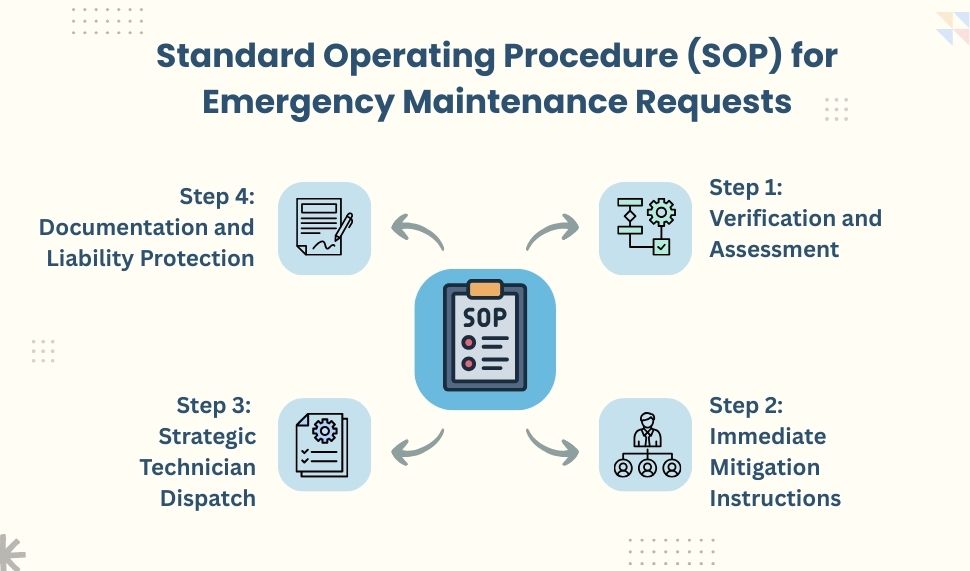
In a high-pressure maintenance crisis, you need to have a documented Standard Operating Procedure (SOP). It makes the difference between a controlled repair and a financial disaster. An SOP ensures that every emergency is handled with the same level of professional rigor, protecting your property’s value and your legal standing.
Follow these four critical steps to manage any emergency request like a professional property manager.
Step 1: Verification and Assessment
Before dispatching an expensive technician, you must verify the severity of the issue. Tenants in distress may describe a “flood” that is actually a minor sink leak. Verification prevents “nuisance” dispatches and ensures you send the right person for the job.
- Request Visual Evidence: Require your tenant to send timestamped photos or a short video of the problem via a portal or SMS.
- Ask Diagnostic Questions: Ask questions like “Is the water contained?” or “Is there a smell of gas?” to determine if the situation is life-threatening.
- Confirm Access: Ensure the tenant or a manager will be present to provide the technician with immediate entry.
Step 2: Immediate Mitigation Instructions
While help is on the way, the tenant must act as your “first responder” to minimize damage. Providing clear, calm instructions can stop a $500 repair from becoming a $5,000 restoration project.
- Water Emergencies: Instruct your tenant to turn off the main water shut-off valve or the local valve under the affected fixture.
- Gas/Fire Emergencies: Instruct your tenant to evacuate immediately and call 911 or the utility provider from outside the building.
- Electrical Hazards: Direct your tenant to flip the specific breaker in the electrical panel if it can be done safely.
Step 3: Strategic Technician Dispatch
Effective dispatching involves knowing the difference between a “specialist” and a “generalist.” For emergencies, you need licensed experts who offer 24/7 service and have the authority to pull permits or sign off on safety.
- Emergency Specialist vs. Handyman: Always call a licensed emergency plumber for burst pipes or a certified HVAC technician for furnace failures. Save the general handyman for non-critical tasks like fixing a cabinet door.
- The 24/7 Network: Maintain a “Short List” of at least two vendors for every major trade (Plumbing, Electrical, HVAC) to ensure coverage if your primary contact is unavailable.
Step 4: Documentation and Liability Protection
In the legal world, “if it wasn’t documented, it didn’t happen.” Detailed record-keeping is your best defense against future habitability claims or security deposit disputes.
- Maintain a Communication Log: Record the exact time the request was received, the time of dispatch, and the technician’s arrival time.
- Secure Post-Repair Documentation: Collect a digital invoice that details the “Cause of Failure” and the specific repairs performed.
- Tenant Follow-up: Send a confirmation email once the repair is complete, stating that the “emergency condition has been resolved” and asking the tenant to confirm the home is habitable.
How to Prevent Emergency Repair Situations?
The most effective way to manage emergency repairs is to ensure they never happen in the first place. We call this Asset Preservation. By shifting from a “reactive” to a “proactive” maintenance model, you can reduce middle-of-the-night phone calls by up to 70% and significantly improve your long-term ROI.
1. Implement a Seasonal Preventive Maintenance Schedule
Emergency failures often follow the seasons; furnaces fail on the first freeze, and AC units die on the first 90°F day. Implementing a biannual inspection allows you to catch these failures while the weather is mild and parts are readily available.
- HVAC Tune-ups: Schedule a professional “clean and check” every spring and fall. Replace filters quarterly to prevent motor strain.
- Gutter and Roof Clearing: Clean gutters every autumn. Clogged gutters lead to “ice damming” in winter and roof leaks during spring storms.
- Water Heater Flushing: Drain and flush the tank annually to remove sediment. This prevents heating element failure and extends the unit’s lifespan.
2. Leverage Smart Home Technology
Modern sensors act as a 24/7 digital “property manager” that can alert you to a problem before the tenant even notices a wet spot on the ceiling.
- Smart Leak Sensors: Place these inexpensive Wi-Fi devices under sinks, behind toilets, and near the water heater. They send an instant alert to your phone if moisture is detected.
- Smart Thermostats: These can alert you if the temperature in a vacant unit drops below a certain threshold, preventing frozen pipes during a winter vacancy.
- Connected Smoke/CO Detectors: These provide real-time status updates on battery life and operational health, ensuring you are always in compliance with safety codes.
3. Focus on Tenant Education
Your tenant is your eyes and ears on the ground. If they don’t know how to handle minor issues, those issues quickly escalate into emergencies.
- The Shut-Off Walkthrough: During move-in, physically show your tenant the main water shut-off valve and the electrical breaker panel.
- The “Do Not Flush” List: Explicitly list items that cause sewage backups (e.g., “flushable” wipes, grease, feminine products).
- Encourage Early Reporting: Make it clear that reporting a small “drip” today is better than calling about a “flood” tomorrow. You can even offer a small “maintenance incentive” for tenants who report minor issues promptly.
4. Proactive Component Replacement
Don’t wait for a “run-to-failure” event. Every major system in your rental has a predictable lifecycle. Replacing them slightly before they fail is always cheaper than an emergency restoration.
- Water Heater Replacement: If a tank is 10–12 years old, replace it proactively. A $1,200 replacement is much cheaper than a $10,000 floor restoration after a burst.
- Supply Line Upgrades: Replace plastic “standard” sink and toilet supply lines with braided stainless steel lines, which are far less likely to burst.
- Tree Trimming: Trim branches that hang over the roof or power lines. This prevents “Act of God” emergencies during high-wind events or ice storms.
Keep Your Property Safe from Unwanted Hazards
Navigating the complexities of emergency repairs is one of the most challenging aspects of being a landlord. By distinguishing between true crises and routine requests, you protect your cash flow while fulfilling your legal obligations. Ultimately, a well-executed maintenance strategy secures your property’s value and ensures long-term tenant retention.
However, managing 24/7 maintenance dispatches while staying compliant with Oklahoma’s habitability laws is a significant burden. One missed call or a delayed response to a burst pipe can result in thousands of dollars in structural damage or legal liabilities. Professional oversight is often the best insurance for your investment.
Don’t let your next maintenance emergency become a financial disaster. At OKC Home Realty Services, we specialize in comprehensive property management and maintenance for Oklahoma City landlords. We handle the 2:00 AM calls so you don’t have to. Contact us today for the maintenance of your rental portfolio and get the peace of mind you deserve.
Frequently Asked Questions About Emergency Maintenance
Is a broken AC considered an emergency?
In regions like Oklahoma, a broken air conditioner is an emergency if outdoor temperatures exceed 90°F. In moderate weather, it is considered an urgent repair but does not require an immediate, expensive after-hours dispatch for property habitability.
What temperature is considered an emergency maintenance request?
Maintenance emergencies are triggered when indoor temperatures cannot be maintained above 60°F during extreme cold (below 40°F outside) or when they exceed 85-90°F during heatwaves, posing significant health risks to your tenants.
Is a broken fridge a maintenance emergency?
Generally, a malfunctioning refrigerator is not a maintenance emergency. While it causes the inconvenience of food spoilage, it does not threaten the tenant’s safety or the building’s structural integrity. This should be handled during standard business hours.
Is a leaking toilet an emergency?
A leaking toilet is only an emergency if the water flow is active, uncontrollable, and risks immediate structural damage. If the leak can be contained or stopped by turning the local shut-off valve, it is a routine repair.
Is a clogged toilet a maintenance emergency?
A clogged toilet qualifies as an emergency only if it is the sole functioning toilet in the rental unit. If the property has a second bathroom, the repair is considered routine and can be scheduled during normal business hours.
Is not having hot water an emergency?
Yes, a complete lack of hot water is a violation of the Implied Warranty of Habitability. Access to hot water is legally required for bathing and sanitation, demanding a landlord’s response within 24 to 48 hours.