(
(



If you are a landlord, you may have dealt with damaged or even completely missing blinds in your rental property. It’s one of those things that seems small but can quickly turn into a dispute if nobody’s clear on the rules.
So, in such situations, who is responsible for blinds in a rental property? In most cases, landlords are responsible if you supplied the blinds with the property. If your tenant damages them through misuse or negligence, the responsibility shifts to them. However, your lease clause overrides default assumptions. It outlines clearly who is responsible and assigns maintenance duties to prevent disputes later.
I’ve been managing rentals in Oklahoma City for over 27+ years, and I’ve faced such issues multiple times. In this blog, I’ll guide you through clear scenarios for when you or your tenant is responsible for blinds. You will understand the major responsibilities for both sides, plus legal considerations and strong lease clauses that settle disputes before they start.
Do Landlords Have to Provide Blinds?
No, Landlords aren’t responsible for providing blinds for a rental property in the United States. There is no federal law mandating window coverings like blinds, and in most states, including Oklahoma, they are considered optional rather than essential habitability requirements. The law typically only requires that the windows themselves are structurally sound, weathertight, and able to open and close properly for ventilation and emergency egress. The decision to provide blinds or curtains is generally left to the landlord’s discretion, as they are considered decorative or privacy elements rather than necessities.
However, if a landlord chooses to install blinds, they must ensure they comply with safety regulations, such as cordless designs to prevent child strangulation hazards. While not legally required, many landlords opt to provide blinds as a practical measure to attract tenants, maintain a uniform appearance, and comply with any specific HOA rules. Tenants who want window coverings in a unit that doesn’t have them should check their lease agreement or discuss the possibility with their landlord, but ultimately, they may need to purchase and install their own after getting approval from the landlord.
Why Are Blinds Required in Rentals?
While you won’t find a specific law stating you must hang blinds, they make your rentals far more appealing and functional for tenants. Here are the major reasons why you need binds in your rentals:
Privacy and Security
Tenants expect a quiet enjoyment of their home, which includes the ability to enjoy their privacy in peace. Without blinds, tenants feel exposed to street views or neighbors, especially in ground-floor units or busy areas, leading to complaints.
Likewise, if a property is vacant and has no window coverings, it’s an open invitation for thieves or squatters to see that no one is home. Providing blinds blocks exterior visibility and ensures the property looks occupied while keeping your tenants’ belongings out of sight.
Light and Temperature Control
Blinds reduce sunlight exposure, which creates glare and heat buildup, raising cooling costs. Direct sunlight damages your hardwood floors, fades carpets, and peels the paint or wallpaper. Blinds block UV rays, keep rooms cooler, protects furnitures, and improve HVAC efficiency.
Better Property Presentation
A rental with blinds photographs better, rents faster, and attracts more qualified tenants. By providing uniform, clean blinds, landlord can control the aesthetic of their property and signal move-in ready condition with justified premium pricing.
When Is a Landlord Responsible for Blinds?
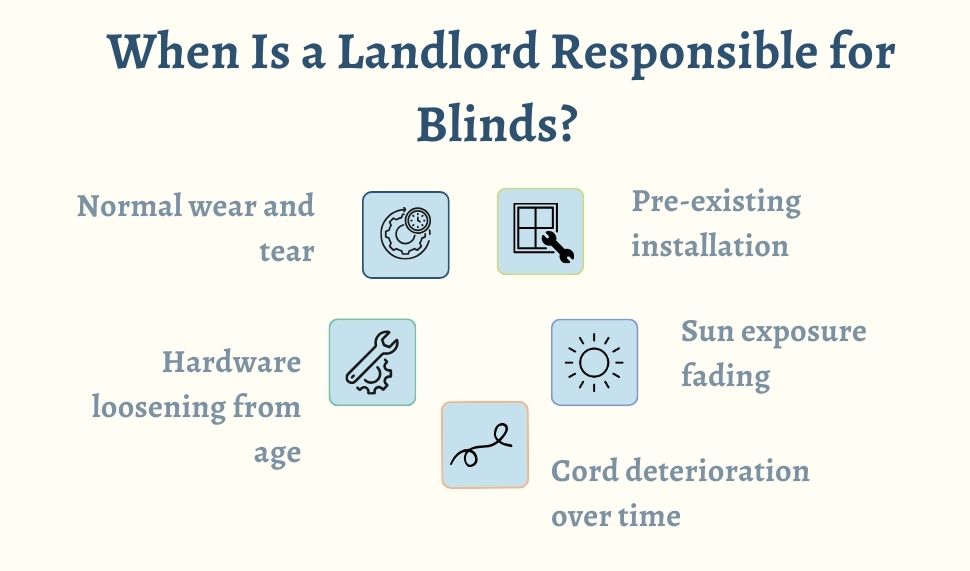
The landlord is responsible for blinds when they provide them with the rental property and list them in the lease or move-in inventory. Once blinds become part of the premises, they function as fixtures that require maintenance under standard landlord repair obligations. While the law does not specifically require blinds, courts generally treat provided window coverings as landlord-owned property. That means as a landlord, it becomes your responsibility to maintain the blinds unless the lease shifts responsibility to the tenant.
You are also responsible for blinds when damage results from:
- Normal wear and tear
- Pre-existing installation
- Sun exposure fading
- Cord deterioration over time
- Hardware loosening from age
If you provide the blinds, you are responsible for their upkeep and ensuring they are in good working order. Your responsibilities as a landlord regarding rental blinds include:
Maintaining Blinds Installed Before Tenant Occupancy
If you, as a landlord, provided the blinds as part of the rental, you’re responsible for keeping them functional. Since the blinds were there when the tenant signed the lease, they have a right to expect those blinds to remain functional throughout their stay. If you don’t keep them in working condition, you can be liable for the breach of the lease agreement.
Repairing Normal Wear and Tear
Normal wear and tear is the natural deterioration of the blinds that happens just by living in the home. You are responsible for normal wear and tear, like fading, fraying strings, or mechanisms that stick due to age. Because these issues aren’t caused by tenant abuse, it’s your responsibility for the repair or replacement costs, and you cannot deduct them from the security deposit.
Safety Compliance
You are responsible for ensuring window coverings meet Consumer Product Safety Commission (CPSC) guidelines, specifically regarding cord hazards. If slats break or cords become dangerous, they must be replaced promptly. Failure to provide safe window coverings could be viewed as a breach of the implied warranty of habitability, making you legally liable.
Replacing Defects
If you install brand-new blinds and they fail within just a few months, such as the lift cords snapping or the tilt wand stripping, this is typically a manufacturing defect. Because the product failed to meet its expected lifespan through no fault of the tenant, the cost of replacement falls on you.
Prompt Response
If you delay the repair, the tenant may have the right to repair and deduct the cost from their rent. This means they can hire a professional to fix the blinds and subtract that cost from their next rent payment. In most states, including Oklahoma, you need to fix non-critical repairs within 14 days of receiving a written repair request to prevent such headaches.
Periodic Inspections
The best way to protect yourself from disputes is to make blind checks a standard part of your property walk-throughs. It’s best practice to check the condition of all blinds during lease renewals or turnovers. Always take photos to document their state to prevent disputes over pre-existing damage.
When Is a Tenant Responsible for Blinds?
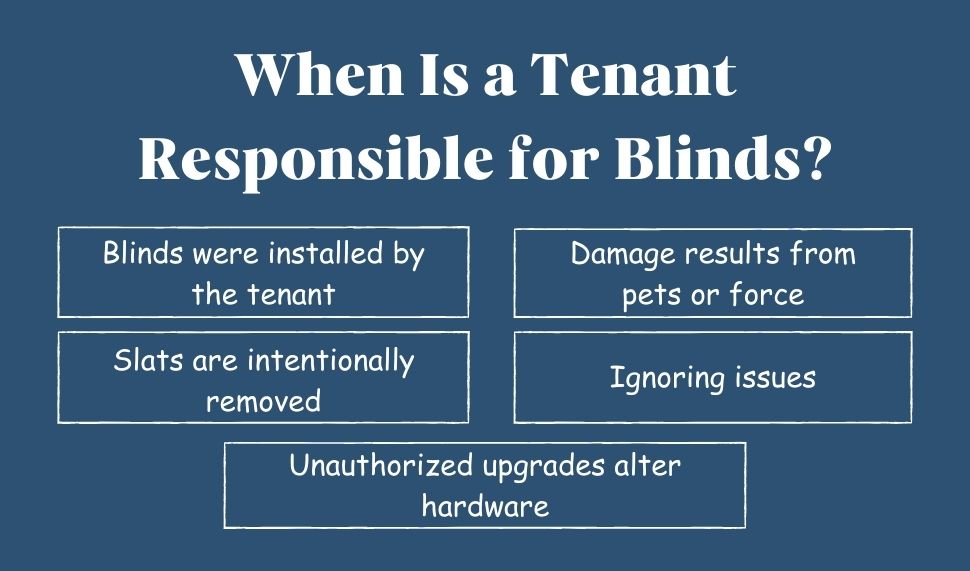
A tenant becomes responsible for blinds when the damage results from misuse, negligence, pets, or unauthorized alteration. For example, if a tenant’s pet chews slats, if children bend or snap panels, or if the tenant pulls mounting brackets from drywall, that damage exceeds normal wear. If a tenant returns the property with blinds that are shredded, bent, or missing, the cost of replacement typically comes out of their security deposit.
Tenant responsibility often applies when:
- Blinds were installed by the tenant
- Damage results from pets or force
- Slats are intentionally removed
- Unauthorized upgrades alter hardware
- Ignoring issues
Tenants have clear duties to keep rental blinds in good shape, focusing on reasonable care to avoid shifting costs back to you as the landlord. These responsibilities require them not to cause damage through negligence, and your lease terms that spell out expectations upfront. Here’s what the tenant must be responsible for:
Use Blinds in a Reasonable Manner
If the slats are bent, snapped, or have holes in them, that’s not wear and tear. Tenants must open and close blinds gently each day without slamming the slats together or overloading the mechanisms. Reckless handling, like peeking through the blinds without opening them, pulling on them too hard, or hanging objects from them, can cause quick breaks that fall on their responsibility.
Prevent Pet Damage
Tenants are required to keep pets like cats and dogs away from the blinds at all times, training them or using barriers if needed. Claw marks, chew holes, or tears in the vinyl from animal activity count as negligence and lead to full replacement deductions from their security deposit.
Avoid Excessive Force on Cords and SLats
Tenants should never yank cords with extra force to make blinds jam up faster, bend slats manually to force them into position, or tug aggressively during cleaning. Such actions inevitably cause snaps in the strings, permanent twists in the rails, or deformed slats that are classified as property damage rather than normal wear and tear.
Report Maintenance Issues Promptly
Tenants need to submit a written notice of any blind problems, such as loose rails or sticky tracks, within 7 days of noticing them. Failing to report allows minor wear to escalate into major structural damage, like fully snapped mechanisms or fallen blinds, which then become fully liable to pay for under both the lease terms and Oklahoma statutes.
Cover Repair Costs for Negligence-Related Damage
Tenants must fully pay for all repairs, cleaning, or complete replacements stemming from their careless or intentional actions, like punctures, deep scratches, or missing parts, through security deposit deductions.
No Unauthorized Changes
Tenants cannot remove, paint, drill into, shorten, or swap out the blinds in any way without obtaining your written approval in advance. They must return them to their exact original condition at the end of the lease term, accounting for normal wear only. If they violate this by making unauthorized alterations, they become responsible for all reinstallation and repair costs.
Tenant-Installed Blinds Removal
If tenants install their own blinds with your prior written permission, they must completely remove them at lease end and restore the windows to original condition, patching any holes or paint mismatches at their expense. They must remove their personal blinds and reinstall yours. If they leave their own blinds behind, or if the reinstallation of your original set is done poorly, you can charge them for the labor and repair required to return the window to its move-in state.
Are Landlords or Tenants Responsible for Repairing Broken Blinds?
Responsibility for repairing broken blinds depends on ownership, cause of damage, and lease language. If you installed the blinds and the damage results from normal wear and tear, you are typically responsible as the landlord. Blinds provided with the property function as fixtures, and fixtures fall under standard maintenance obligations of a landlord.
If the breakage results from tenant misuse, pets, excessive force, or unauthorized alterations, the tenant becomes financially responsible. The landlord-tenant law allows you to deduct repair costs from the security deposit when damage exceeds normal wear.
To understand who is liable, you must know how to distinguish between normal wear and tear vs property damage in your blinds in rental properties.
Normal Wear and Tear Vs. Tenant Damage for Rental Blinds
Normal wear and tear refers to gradual deterioration that occurs from ordinary, intended use. Time, sunlight, and everyday use naturally degrade window coverings, not tenant misconduct.
Tenant damage occurs when actions directly cause breakage beyond ordinary use. Force, neglect, pets, or improper handling create visible structural harm, which you should document, address in your lease, and, if necessary, deduct from the security deposit.
| Normal Wear & Tear | Tenant Damage |
| Fading or yellowing due to sunlight exposure. | Stains from food, grease, or nicotine smoke. |
| One or two slats cracking slightly due to age. | Multiple slats bent, snapped, or with teeth marks. |
| Fraying or snapping after 3+ years of daily use. | Cords cut, tangled by pets, or pulled out of the headrail. |
| Wand or pulley becoming sticky or loose over time. | Hardware ripped out of the wall or drywall. |
| Dusty or lightly soiled from normal living. | Excessive grime, sticky residue, or missing parts. |
| Small screw holes from the original professional install. | Large, unpatched holes from unauthorized curtain rods. |
How Does the Lease Agreement Define Blind Responsibility?
The lease agreement defines blind responsibility by assigning maintenance, repair, and replacement duties in writing. If your lease clearly states that blinds are landlord-owned fixtures, you retain repair responsibility for normal wear. If the lease shifts minor maintenance to the tenant, that clause governs daily upkeep.
I always tell landlords that the lease controls the outcome more than assumptions do. A strong lease enforces written terms so the responsibilities are clear, preventing vague state defaults and disputes in the future.
A strong lease should:
- Identify blinds as included fixtures
- Define normal wear and tear vs property damage
- Assign liability for negligence or misuse
- Clarify security deposit deductions
- Prohibit unauthorized alterations
Professional property management companies standardize these clauses to protect owners from recurring small-loss maintenance issues.
What Does Oklahoma Landlord-Tenant Law Say About Window Coverings?
Oklahoma doesn’t have a law that specifically calls out blinds or window coverings by name, but that doesn’t mean you’re off the hook as a landlord. Under the Oklahoma Residential Landlord and Tenant Act, landlords are required to maintain rental properties in a habitable condition, and window coverings, when they contribute to privacy and basic livability, can fall under that umbrella.
Once you provide blinds and include them in the rental agreement, they become part of the premises you must maintain under Section 118 of the Act. On the flip side, Oklahoma law also requires tenants to keep the premises clean and safe. If a tenant’s negligence causes the damage, the law is on your side to charge them for it.
How Professional Property Management Handles Blinds Maintenance?
The answer to who is responsible for blinds in a rental property always comes down to three factors: who supplied the blinds, what caused the damage, and what your lease says. In most cases, you, as the landlord, handle normal wear and tear for blinds you installed, while the tenants cover damage caused by misuse, carelessness, or negligence. The lease agreement ultimately controls enforcement, and documentation determines whether you win or lose a deposit dispute.
Navigating who pays for what in your rental business can be a headache, but you don’t have to do it alone. With OKC Home Realty Services, you never have to wonder who’s responsible for what because we make sure it’s all spelled out and enforced from the start. We document blind conditions during move-in and move-out inspections, apply consistent wear-and-tear standards, coordinate licensed vendors for repairs, and enforce lease terms objectively. That system protects your rental income and reduces friction with tenants.
Ready to stop second-guessing over damaged blinds? Contact us today to see how our full-service property management can take the stress off your plate.
FAQs: Who Is Responsible for Blinds in a Rental Property?
Is blind damage considered normal wear and tear in a rental?
It depends on the type of damage. Fading, minor warping, or a frayed cord from everyday use, that’s normal wear and tear and falls on the landlord. Broken slats, missing blinds, or pet damage are tenant damage and can be deducted from the security deposit.
Can a tenant install their own blinds without the landlord's permission?
No, not without written approval. Most leases prohibit alterations. Installing blinds requires consent because drilling, mounting, or replacing fixtures affects property condition and liability.
Should a landlord pay for blinds?
A landlord pays for blinds if they provide them with the property, and damage results from normal wear. If tenants cause the damage, tenants pay for the repair or replacement.
How often do landlords replace blinds?
The average useful life for rental-grade blinds is about 3 to 5 years. As a general rule, if they’re visibly worn, faded, or malfunctioning between tenancies, it’s time to replace them before your next tenant moves in.
Are blinds real or personal property?
Once they are screwed into the window frame or wall, they are generally considered real property (fixtures). This means they belong to the property and must stay when the tenant moves out, unlike curtains, which are often considered personal property.
Can a landlord deduct broken blinds from the security deposit?
Yes, but only if you can prove the damage was caused by the tenant and goes beyond normal wear and tear.