(
(

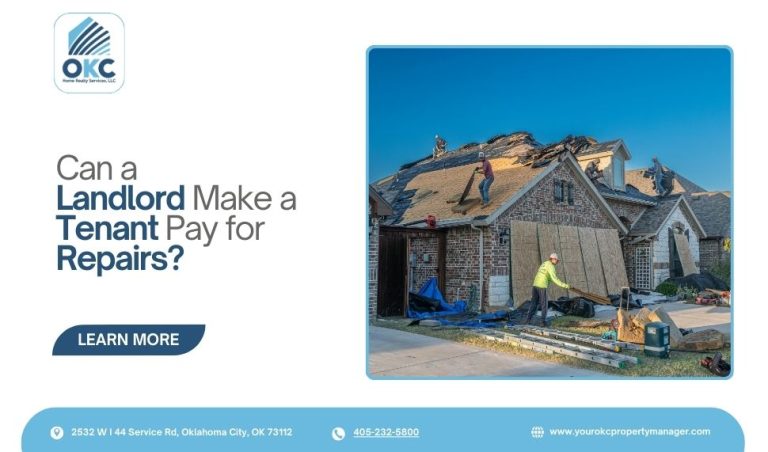

One small repair can quickly turn into a legal problem if you don’t know where responsibility actually begins and ends.
After more than 27+ years of hands-on rental property management in Oklahoma City and surrounding metro areas, one question comes up more than almost any other, from new landlords and seasoned investors alike:
Can a landlord make a tenant pay for repairs?
The honest answer is sometimes, but not always. And the difference matters more than most landlords realize.
In practice, repair responsibility is not decided by opinion or convenience. It depends on the cause of the problem, the condition of the property, the lease terms, and, most importantly, state and local landlord-tenant laws. When these rules are misunderstood or misapplied, the result is often withheld rent, tenant disputes, failed inspections, or costly legal action.
Over the years, we’ve seen many well-intentioned landlords lose money, not because they ignored maintenance, but because they relied on incorrect assumptions about what tenants can legally be charged for and what lease language actually holds up.
In Oklahoma and across the United States, landlords have a legal duty to maintain safe and habitable housing. At the same time, tenants can be held financially responsible for damage they cause through negligence, misuse, or unauthorized changes. Knowing where that line is and documenting it properly protects both your property and your income.
In this guide, I have explained the rules, backed by real-world property management experience and established landlord-tenant law principles. You’ll learn:
- When landlords are legally required to pay for repairs
- When tenants can be charged without violating the law
- How Oklahoma landlord-tenant laws differ from general U.S. standards
- What common repair disputes look like in real life and how to avoid them
Let’s dive in.
Can You Make a Tenant Pay for Repairs and Why It Matters
Yes, you can make tenants pay for repairs, but only in very specific situations.
You’re probably dealing with repair requests constantly and wondering which ones you can pass along to your tenant. It’s one of those gray areas that can make or break your rental business, so let’s clear it up.
As a landlord, you can require a tenant to pay for repairs when:
The tenant caused the damage
The damage goes beyond normal wear and tear
The lease clearly allows it
State and local laws permit it
You cannot charge a tenant for:
- Normal wear and tear
- Repairs related to habitability
- System failures caused by age or poor maintenance
- Issues the landlord is legally required to fix
In Oklahoma and most U.S. states, habitability always comes first, no matter what the lease says.
Recommended: Do property managers pay for repairs
Why This Matters More Than You Think
Here’s the reality: repairs eat up 15-25% of your gross rental income every year, according to the U.S. Census Bureau’s Rental Housing Finance Survey. For older properties, that percentage climbs even higher. When you’re looking at thousands of dollars annually, every repair decision matters.
Get this wrong, and you’re just losing money, you’re risking legal trouble. Violating landlord-tenant laws can lead to fines, lawsuits, and, in some cases, losing your right to collect rent entirely. Your reputation as a landlord suffers, too, making it harder to attract quality tenants down the line.
The key is understanding exactly where that line sits between tenant responsibility and landlord obligation, because that’s where your profitability lives.
The Legal Foundation: Your Non-Negotiable Responsibilities
Before you even think about charging tenants for repairs, you need to understand what’s legally carved in stone. There’s a fundamental principle that governs every rental relationship, and it can’t be waived or negotiated away.
The Foundation You Can’t Ignore
Every state recognizes something called the Implied Warranty of Habitability, think of it as your basic promise that the place you’re renting is actually livable. This warranty exists whether your lease mentions it or not, and it covers four core requirements: your rental must be safe, sanitary, structurally sound, and genuinely fit for human living.
In Oklahoma, this falls under the Oklahoma Residential Landlord and Tenant Act (ORLA), but similar protections exist nationwide. The specific details might vary by state, but the core principle remains the same everywhere.
Your Non-Negotiable Maintenance List
When it comes to habitability, certain systems and features are always your responsibility as the landlord. The plumbing needs to work properly, the electrical system has to be safe and functional, and the heating system must operate as intended. If you provided cooling when the tenant moved in, that’s your responsibility too.
You’re also on the hook for hot water, maintaining the roof and structural elements, and ensuring doors, locks, and windows function properly. Smoke detectors fall under your responsibility in most jurisdictions, and you’re responsible for keeping common areas in good condition.
Here’s the crucial part: when these systems fail due to normal use, aging, or regular wear, you pay for the repairs. You cannot transfer these responsibilities to your tenant, even if they sign a lease agreeing to it. Courts will typically void any lease clause that attempts to shift habitability responsibilities to tenants, because these protections exist to prevent exactly that kind of arrangement.
This isn’t about being fair or unfair; it’s about legal reality. Understanding these boundaries helps you make smarter decisions about which repairs you can legitimately charge back to tenants.
When Can You Make a Tenant Pay for Repairs?
This is the part most landlords really want to understand and where the law actually allows you to recover costs.
In Oklahoma and across the U.S., a landlord can legally make a tenant pay for repairs only when the damage is caused by the tenant, not by normal use, age, or system failure.
Below are the most common situations where charging a tenant is typically allowed.
1. The Negligence
Negligence means the tenant failed to use the property reasonably or responsibly, or failed to report a known issue in a timely manner.
Common examples include:
- Letting a known plumbing leak continue without reporting it
- Repeatedly overflowing sinks, tubs, or toilets
- Ignoring basic care instructions that led to damage
- Allowing a small issue to become major due to inaction
If a minor problem turns into expensive damage because the tenant failed to act, the tenant may be financially responsible for the resulting repairs.
2. Tenant Misuse and Abuse
This goes beyond accidents and involves careless, reckless, or intentional behavior.
Examples include:
- Holes punched in walls
- Broken doors from slamming or kicking
- Cracked countertops from improper use
- Broken windows caused by rough behaviour
- Appliances damaged by misuse
A common point of confusion is whether landlords are responsible for appliances that the tenant broke. While landlords typically handle repairs for mechanical failure due to age, this type of damage is not considered normal wear and tear. In cases of misuse or abuse, landlords are generally allowed to charge tenants for these repairs or the cost of replacement.
3. Unauthorized Alteration and Repairs
Tenants are not allowed to alter or repair the property unless the lease clearly permits it.
Chargeable tenant-caused damage often includes:
- DIY plumbing or electrical work
- Poorly installed shelves, TVs, or fixtures
- Removing or altering appliances
- Painting, flooring, or wall changes without approval
If something breaks or fails because the tenant made an unauthorized change, the cost of fixing it can legally be passed on to the tenant.
4. Lease-Assigned Minor Maintenance Duties (When Legal)
In Oklahoma and many other states, landlords may assign minor maintenance responsibilities to tenants but only under specific conditions.
Common examples include:
- Replacing light bulbs
- Changing HVAC air filters
- Yard care or lawn maintenance for single-family homes
- Snow or ice removal (in states where applicable)
For these charges to be enforceable:
- The duties must be clearly and specifically written in the lease
- The responsibilities must be reasonable
- They cannot affect habitability or safety
- The assignment must be allowed under state law
If these conditions are not met, landlords may not be able to legally charge tenants for the work.
Wear and Tear vs. Damage: The Biggest Source of Repair Disputes
This is where most landlord-tenant disagreements begin, and where many landlords lose money if they get it wrong.
Understanding the difference between normal wear and tear and tenant-caused damage is critical when deciding whether repair costs can legally be passed on to a tenant.
What Is Normal Wear and Tear?
Wear and tear refers to the natural, expected deterioration of a rental property from everyday use over time, even when the tenant takes reasonable care of the home.
Common examples include:
- Faded or worn paint
- Light carpet wear in high-traffic areas
- Loose cabinet handles or hinges
- Small nail holes from hanging pictures
Landlords cannot legally charge tenants for normal wear and tear. These costs are considered part of owning and maintaining a rental property.
What Counts as Tenant-Caused Damage?
Tenant damage is avoidable, excessive, or careless harm that goes beyond normal use.
Examples include:
- Large stains, burns, or tears in carpet
- Broken or cracked tiles
- Missing or damaged fixtures
- Pet urine damage or strong odors
- Cracked or broken appliances caused by misuse
In these situations, landlords are generally allowed to charge tenants for the cost of repairs or replacement, as long as the charges are reasonable and well-documented.
Why Depreciation Matters
Courts don’t just look at what was damaged; they also consider how old the item was at the time of damage.
Every component of a rental has a useful life.
For example:
- Average carpet lifespan: about 7 years
- If a tenant damages a 6-year-old carpet, the landlord cannot charge for full replacement
- The tenant can only be charged for the remaining value, not a brand-new item
This depreciation principle is widely recognized across the U.S., including in Oklahoma, and it often plays a key role in security deposit disputes.
Can a Lease Force a Tenant to Pay for All Repairs?\
The short answer: No. This is one of the most common and costly myths in rental property ownership.
Many landlords include broad clauses such as:
“The tenant is responsible for all repairs.”
While this language may sound protective, it often fails in court and can even create legal risk for the landlord.
Why These Clauses Don’t Hold Up
Courts routinely reject “all repairs” clauses for several key reasons:
- Habitability duties cannot be waived
Landlords are legally required to maintain safe and livable housing, regardless of lease wording.
- Tenant safety takes priority
Courts consistently favor health and safety over private contract terms.
- State law overrides lease language
If a lease conflicts with landlord-tenant law, the law controls, not the lease.
As a result, these clauses may be considered:
- Unenforceable
- Invalid
- Void under state law
What Oklahoma Law Allows (and Doesn’t)
In Oklahoma, leases can assign limited responsibilities to tenants, such as minor upkeep or routine maintenance, but only when:
- The duties are clearly written
- They are reasonable
- They do not affect habitability or safety
Landlords cannot transfer core maintenance duties, including:
- Plumbing systems
- Electrical systems
- Heating and cooling
- Structural elements
- Health or safety repairs
Even with a signed lease, these responsibilities remain with the landlord.
Security Deposits and Repair Costs
Can a Landlord Deduct Repair Costs From the Security Deposit?
Yes, but only if the damage was caused by the tenant and the process is handled correctly.
In Oklahoma and in most U.S. states, landlords are allowed to use the security deposit to cover certain costs after a tenant moves out. However, strict rules apply.
What Oklahoma Allows Landlords to Deduct For
Under Oklahoma law, landlords may deduct security deposit funds for:
- Unpaid rent
- Damage beyond normal wear and tear
- Cleaning that goes beyond normal use
Normal wear and tear, such as faded paint or lightly worn carpet, cannot be deducted, even if repairs are needed.
Oklahoma Security Deposit Rules
To make a deduction legally enforceable, landlords must:
- Provide an itemized written statement explaining each deduction
- Ensure all charges are reasonable and supported by evidence
- Send the statement and any remaining deposit within 45 days of move-out
Failing to follow these requirements can force a landlord to return the entire security deposit, even when real damage exists.
Best Practices for Deposit Deductions
Whether you manage one property or many, these steps significantly reduce disputes:
- Take clear move-in and move-out photos or videos
- Use written inspection checklists
- Keep repair invoices and estimates
- Provide detailed, itemized statements
- Follow state deadlines exactly, no exceptions
Courts and housing agencies focus as much on procedure as they do on damage itself.
How Smart Landlords Protect Themselves
Experienced landlords know that most repair disputes are preventable. Clear expectations, good documentation, and quick action do more to protect your rental income than any lease clause alone.
Here are the best practices smart landlords, especially in Oklahoma, consistently follow.
1. Use Clear, Specific Lease Language
Avoid vague phrases like “tenant handles repairs.” These often create confusion and don’t hold up well in disputes.
- Instead, clearly spell out:
- Tenant maintenance duties (such as changing air filters)
- Responsibility for tenant-caused damage
- Maintenance reporting requirements and timelines
- Consequences for misuse, neglect, or unauthorized alterations
The clearer the lease, the fewer arguments later.
2. Document Everything
Documentation is one of the strongest protections a landlord has. In most disputes, the landlord with better records wins.
Best documentation practices include:
- Move-in photos or videos
- Move-out inspections
- Ongoing maintenance logs
- Repair invoices and estimates
- Written notices and communication
Good Records Turn Opinions into Evidence.
3. Responds to Repair Requests Promptly
Delaying Repairs almost always works against the landlord.
Slow responses can:
- Shift liability back to you
- Justify tenant rent withholding in some situations
- Lead to code violations or legal exposure
Prompt repairs protect both the property and your legal position.
4. Educate Tenants at Move-in
Many costly repairs happen simply because tenants don’t know what to do or what not to do.
At move-in, show tenants:
- How to report maintenance issues properly
- What should never be flushed or poured down drains
- How to shut off water in an emergency
- Basic steps to prevent common damage
Preventing damage is almost always cheaper and easier than fixing it later.
The Rule Smart Landlords Follow
Here’s the simplest rule:
If the property broke because it aged, failed, or wore out, the landlord pays.
If it broke because the tenant misused it, the tenant pays.
Trying to push illegal repair costs onto tenants often costs more than the repair itself.
The most profitable landlords don’t fight the law; they work with it, write better leases, and manage repairs strategically.
If you manage rentals in Oklahoma or anywhere in the U.S., understanding repair responsibility is one of the best ways to protect your cash flow and your peace of mind.
Maximize Your Rental Income with Hassle-Free Property Management
Request a Service →FAQs
Can You Bill a Tenant Directly for Repairs?
Yes, in some situations. A landlord can bill a tenant directly for repairs only when the tenant caused the damage through negligence, misuse, or unauthorized alterations and the charges are reasonable and well documented. However, landlords cannot force payment by shutting off utilities, locking tenants out, or withholding essential services. If a tenant refuses to pay, the usual options are deducting the cost from the security deposit, billing the tenant after move-out, or pursuing the amount through small claims court.
What Are “Repair and Deduct” Laws?
“Repair and deduct” laws allow a tenant, in limited situations, to fix a serious repair issue themselves and subtract the cost from their rent. These laws usually apply only when the problem affects habitability, the tenant has given proper written notice, and the landlord fails to make the repair within a reasonable time. The tenant must follow strict rules, including using a qualified repair person and providing receipts. Not all repairs qualify, and the amount that can be deducted is often capped by state law.

Author
Scott Nachatilo is a licensed real estate broker and Certified Property Manager with over 27+ years of experience in Oklahoma’s real estate market. He holds a Master’s Degree in Geology from the University of Missouri and is a proud NARPM member. He is also a co-author of Weekend Warriors Guide to Real Estate (2006). Scott founded OKC Home Realty Services to help landlords and investors across Oklahoma City maximize their returns and enjoy a stress-free property ownership experience.