(


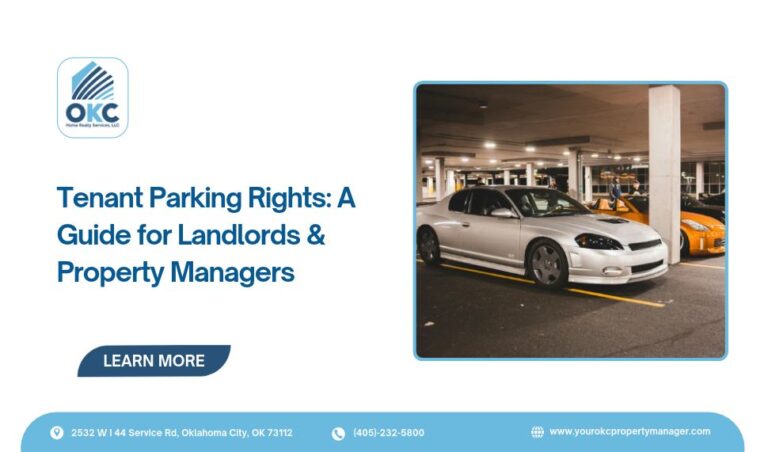

Tenant parking rights depend on what the lease promises, the parking arrangements the landlord provides, and applicable laws. Landlords should clarify whether parking is included, assigned to specific tenants, or shared under property rules.
What happens when a tenant claims a parking space belongs to them, another vehicle blocks it, or you need to change the arrangement? Without clear terms, a simple parking issue can turn into a dispute over what the lease allows.
I’ve spent more than 27 years in property management. At OKC Home Realty Services, we help Oklahoma City landlords manage their rental properties. In this guide, I’ll explain what to include in a parking policy, when changing a parking arrangement can create problems, and how to handle disputes before they become bigger issues.
What Are Tenant Parking Rights?
Tenant parking rights describe the parking privileges a landlord agrees to provide as part of a rental arrangement. The lease may guarantee an assigned parking space, allow access to a shared parking lot, or include a garage or carport. These terms help determine a tenant’s right to use a particular area.
Do landlords have to provide parking? Not necessarily. A landlord may offer a property without dedicated parking, but the situation changes if the rental agreement promises a space or includes parking as part of the tenancy. Public street parking also differs from private parking on the property because the landlord generally cannot guarantee a public space.
Before advertising a property or signing a lease, specify whether parking comes with the rent, requires an additional fee, or depends on availability. If you use a separate parking agreement or parking addendum, make sure its terms match the lease and explain any restrictions. Clear wording helps you manage expectations before a dispute over parking privileges arises.
What Should Landlords Include in a Parking Policy?
Put parking rules in writing so tenants know what they can use, what parking costs, and which restrictions apply. Include the key terms in the lease or use a parking addendum to explain assignments, permits, and enforcement procedures. Keep both documents consistent.
Five Parking Rules Every Landlord Should Clarify
A clear parking policy helps prevent disputes and keeps shared spaces organized. Here are the five parking rules every landlord should clarify:
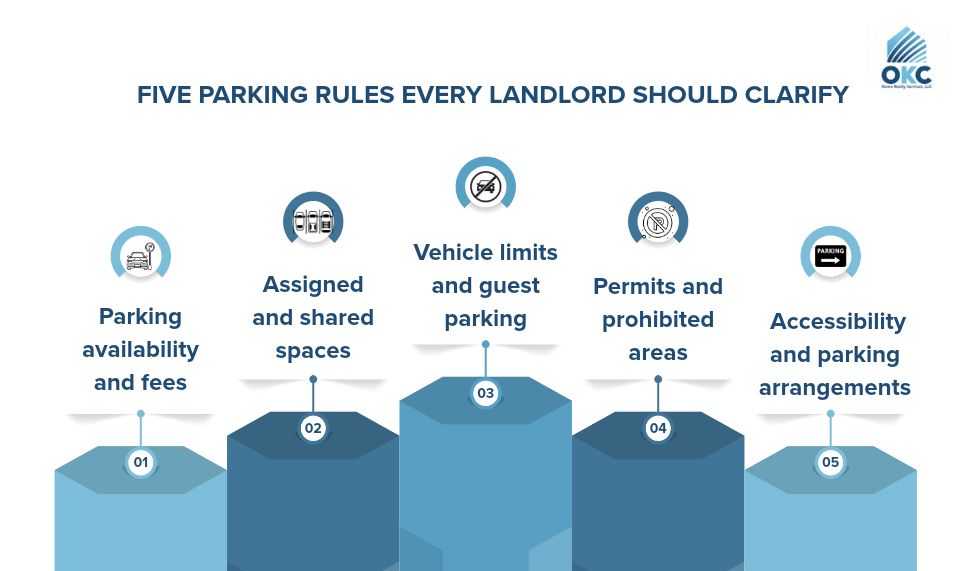
1. Parking availability and fees
State whether parking is included in rent, costs extra, or is unavailable. If you advertise free parking on premises, clarify whether tenants receive a guaranteed space or use spots as they become available.
2. Assigned and shared spaces
Identify each assigned tenant parking space by number or location. For shared or unassigned parking, explain how tenants use available spots and whether first-come, first-served rules apply.
3. Vehicle limits and guest parking
Specify how many vehicles each household may register and whether tenants must provide vehicle details. Explain where guests can park, whether they need a pass, and what restrictions apply to overnight visits.
4. Permits and prohibited areas
Explain how tenants obtain and display parking permits. Identify areas that must remain clear, such as fire lanes and access routes, and outline how you handle violations. Check applicable requirements before arranging towing.
5. Accessibility and parking arrangements
Give tenants a clear way to request accessible parking accommodations. A tenant with a disability may need a designated space near their unit, even where parking is usually unassigned. Evaluate requests individually under applicable fair housing requirements.
Review the policy when parking arrangements or lease terms change. Clear written rules give you a reference point when tenants question fees, challenge assignments, or report violations.
Can a Landlord Take Away a Parking Space?
You may be able to change a parking arrangement, but check the lease first. If you promised a tenant an assigned parking spot or included parking in the rent, permanently removing that benefit could change the terms of the tenancy.
Under Oklahoma Statutes § 41-126(B), a rule or regulation adopted after the rental agreement begins is not enforceable if it substantially modifies the tenant’s bargain unless the tenant consents in writing. Whether removing a parking space meets that standard depends on the agreement and circumstances.
A temporary closure for repairs differs from permanently removing a promised space. Explain the reason for the closure, communicate the expected duration, and consider alternatives. Before making a permanent change, review the lease and any parking addendum, along with applicable Oklahoma landlord-tenant laws. If the change reduces a benefit the tenant was promised, seek written agreement rather than assuming you can make the change unilaterally.
How Can Landlords Prevent and Resolve Parking Disputes?
Handle parking complaints promptly, check the facts, and apply your written rules consistently. A tenant using the wrong assigned parking spot or a guest blocking another resident’s space may need a different response, so investigate before deciding what to do.
Use this checklist to keep your decisions clear and documented:
- Record assigned spaces and violations: Keep an updated parking-space list and note reported incidents.
- Investigate complaints: Verify the space assignment, vehicle details, and circumstances before taking action.
- Communicate in writing: Explain the relevant parking rule and your decision to the tenants involved.
- Check requirements before enforcement: Verify applicable laws and procedures before arranging towing or imposing penalties.
- Keep complete records: Save notices, tenant communications, evidence, and the outcome of each dispute.
Can you sue an apartment complex for no parking? A tenant may have grounds for a claim if the landlord fails to provide parking promised in the lease or agreement. However, the outcome depends on the contract, circumstances, applicable law, and any losses the tenant can establish.
Consistent documentation helps you explain your decisions if a disagreement escalates into a broader landlord-tenant dispute. Oklahoma landlords should also understand which state and local parking requirements may affect enforcement.
What Should Oklahoma Landlords Know About Parking Rules?
Before enforcing parking rules, check the property’s location, zoning requirements, lease terms, and any applicable HOA restrictions. Oklahoma City has specific off-street parking standards, but requirements can depend on the property’s use and zoning. Landlords in other municipalities should check their local codes rather than assume Oklahoma City rules apply.
Also, distinguish private-property parking notices from official city citations. Oklahoma City explains the difference: private notices involve private contractual matters, while official city parking citations follow a municipal process.
If you manage an apartment complex or a property with shared parking, confirm that your arrangements comply with applicable requirements and community restrictions. When you’re unsure, verify the rules with the relevant city department before changing parking access or enforcing a disputed restriction.
Conclusion
Clear lease terms and practical parking policies help landlords set expectations and handle disputes fairly. When questions about tenant parking rights arise, review the agreement, document decisions, and check applicable Oklahoma requirements before changing parking arrangements or enforcing restrictions.
If you need help managing parking rules alongside your other property responsibilities, contact OKC Home Realty Services. With more than 15 years of local property management experience, our team can help you manage your Oklahoma City rental property with clearer expectations and fewer avoidable disputes.
Frequently Asked Questions
Are Landlords Responsible for Theft or Damage to Tenant Vehicles?
Not automatically. A landlord’s responsibility depends on the circumstances, including who controlled the parking area, whether the landlord acted negligently, and whether that conduct caused the loss. Review the facts and applicable law before deciding responsibility. A lease disclaimer does not automatically eliminate liability in every situation.
Can Tenants Perform Vehicle Repairs in Shared Parking Areas?
Only if the lease and property rules allow the work. Landlords can establish reasonable restrictions on repairs that cause oil or coolant spills, excessive noise, or disruption to other residents. If a repair could damage the parking surface or interfere with shared-space use, ask the tenant to arrange repairs elsewhere, subject to the lease and applicable requirements.
Can Landlords Reserve Parking Spaces for Contractors or Maintenance Workers?
You can plan parking for contractors, but consider existing tenant agreements before reserving spaces. If maintenance requires temporary parking restrictions, explain why the change is needed, which spaces are affected, and how long the restriction may last. Offer alternatives when practical, and check the lease and applicable requirements before restricting a space promised to a tenant.
May a Tenant Sublet or Transfer an Assigned Parking Space?
A tenant should check the lease and parking addendum before attempting to sublet an assigned parking space or letting someone else use it. If the agreement restricts transfers or requires approval, follow those terms before authorizing another vehicle. Clear rules help landlords maintain accurate space assignments and prevent unauthorized parking.