(
(


When you’re reading a lease, the terms “lessor” and “lessee” can make a simple rental agreement sound more complicated than it is. The difference between lessor and lessee comes down to who provides the property and who receives the right to use it. The lessor grants that right, while the lessee receives it under the lease terms.
In a typical residential rental, the lessor is the landlord or property owner, and the lessee is the tenant. Understanding those roles helps when questions come up about rent, repairs, property use, or other lease responsibilities. From managing Oklahoma City rental properties, we know that knowing who holds each role can make a lease much easier to understand.
The terms become even clearer when you see how they work in an actual lease. Here’s how to tell the two parties apart and understand what their agreement requires.
What Is the Difference Between a Lessor and Lessee?
The simplest way to tell them apart is to look at what each party receives from the lease. The lessor grants the right to use the property, while the lessee receives that right and agrees to the lease terms.
Think of a typical Oklahoma City rental home. The property owner or landlord acts as the lessor, while the person renting the home acts as the lessee. The lessor retains the ownership interest, and the lessee receives possession and use of the home for the agreed lease term.
| Lessor | Lessee |
| Grants the right to use the property | Receives the right to use the property |
| Typically the landlord or property owner | Typically the tenant |
| Usually receives rent | Usually pays rent |
| Retains ownership or the underlying property interest | Holds the right to possess and use the property |
| Enters the lease as the party granting the lease | Enters the lease as the party receiving the lease |
Ownership vs. Right to Use
The easiest way to keep the terms straight is to separate ownership from use. A tenant can have the right to live in a house for the agreed lease term without owning it, while the landlord can retain ownership without occupying the property.
The lease establishes the contract relationship between the two parties and sets the conditions under which the lessee can use the premises.
Who Pays and Who Receives Rent?
The lessee normally pays rent according to the lease agreement, and the lessor receives that payment. The amount, due date, payment method, and other financial terms should come directly from the lease rather than assumptions about what landlords or tenants usually do.
But here’s where the terminology becomes more useful: lessor and lessee do not always mean the same thing as “owner” and “renter” in every type of lease. The parties can be individuals, businesses, or other legal entities, and the lease can cover residential or commercial property.
What Is a Lessor?
A lessor is the party that leases property to another party under a lease agreement. In real estate, the lessor is commonly the landlord or property owner who has the authority to lease the property and enter into the agreement.
If you’re wondering who the lessor is in a lease agreement, look at the party identified as granting the right to use the property. That party can be an individual, company, or other legal entity.
Is the Lessor the Landlord?
In a typical residential rental, yes. The landlord who leases a house or apartment to a tenant is generally the lessor. “Landlord” is the everyday real estate term, while “lessor” is the contractual term used in the lease.
There is one detail worth checking, though: the person signing as the lessor should have the authority to lease the property. This matters when a property is owned by a company, managed by another party, or leased through a representative.
And one small spelling difference can confuse. “Lessor” and “lesser” do not mean the same thing. Lessor identifies a party to a lease, while lesser means something lower, smaller, or less significant.
What Is a Lessee?
A lessee is the person or entity named in a lease as the party receiving the right to use the property. In a residential rental, the lessee is typically the tenant who agrees to the terms of the lease.
Is the Lessee the Tenant?
Yes. In a typical residential lease, the lessee is the tenant. “Tenant” is the common real estate term, while “lessee” is the formal term often used in the lease agreement.
The lessee does not own the property simply by signing the lease. Instead, the agreement establishes their right to occupy and use the premises under its terms.
The same concept applies to commercial leasing. A business can be the lessee when it leases space, just as an individual can be the lessee of a home. When reviewing a lease, check who is identified as the lessee so you know which person or entity holds that contractual role.
What Are the Roles and Responsibilities of a Lessor and Lessee?
The lessor and lessee have different responsibilities, but the exact duties depend on the lease agreement and applicable law.
Lessor’s Role and Responsibilities
The lessor generally must:
- Provide the property according to the lease terms.
- Meet applicable maintenance, safety, and habitability requirements.
- Complete repairs that fall under the lessor’s responsibility.
- Follow the lease and applicable landlord-tenant requirements.
- Respect the lessee’s rights during the tenancy.
- Collect rent according to the agreed terms.
Lessee’s Role and Responsibilities
The lessee generally must:
- Pay rent as required by the lease.
- Use the property for the permitted purpose.
- Take reasonable care of the premises.
- Report maintenance or property issues promptly.
- Follow property rules and lease requirements.
- Obtain approval before making alterations when the lease requires it.
- Return possession according to the lease terms.
Here’s where things can get less obvious: a responsibility that seems standard may change depending on the wording of the lease or the law that applies. Before assuming who handles a particular obligation, check the written agreement.
How Does a Lease Agreement Define Lessor and Lessee Responsibilities?
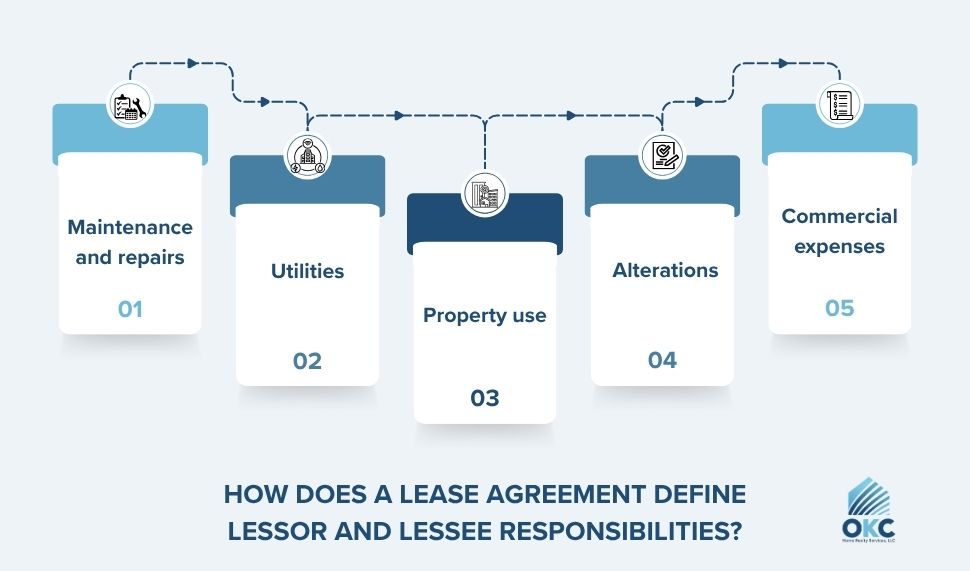
A lease agreement puts the agreed obligations of the lessor and lessee in writing. General landlord-tenant rules may establish certain requirements, while the lease explains how those responsibilities apply to the particular property.
Look for clauses covering:
- Maintenance and repairs: The lease can identify who handles routine tasks, reports problems, or pays for certain work, subject to applicable law.
- Utilities: It can state which party sets up, pays, or maintains each utility account.
- Property use: The agreement can establish occupancy limits, permitted uses, pets, or other property rules.
- Alterations: Painting, fixtures, renovations, or other changes may require the lessor’s written approval.
- Commercial expenses: A commercial lease may assign expenses such as maintenance, taxes, insurance, or common-area costs differently from a typical residential lease.
The key is not to assume that a responsibility follows the title “landlord” or “tenant” alone. Read the actual lease terms alongside the applicable law. If the two conflict, the law can limit what the lease may require.
Lessor vs. Lessee in Oklahoma Rental Agreements
For Oklahoma rentals, the same lessor and lessee distinction applies, but the lease must also be read alongside Oklahoma landlord-tenant requirements.
If you are reviewing an Oklahoma lease, focus on what the agreement actually requires and whether those terms comply with applicable law. Clear language about rent, property use, maintenance, and other lease conditions can help both parties understand their obligations and avoid unnecessary disputes.
Lessor and Lessee Examples in Real Estate
A simple real-world example can make the lessor and lessee roles easier to recognize in different leasing situations.
Residential Rental Example
Suppose Maria owns a house and leases it to James. Maria is the lessor, and James is the lessee. Their lease states the rent, lease term, and each party’s obligations.
Commercial Lease Example
A business leases a storefront from a property owner. The owner is the lessor, and the business is the lessee. The commercial lease may assign rent, operating expenses, and maintenance differently, so both parties should follow its specific terms.
What Should You Check Before Signing a Lease?
Before signing, use this quick checklist to make sure the agreement clearly identifies your rights and obligations:
- Lessor and lessee: Are the correct legal names or entities listed?
- Property: Is the property and permitted use clearly identified?
- Lease term: Are the start date, end date, and renewal terms clear?
- Payments: Do you understand the rent, security deposit, due dates, and payment terms?
- Responsibilities: Does the lease clearly address maintenance, utilities, and property care?
- Changes and occupancy: Are alterations, subleasing, and additional occupants addressed?
- Ending the lease: Do you understand the notice and lease termination requirements?
If a term is unclear, get clarification before signing. It is easier to resolve a question before the lease begins than after a disagreement arises. For an additional reference, you can review the Oklahoma Real Estate Commission’s Residential Lease Agreement.
Conclusion
Understanding the difference between lessor and lessee makes lease agreements easier to read and responsibilities easier to follow. In Oklahoma City, clearly identifying each party and reviewing the lease terms can help landlords and tenants avoid misunderstandings throughout the tenancy.
If you have questions about leasing or managing a rental property in the Oklahoma City area, contact OKC Home Realty Services to discuss your situation and your options.
Frequently Asked Questions
Can the lessor and lessee be different from the property owner and tenant?
Yes. Lessor and lessee describe the parties’ roles in a lease, while owner and tenant are common real estate terms. For example, a legal entity can act as the lessor, while an authorized representative handles the lease on its behalf. Likewise, a business can be the lessee rather than an individual tenant. Check the lease to see which person or entity is actually named as each party.
Can a lease have more than one lessee?
Yes. A lease can name multiple individuals or entities as lessees when they rent the same property under the agreement. The lease should clearly identify each lessee and explain how rent, property use, lease rules, and other obligations apply to the named parties. When multiple people sign, each person should understand the responsibilities established by the agreement.
Does a lessor have to be the person who manages the property?
No. The lessor and property manager can be different parties. A property manager may handle leasing, rent collection, maintenance, or other management duties on behalf of the lessor, while the lessor remains the party identified in the lease as granting the right to use the property. The lease and management arrangement should make each party’s role clear. Read More: Property Manager Responsibilities