(
(



Quick Answer
Assess the rental’s condition, document what you find, talk with the tenant, address immediate safety concerns, and create a practical plan for improvement. Keep following up and take further action only when the situation calls for it.
When clutter starts affecting access, maintenance, sanitation, or the condition of the rental, the problem requires more than simply asking the tenant to clean up. That is where knowing how to deal with hoarder tenants becomes important. The goal is to separate ordinary clutter from conditions that can damage the property or create safety concerns.
The harder part comes when the problem continues despite your efforts. Safety concerns, neighboring residents, tenant protections, and access to essential systems can all affect what you should do next.
How Can You Tell If a Tenant Is Hoarding?
Look at how the tenant’s belongings affect the rental, not simply how many belongings the tenant has. Hoarding may become a property concern when accumulated items restrict normal use, block access, create sanitation problems, or interfere with maintenance. A crowded home alone does not tell you enough.
Clutter Is Not Always Hoarding
Some tenants simply have more belongings than others. If they can safely use the rooms, keep exits clear, maintain reasonable sanitation, and allow necessary access, clutter may not require action.
What matters is whether the condition creates a problem you need to address.
Warning Signs That Require Landlord Attention
Pay closer attention when you see:
- Blocked walkways, doors, or exits
- Items covering HVAC, plumbing, or electrical systems
- Pests, odors, moisture, or sanitation concerns
- Damage that clutter hides or contributes to
- Conditions that prevent routine maintenance
What should you do next? Note the specific conditions you observe and speak with the tenant respectfully before deciding how to respond. This helps you understand the actual property concern before taking further action.
What Should Landlords Look for During a Hoarding Situation?
Once you identify a possible hoarding situation, look beyond the visible clutter. The key question is whether the accumulation has created conditions that could harm people, damage the rental, or prevent you from maintaining essential parts of the property.
You need to pay particular attention to:
- Blocked exits or walkways: Make sure occupants can reach doors and move through the home safely.
- Fire access: Check whether clutter could obstruct escape routes or make emergency response more difficult.
- Pests and sanitation: Look for food waste, infestations, odors, moisture, or unsanitary conditions.
- Hidden property damage: Accumulated belongings can conceal leaks, moisture, damaged flooring, or other deterioration.
- Essential systems: Make sure technicians can reach plumbing, HVAC, electrical panels, and utilities when needed.
- Overloaded spaces: Note when belongings prevent rooms from serving their intended purpose.
- Impact on neighbors: Consider odors, pests, leaks, or other conditions that extend beyond the unit.
How to Deal With Hoarding Tenants: 6 Steps You Can Follow
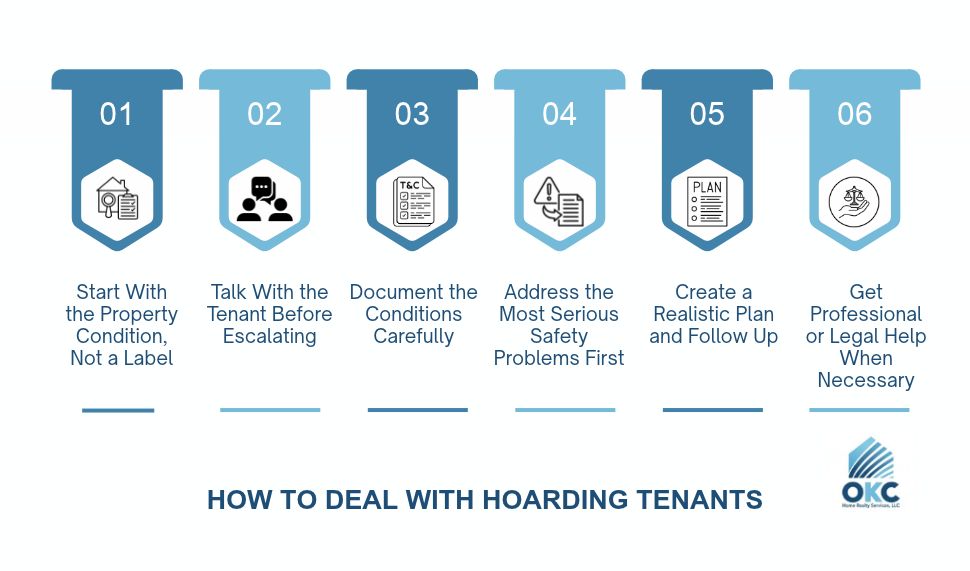
When hoarding affects a rental, landlords need a clear process for addressing property and safety concerns while respecting tenant rights. These six steps provide a practical way to assess the situation, communicate with the tenant, document conditions, and determine what to do next.
1. Start With the Property Condition, Not a Label
Describe what the accumulation is doing to the rental. Note blocked access, visible damage, sanitation concerns, or areas you cannot safely maintain. Avoid diagnosing the tenant or assuming why they keep belongings.
2. Talk With the Tenant Before Escalating
Explain what you observed and why it concerns you. Knowing how to deal with a hoarder tenant starts with keeping the conversation respectful and specific. Ask whether anything is preventing the tenant from addressing the conditions. You may learn something important before deciding what action makes sense.
3. Document the Conditions Carefully
Keep dated notes, photographs of relevant conditions, tenant communications, and related repair records. Describe specific conditions rather than using vague terms such as “messy” or “dirty.” Good documentation gives you a reliable history if the situation continues or the tenant disputes what you reported.
4. Address the Most Serious Safety Problems First
Do not wait for the entire unit to be cleaned up before addressing an immediate hazard. Prioritize blocked exits, serious sanitation problems, fire risks, active leaks, or conditions that prevent necessary repairs. In an Oklahoma rental, use qualified maintenance or emergency professionals when the condition goes beyond routine property management.
5. Create a Realistic Plan and Follow Up
Focus on the specific property concerns that need to be addressed. Severe accumulation may not disappear in one attempt, so identify practical improvements and establish a reasonable follow-up point. Track the progress and address new concerns as they appear.
6. Get Professional or Legal Help When Necessary
Bring in appropriate help when serious hazards remain, the property needs specialized cleanup, or you need to consider formal lease enforcement. If the tenant raises a disability-related accommodation request, handle it carefully rather than treating it as an automatic lease violation. Applicable fair-housing requirements may require housing providers to consider reasonable accommodation requests.
The goal is not to force the situation into a single solution. If the conditions improve, continue monitoring them. If they do not, your records and communication history will help you determine what needs to happen next.
What Are the Biggest Risks of Hoarding in a Rental Property?
The biggest risks include fire hazards, pest and sanitation problems, property damage, blocked access to essential systems, and problems that affect neighboring residents. These risks matter because they can turn a manageable concern into a much larger property problem.
Fire and Emergency Access
Heavy accumulation can make it harder for a tenant to leave quickly or for emergency responders to reach the property. Keep exits, doors, and necessary pathways accessible.
Pests, Odors, and Sanitation
Accumulated belongings can hide food waste, moisture, and pest activity. Persistent odors, insects, rodents, or unsanitary conditions can also create problems beyond the affected room. When pests become part of the problem, understanding who is responsible for pest control can help clarify the next step.
Property Damage and Maintenance Problems
Clutter can hide leaks, moisture, damaged flooring, or other problems that need attention. It can also make repairs more difficult when maintenance workers cannot reach the affected area.
Problems Accessing Plumbing, HVAC, and Other Systems
Plumbing, HVAC equipment, electrical panels, and other essential systems need appropriate access. When belongings block these areas, routine maintenance becomes harder and smaller problems may go unnoticed.
Risks to Neighbors and Other Residents
The effects may extend beyond the rental itself. Pests, odors, leaks, or blocked shared areas can affect neighboring residents and lead to additional complaints or property concerns.
These risks explain why the condition of the rental matters. But there is another side of the situation you need to understand before deciding how to respond: the tenant’s rights.
What Are Hoarding Tenant Rights Landlords Should Understand?
Hoarding tenant rights can involve disability-related housing protections, so you should not treat every hoarding situation as a straightforward lease violation. In Oklahoma, landlords need to consider applicable fair-housing protections while still addressing conditions that violate the lease or create legitimate property or safety concerns.
Hoarding May Involve Disability Protections
Do not diagnose your tenant or assume that severe clutter means the tenant has a disability. If the tenant tells you that a disability affects the situation, consider that information before deciding how to proceed.
Reasonable Accommodation May Need to Be Considered
A tenant may request a reasonable accommodation related to a disability. Evaluate that request based on the circumstances rather than automatically treating it as a refusal to follow the lease.
Landlords Still Have Property and Safety Responsibilities
Tenant protections do not mean you have to ignore serious conditions affecting the rental. Tenants still have responsibilities under applicable law and the lease, while landlords have their own duties regarding the property.
That balance matters when the problem does not improve. You may have followed the right steps and still find yourself asking, “What do I do if nothing changes?”
What Should You Do If the Hoarding Problem Does Not Improve?
If the problem continues, step back and look at what has changed since your first conversation with the tenant. Do not keep repeating the same request without reassessing the condition and your next appropriate step.
- Review your records and identify what has changed since your previous communication.
- Reassess whether the current condition creates new safety, maintenance, or property concerns.
- Check the lease to identify the specific obligations that apply.
- Give the tenant a clear opportunity to address conditions that violate the lease or remain their responsibility, including through a notice to the tenant to clean the property when appropriate.
- Consider whether a disability-related request affects how you should proceed.
- Get Oklahoma-specific legal guidance before taking major enforcement or eviction action.
At this point, the goal is no longer simply to ask the tenant to clean up. You need to make sure your next step fits both the condition of the property and the rules that apply to the tenancy.
How Can Oklahoma Landlords Handle a Hoarding Tenant?
For Oklahoma landlords, handling a hoarding situation also means keeping the management process organized. Keep communication in writing, coordinate necessary maintenance, and document changes in the property’s condition. If specialized cleanup or hazardous conditions are involved, use qualified professionals rather than trying to handle them yourself.
Keeping these records together gives you a clear history of what was observed, what actions were taken, and what still needs attention.
Conclusion
A hoarding situation can be difficult to manage, but you do not have to treat every cluttered rental the same way. Start with the property’s condition, understand what is creating the problem, and respond based on the facts in front of you.
That is the foundation of knowing how to deal with hoarder tenants without turning a difficult situation into a bigger one. For Oklahoma landlords, local experience also matters when property concerns, tenant rights, and lease requirements overlap.
If you are dealing with a challenging rental situation and want help managing it, contact us at OKC Home Realty Services. Our team brings more than 15 years of local property management experience to Oklahoma rental properties.
FAQ
Does Paying Rent Change How a Landlord Handles Hoarding?
Paying rent does not prevent a landlord from addressing hoarding-related concerns. If accumulated belongings create lease, maintenance, or safety issues, you still need to address those concerns while following the rules that apply to the tenancy.
Can a Landlord Enter a Rental Property Because of Suspected Hoarding?
Not simply because you suspect a tenant is hoarding. Landlords generally need to follow the notice and entry requirements that apply to the tenancy, except when a lawful exception, such as an emergency, allows entry without the usual notice.
How Could Hoarding Affect a Landlord's Insurance Coverage?
Hoarding may increase property risks such as fire, water damage, pests, or blocked access, which could create insurance concerns depending on the policy and circumstances. If you are concerned that the property’s condition could affect coverage or a future claim, contact your insurance provider for guidance rather than assuming what the policy covers.