(


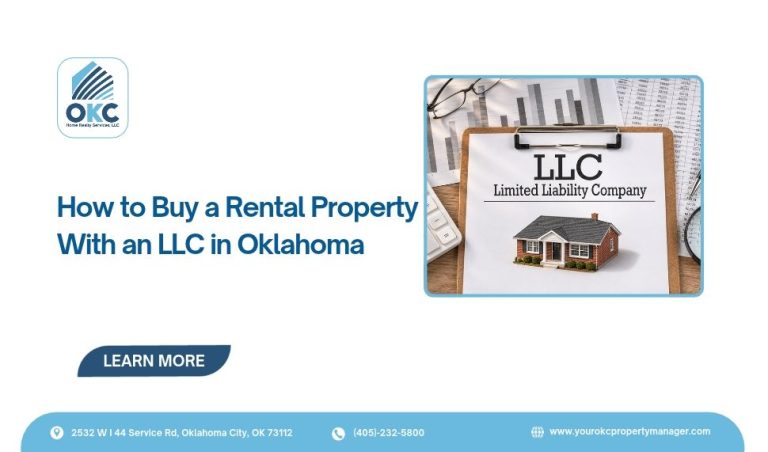

Can an LLC buy a house? Yes. Here is how to buy a rental property with an LLC in Oklahoma: first, form the LLC, open a separate business bank account, finance through a lender that allows LLC ownership, and close in the LLC’s exact legal name. The trade-off is real: a real estate LLC can protect your personal assets, but financing is usually harder and more expensive, and the LLC does not lower your taxes on its own.
In this guide, you’ll learn:
- What a rental property LLC is and whether it makes sense for you
- How to set up an LLC for a rental property in Oklahoma, step by step
- How to finance, buy, and close on real estate in the LLC’s name
- What it costs, how taxes work, and which tax benefits are real
- What changes in day-to-day landlord work once the LLC owns the property
What Is a Rental Property LLC?
A limited liability company (LLC) is a business structure that holds real estate separately from you. When the LLC owns a rental property, the LLC signs the leases, collects the rent payments, and pays the property expenses. As the business owner, you own the LLC.
The main reason rental property owners use one is liability protection. If a tenant or visitor wins a lawsuit related to the property, the claim is generally limited to what the LLC owns. Your home, savings, and other personal property usually stay out of reach.
An LLC does not give complete asset protection. You can still be personally liable for your own negligence, for any loan you sign with a personal guarantee, and for the LLC’s debts if a court decides the LLC was not run as a truly separate business.
Lawyers call this “piercing the corporate veil,” and it usually happens when owners mix business and personal finances or skip basic paperwork. How much protection you actually get depends on the facts, Oklahoma law, your insurance, and how carefully you run the LLC.
Should You Buy a Rental Property With an LLC?
You do not need an LLC to own a rental property. Most investors choose one of three options: buy in their own name, buy through an LLC, or buy in their own name and add an umbrella insurance policy for extra protection.
The table below shows how each option affects protection, financing, taxes, and cost, so you can pick the property ownership setup that fits your goals:
| Factor | Buy in your own name | Buy in a real estate LLC | Own name + umbrella policy |
| Liability protection | Personal assets exposed | Generally limited to LLC assets | Extra insurance coverage, usually $1 million or more |
| Financing options | Standard home loans and investor loans | Investor and business loans, or cash | Standard home loans and investor loans |
| Typical down payment | Can be lower | Commonly 20–30% | Can be lower |
| Taxes | Rental income goes on your own tax return (Schedule E) | Usually the same as owning it yourself. The LLC does not pay its own income tax, so profits are not taxed twice (no double taxation) | Rental income goes on your own tax return (Schedule E) |
| Yearly cost and paperwork | Lowest | Annual LLC fees, separate books | Insurance premium |
When an LLC Usually Makes Sense
Many real estate investors use an LLC once they own multiple properties, buy with partners, own higher-risk rentals such as older multifamily buildings, or have significant personal assets that need asset protection.
When It May Not Make Sense
If this is your first rental property, an LLC may cost more than it saves, especially if you want a low-down-payment conventional loan or have a tight budget. Never put your primary residence in an LLC without advice, because it can affect your loan and property taxes.
For many first-time owners, landlord insurance plus an umbrella policy is a simpler starting point. Our guide to common landlord liability issues explains the risks an LLC is meant to address.
LLC vs. Umbrella Insurance
An umbrella policy is extra liability insurance that kicks in after your landlord policy reaches its limit, often adding $1 million or more of coverage. It pays legal costs and claims, needs no new loan, and involves no yearly state filings.
An LLC works differently: it does not cover the claim itself, but it can limit which of your personal assets are exposed if you lose a lawsuit. With one or two rentals, an umbrella policy is often the cheaper first step. As you add properties or partners, many owners use both.
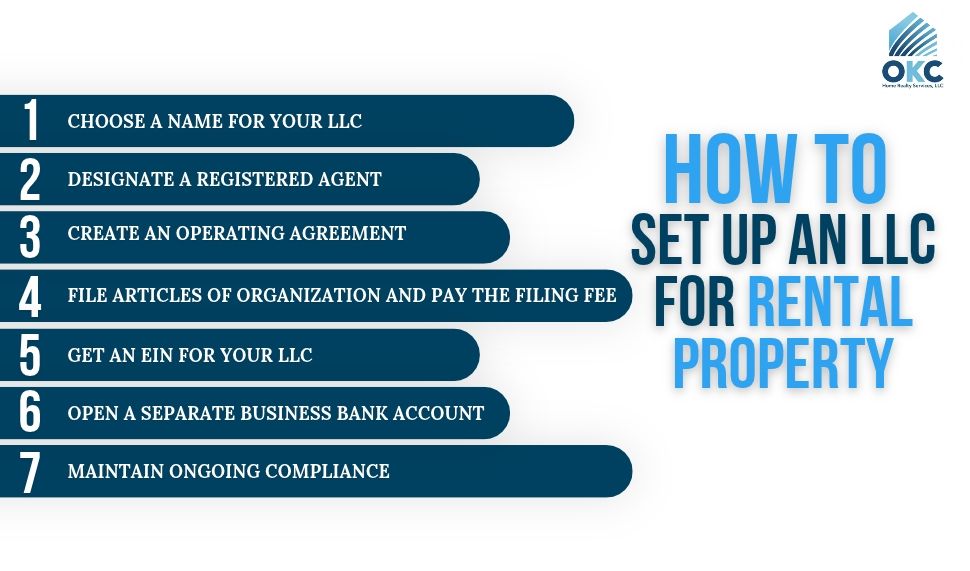
How to Set Up an LLC for a Rental Property in Oklahoma: Step-by-Step
Forming a real estate LLC in Oklahoma is fairly quick and inexpensive. Complete these steps before you make an offer.
1. Choose a Name for Your LLC
The name must be available and include “Limited Liability Company,” “LLC,” or “L.L.C.” Many owners use a neutral name or the property address. Check availability on the Oklahoma Secretary of State website.
2. Designate a Registered Agent
Every Oklahoma LLC needs a registered agent: a person or company with an Oklahoma street address who accepts legal papers for the LLC. You can serve as your own registered agent if you live in Oklahoma, or hire a registered agent service, as many out-of-state owners do.
3. File Articles of Organization and Pay the Filing Fee
File articles of organization with the Oklahoma Secretary of State online or by mail. This short form creates your LLC and lists its name and contact details. The filing fee is $100.
According to the state’s business registration portal, registering online takes about 15 minutes and adds a small service fee. Mailed filings take longer. Keep the confirmation with your LLC records, because lenders will ask for it.
4. Create an Operating Agreement
Oklahoma does not require an operating agreement, but you should have one. Lenders and title companies usually ask for it before closing. The operating agreement is the LLC’s rulebook. It explains who owns the LLC, who can sign documents, how decisions are made, and how profits are split (profit distribution).
For a multi-member LLC (one with two or more owners), it should also cover each owner’s share (ownership interests), what happens if a member wants out, and how new properties are added. A real estate attorney can review it for you.
5. Get an EIN for Your LLC
An employer identification number (EIN) is the LLC’s tax ID. The IRS issues an employer identification number for free online, usually right away. A single-member LLC without employees may not need an EIN for federal income tax reporting, but banks and lenders often require one, so most rental LLCs obtain one anyway.
6. Open a Separate Business Bank Account
Open a business bank account in the LLC’s name using the EIN and articles of organization. All rent, deposits, and business expenses should run through this account, not your personal one.
7. Maintain Ongoing Compliance
File the Oklahoma annual certificate, a short yearly form, to keep the LLC active, keep the registered agent current, and maintain proper records. Oklahoma’s annual report fees are low: the annual certificate costs $25 and is due each year on the anniversary of the date your LLC was formed.
If it is more than 60 days late, the LLC loses good standing and cannot file a lawsuit in Oklahoma courts until it is reinstated (18 O.S. §2055.2). Review your operating agreement and insurance once a year, too.
How Long Does It Take to Set Up an LLC in Oklahoma?
Filling out the online form takes about 15 minutes, and you can file 24 hours a day. Oklahoma does not publish a set approval time. Formation services report that online filings are usually approved within a few business days, while mailed filings take about a week plus mail time. Your LLC legally exists once the Secretary of State files your articles, unless you choose a later start date up to 90 days out (18 O.S. §2007). The EIN is usually issued the same day online, and opening the bank account can take another day or two. Most owners finish setup within a couple of weeks, so start before you make an offer.
Out-of-State Investors Buying in Oklahoma
If you form your LLC in your home state and buy real estate in Oklahoma, the LLC generally must also register in Oklahoma as an out-of-state (“foreign”) LLC. That means paying filing and yearly fees in two states. If you live outside Oklahoma, our property management for out-of-state owners page explains how we handle the local work.
One LLC, a Separate LLC for Each Property, or a Series LLC?
One LLC can hold multiple properties, but a judgment against one property can then reach all of them. For investors with several rental properties, forming a separate LLC for each property isolates the risk but multiplies fees and paperwork.
Oklahoma also allows series LLCs: one main LLC with separate compartments, each holding one property. Ask a real estate attorney which business structure fits your portfolio, especially if you plan to buy a multifamily property with an LLC or own duplexes and 4-plexes.
How to Finance a Rental Property in an LLC
Financing is where most rental property LLC plans get complicated. Conventional mortgages are generally made to individual borrowers and usually do not allow an LLC to take title at closing. If you want a rental property in an LLC with a mortgage, you will usually need a loan made for investors.
| Financing option | How it works | Trade-Offs |
| DSCR loan | Based mainly on the rent the property brings in | Higher interest rates; commonly 20–30% down; you usually promise to repay it yourself |
| Portfolio loan | Rules vary by bank | Shorter loan terms are common |
| Commercial loan | Business and property finances | Shorter terms; may suit multifamily |
| All-cash purchase | You pay the full price yourself, with no loan | Simplest closing; ties up your savings |
Many LLC loans for investment real estate require a personal guarantee, although rules vary by lender and loan program. That means you promise to repay the loan yourself if the LLC cannot, even though the LLC owns the property.
Requirements to Buy a House Under an LLC
Lenders that allow LLC ownership usually ask for:
- Articles of organization
- Operating agreement
- EIN confirmation letter
- Certificate of good standing (proof from the state that the LLC is active)
- A signed document showing who can sign for the LLC
- ID for each person backing the loan
Multi-Member LLCs and Personal Guarantees
If you own a multi-member LLC with partners, lenders may require a guarantee from every member above a certain ownership share. Ask about this before you set ownership percentages.
Confirm with your lender that the loan can close in the LLC’s name before you make an offer. For a broader look at options, see our guides to how to finance a rental property and rental property loan types.
How to Buy a House With an LLC and Close in Its Name
When you buy rental property through an LLC, the key is consistency: the same legal name on every document, from the offer to the deed.
- Form the LLC and open its bank account before you make an offer.
- Get pre-approved with a lender that allows LLC title.
- Write the offer and purchase contract in the LLC’s exact legal name, signed by an authorized member or manager.
- Check the property before closing. Complete the inspection, appraisal, and title review before your contract deadlines. If tenants already live there, review their leases, rent records (the rent roll), security deposits, and any notices that will transfer to the LLC.
- Pay the good-faith deposit (earnest money) and the down payment from the LLC’s separate bank account.
- Insure the property in the LLC’s name, after confirming the lender’s requirements.
- Close by signing as the LLC’s authorized member or manager.
- Record the deed in the LLC’s name with the county clerk.
Insurance When the Deed and Loan Names Differ
Some real estate investors take a loan in their own name and put the deed in the LLC’s name. That can create an insurance problem: the insurance company wants the policy in the name on the deed, while the lender wants it in the name on the loan. Ask both the insurance company and the lender how the LLC, the borrower, and the lender must each be named on the policy, and get the answer in writing before closing. Do not assume one common setup will satisfy every insurer and lender. Also buy an owner’s title policy in the LLC’s name.
Recording the Deed and Preventing Deed Fraud
Check that the recorded deed shows the LLC’s exact legal name, and keep a copy with your LLC records. Deed fraud targets investment real estate, so it is worth monitoring county records. Learn more about Oklahoma’s deed theft law.
What If You Already Own the Property?
This guide covers buying new real estate in an LLC. If you want to change the property ownership of a rental you already own, the process is different. The two biggest issues are your mortgage’s due-on-sale clause, which can let the lender ask for the full loan balance when ownership changes, and Oklahoma’s deed tax, which is often exempt when you move property into an LLC you own.
Our guide to transferring a rental property to an LLC walks through each step.
How Much Does It Cost to Set Up an LLC in Oklahoma?
Oklahoma’s state fees are modest: $100 to form the LLC and $25 a year after that. The higher costs usually come from financing and running the rental business.
| Cost | When you pay it | Notes |
| Articles of organization | Once | $100 Secretary of State filing fee |
| Operating agreement | Once | Free if you use a template; Oklahoma attorneys often quote about $450–$1,250 to draft or review one |
| Deed preparation and recording | Per property | Title company or attorney fees, plus the county clerk’s recording fee: $18 for the first page and $2 for each additional page (28 O.S. §32) |
| Annual certificate | Every year, on your LLC’s formation anniversary | $25 state fee to keep the LLC in good standing |
| Registered agent | Every year | Free if you serve yourself; professional services usually charge $100–$300 a year |
| Bookkeeping and tax preparation | Every year | Higher for a multi-member LLC that files a partnership return |
| Property management fees | Monthly, if you hire a manager | Usually a percentage of collected rent |
The hidden costs are on the loan side: DSCR and portfolio loans often carry higher interest rates, larger down payments, and extra lender fees. Some states also charge LLCs a yearly franchise tax (a fee for doing business there), such as California’s $800 minimum. Oklahoma’s ongoing fees are much lower, but they still add up if you form a separate LLC for each property.
How Taxes Work for a Rental Property LLC
Many investors expect big tax benefits from an LLC. On its own, an LLC usually does not change how much you pay in taxes.
Pass-Through Taxation
By default, an LLC is a pass-through entity. With pass-through taxation, the LLC itself does not pay taxes on its income. Instead, profits and losses pass through to the owners’ own tax returns. This avoids double taxation, where a regular corporation pays tax on its profits, and the owners pay tax again on what they take out.
An LLC can choose to be taxed as a corporation instead, but most rental LLCs keep the default treatment.
- Single-member LLC: For federal tax purposes, the IRS treats it as if you own the property yourself. Rental income and expenses go on the owner’s personal tax return, on the same form (Schedule E) you would use without an LLC.
- Multi-member LLC: It is also a pass-through entity. It is taxed as a partnership and files a separate information return. Each member reports their share on their own personal tax return.
Tax Deductions Stay the Same
You can still deduct mortgage interest, repairs, insurance, property taxes, and rental property depreciation whether you own the property personally or through a single-member LLC. Some rental businesses may also qualify for the qualified business income deduction, a tax break that can reduce taxable rental profit by up to 20%.
Whether you qualify depends on how actively you run the rental, not on the LLC itself. When you sell, capital gains taxes work the same way too.
In short, the tax advantages people talk about come from owning rental real estate, not from the LLC. The LLC’s real value is liability protection and cleaner tax reporting. Ask a tax professional how to get the best tax efficiency for your situation.
No BOI Report for U.S. LLCs
Many guides still tell LLC owners to file a federal ownership report, called a beneficial ownership information (BOI) report. That advice is out of date. FinCEN, the Treasury agency that collects these reports, finalized a rule that took effect on August 14, 2026, exempting companies created in the United States from BOI reporting.
An Oklahoma LLC owned by U.S. investors does not need to file one. Some companies formed in other countries and registered to do business in the U.S. may still have to report, so foreign investors should check FinCEN’s site.
For how rental income is taxed overall, see if rental income is taxed as ordinary income, and confirm your plan with a tax advisor.
What Changes After Your LLC Owns the Rental
Closing is only the start. To maintain liability protection, run your real estate LLC as a separate business from day one:
- Leases: Sign rental leases in the LLC’s name, as its authorized member or manager.
- Rent: Run rent and business expenses through the LLC’s business bank account, and never use it for personal expenses.
- Security deposits: Hold deposits in an escrow account at a federally insured Oklahoma bank or credit union (41 O.S. §115); see our guide to security deposits.
- Owner disclosure: Tell tenants the names and addresses of the owner (now the LLC) and manager, as 41 O.S. §116 requires.
- Section 8 and vendors: Move Section 8 paperwork, tax forms, utilities, and vendor accounts to the LLC.
- Property management: If you use rental property management, sign the property management agreement in the LLC’s name.
- Records: Like any business owner, keep separate books and follow local and state regulations; good financial management is easier with property management software or clear owner statements and financial reports.
- Financial reports.
Common Mistakes When Buying Rental Property With an LLC
Most real estate LLC problems come from small shortcuts. Watch out for these:
- Signing the contract personally. Switching the buyer to the LLC later can require the seller’s and lender’s approval.
- Mixing business and personal finances. Paying personal bills from the LLC’s bank account, or rent into a personal account, can weaken the legal wall between you and the LLC (the corporate veil) and expose the owner’s personal assets.
- Skipping landlord insurance. An LLC limits which assets a claim can reach, but it does not cover insurance claims or legal costs.
- Ignoring the due-on-sale clause. Transferring a mortgaged property can let the lender call the loan.
- Mismatched names. The names on the deed, loan, and insurance should line up, or you may face coverage or closing problems.
- Forming the LLC out of state without registering in Oklahoma. An out-of-state LLC that is not registered here can face penalties and problems in court.
- Living in an LLC-owned duplex without checking the homestead exemption. Oklahoma’s homestead exemption, a property tax break for your main home, is only for individuals, and state rules bar it for homes owned by corporations (OAC 710:10-5-12). Ask your county assessor how a residential property owned by an LLC is treated before you buy.
Conclusion
Buying a house with an LLC and renting it out can protect your personal assets, but only if you plan the financing, costs, and paperwork before you buy. For most real estate investors, the right first step is simple: talk to a lender about closing in an LLC, then form the LLC and open its business bank account before you make an offer.
If you are planning to buy your next rental in an LLC, OKC Home Realty Services can help you understand what the property could earn and how it would be managed. Schedule a free owner consultation or request a free rental price analysis to get started.
FAQs
Can I Use an FHA or VA Loan to Buy a Rental Property in an LLC?
Generally, no. FHA and VA loans are made to individuals who plan to live in the home, so they do not fit an LLC purchase.
Can an LLC Buy a House With No Money?
Rarely. A new LLC has no credit history, so lenders rely on your personal credit, cash reserves, and guarantee. Some investors use partners or seller financing, but expect to bring a down payment.
Can I Buy a House With My LLC and Rent It to Myself?
It is possible on paper, but it rarely achieves the liability or tax goal. It can also create loan, insurance, and homestead exemption problems, so talk with an attorney and a tax professional first.
Can My LLC Do a 1031 Exchange?
Often, yes. A 1031 exchange lets you sell a rental and delay paying tax on the profit by buying another one. The same owner has to sell and buy, and a single-member LLC is usually treated as you for tax purposes. Confirm the details with a tax advisor or a 1031 exchange company.