(



Quick Answer
Tenants generally do not pay property taxes directly to the county. The property owner usually pays the bill, although the cost may be included in rent or passed on to a tenant under certain lease agreements.
When property taxes rise, landlords may see their rental income shrink even if tenants continue paying the same rent. If you’re wondering, do tenants pay property taxes separately? The answer depends on the lease terms, the type of property, and applicable law. With 15+ years of local property management experience, we understand why landlords need to review these details before adding tax-related charges to a tenant’s bill.
Before passing property tax costs to tenants, landlords should know what their lease permits and what rules apply in Oklahoma. The following sections explain who is responsible for the tax bill, when a lease may allocate certain costs to tenants, and what landlords should review before charging them.
Who Is Responsible for Property Taxes on a Rental Property?
The property owner generally pays the property tax bill directly to the county, while tenants may contribute to the cost through their rent. The lease determines whether tenants have any separate obligation to pay or reimburse property taxes, subject to applicable law.
For example, a landlord might consider property taxes alongside insurance, maintenance, and other ownership expenses when determining the rent for a property. The tenant pays the agreed rent, and the landlord uses that income to cover the property’s expenses. This is why renters may pay property taxes indirectly through rent, even when the landlord pays the county directly.
Commercial leases may handle these costs differently. Depending on the agreement, a tenant may be responsible for reimbursing certain property expenses in addition to base rent. The lease determines how those costs are allocated, subject to applicable law.
For landlords, understanding this distinction helps separate ordinary rental income from expenses a tenant has specifically agreed to cover.
Can Landlords Pass Property Taxes on to Tenants?
Landlords may pass property tax costs on to tenants when the lease and applicable law permit it. However, including expected tax expenses in the rent is different from adding a separate charge after the lease has been signed.
Before billing a tenant for property taxes, review the lease for language covering tax payments, additional rent, expense reimbursements, or tax increases. Check whether the agreement explains how the amount is calculated and when payment is due.
A property tax increase alone does not automatically authorize a landlord to add a new charge or change the agreed rent. If the lease does not clearly permit the proposed charge, review the applicable law and seek legal advice before billing the tenant. Oklahoma landlords can consult the Oklahoma Landlord and Tenant Act when reviewing the rules that apply to a residential rental agreement.
Who Pays Property Taxes on a Commercial Lease?
Commercial leases often specify how property taxes and other operating expenses are divided between the landlord and tenant.
- Gross lease: The rent generally includes property expenses such as property taxes, although the exact arrangement depends on the contract.
- Net lease: The tenant pays certain property expenses in addition to base rent, as specified in the lease.
- Triple net (NNN) lease: The tenant typically pays property taxes, building insurance, and maintenance expenses in addition to base rent, according to the agreement.
If you manage commercial property, check the exact wording rather than relying on the lease label alone. Confirm which taxes the tenant must pay, how increases are handled, and whether the agreement sets limits or a specific allocation method.
What Should Landlords Check Before Charging a Tenant for Property Taxes?
Before charging a tenant for property taxes, review the lease, confirm the charge is permitted, and verify the calculation. These five checks can help you catch billing issues before they become disputes.
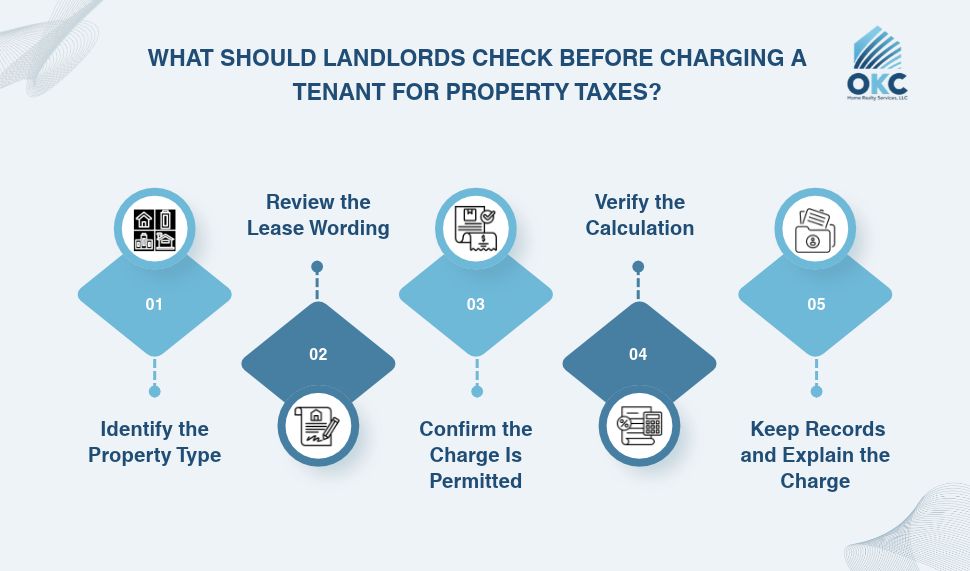
1. Identify the Property Type
Determine whether the agreement covers a residential rental, commercial property, manufactured home, or another arrangement. The type of property and contract can affect how tax expenses are allocated.
2. Review the Lease Wording
Look for clauses covering property taxes, additional rent, expense reimbursement, or tax increases. Check exactly which costs the tenant agreed to pay and whether the lease explains how those charges are calculated.
3. Confirm the Charge Is Permitted
Make sure the lease authorizes the proposed charge and applicable law allows it. If the wording is unclear, seek legal advice before billing the tenant.
4. Verify the Calculation
Compare the proposed amount with the actual tax bill and the allocation method stated in the lease. Do not assume the tenant owes the entire bill if the agreement assigns only a portion of the expense.
5. Keep Records and Explain the Charge
Retain the tax bill, calculation, relevant lease provision, and supporting correspondence. Explain how you calculated the charge and provide supporting details to the tenant when appropriate.
Before you bill: If you cannot connect the proposed charge to the lease and a verifiable calculation, pause and clarify the arrangement first.
What Should Oklahoma Landlords Know About Rental Property Taxes?
Oklahoma landlords can use county records to verify property information and check tax accounts. The county assessor maintains property assessment records, while the county treasurer handles property tax billing, collection, and payment records.
For rental properties in Oklahoma City and the surrounding area, check the relevant county’s official records. Make sure you are reviewing the correct property and tax account before relying on the information. For more information about how property taxes are assessed and administered in Oklahoma, consult the Oklahoma Tax Commission’s Ad Valorem resources.
If you need more information about Oklahoma property tax assessments, local rates, exemptions, deadlines, or payment methods, see our Oklahoma property tax rate guide. This guide covers those tax details, while the key issue in this article is whether a tenant is responsible for paying or reimbursing property taxes under a lease.
What Should Landlords Review on a Property Tax Bill?
A property tax bill is an important record for managing rental expenses. Review the details before recording a payment or using the amount to calculate a tenant’s share under a lease.
- Property identification: Confirm that the bill relates to the correct rental property. Check the property address and parcel or account number, especially if you manage multiple properties.
- Taxable amount: Review the taxable value and total tax charged. If the amount looks unexpected, compare it with the county’s records or contact the appropriate office.
- Tax year: Make sure the bill covers the correct tax period so you do not confuse a current charge with an earlier year’s balance.
- Payment status: Check the county treasurer’s records to see whether the taxes remain outstanding or the payment has posted. Payments made through a mortgage company or third-party tax service may take time to appear. For additional information about Oklahoma’s property tax system, consult the Oklahoma Tax Commission’s Ad Valorem resources.
- Supporting records: Keep a copy of the bill, payment confirmation, and correspondence about any discrepancy. These documents help you reconcile expenses and answer questions later. For broader financial recordkeeping, see our guide to monthly itemized statements.
If the assessed value or tax amount appears incorrect, contact the relevant county office to confirm the information before changing your records or calculating a tenant’s share.
Final Thoughts
Understanding whether tenants pay property taxes comes down to the lease terms, the type of property, and applicable law. Before charging a tenant separately, check whether the lease permits the charge and verify the amount against the property’s tax records. Clear calculations and supporting documentation can help you explain the charge and resolve questions before they become disputes.
If you own a rental property in the Oklahoma City area and need help managing property expenses, tenant responsibilities, or day-to-day operations, contact OKC Home Realty Services to discuss how we can help manage your property.
Disclaimer: This article provides general information, not legal or tax advice. Property tax obligations can vary by lease type, ownership arrangement, and applicable law. Review the relevant agreement and consult an Oklahoma real estate attorney or qualified tax professional if you are unsure how the rules apply to your situation.
Frequently Asked Questions
Who pays property taxes in a rent-to-own agreement?
It depends on the contract and ownership arrangement. Review the agreement to determine who must pay property taxes and when that responsibility begins. If the terms are unclear, consult an Oklahoma real estate attorney.
If you pay lot rent, do you also pay property taxes?
It depends on whether you own the home, the land, or both. Check your ownership documents, lot rental agreement, and county tax records to determine which property is taxed and who is responsible for payment.
Does a lessee pay property taxes?
A lessee may have to pay property taxes if the lease assigns that responsibility, subject to applicable law. Understanding the roles of the lessor and lessee can help clarify which party has agreed to pay specific costs. This arrangement is more common in some commercial leases than in standard residential rentals.