(
(


Owning a rental property can be a great investment, but protecting it involves more than finding the right tenant or signing a solid lease. Landlord insurance can help protect your property, rental income, and finances when unexpected damage or liability issues arise.
So, how much does landlord insurance cost in Oklahoma? Most landlords pay around $1,200 to $1,500 per year for a single-family rental, but the price may vary based on the property’s location, type, coverage limits, deductible, and claims history.
In this guide, I will explain typical landlord insurance costs, what can affect your premium, how prices vary by property type, and ways to manage your insurance expenses.
Key Takeaways
- Florida has one of the highest landlord insurance costs, while Hawaii has the lowest.
- Factors such as location, property condition, replacement cost, coverage limits, deductible, and claims history can affect your premium.
- Comparing quotes, reviewing your policy, selecting a higher deductible, and asking about discounts can help lower your insurance costs.
What is the Average Cost of Landlord Insurance?
Landlord insurance typically costs around $100 to $125 per month for a standard single-family rental. However, your actual cost may be higher or lower depending on the rental property and coverage you choose.
Your actual premium can vary depending on factors such as your property’s location, age, size, type, coverage limits, and many more. Since every rental property is different, getting quotes based on your specific property is the best way to find out how much you’ll actually pay.
Landlord Insurance Cost by Property Type
The type of rental property you have can make a huge difference in how much you pay for landlord insurance. A condo may cost less to insure, but larger multi-family properties typically cost more since they cover more units and come with greater risks.
Here are some of the typical annual cost ranges:
| Types of Property | Typical Annual Cost |
| Condos | $700 – $1200 per year |
| Single Family Home | $1200 – $1500 per year |
| Small Multi-Family (2-4 Units) | $1500 – $2500 per year |
| Large Multi-Family (5+ Units) | $2500+ per year |
These are general estimates. Your property’s actual cost may depend on the property’s location, condition, value, coverage, and other risk factors.
Why Does Landlord Insurance Cost More Than Homeowner Insurance?
Landlord insurance often costs 15% to 25% more than homeowners insurance for a similar property. The main reason is simple: rental properties come with additional risks that owner-occupied homes may not have.
Landlord insurance can cover property damage, liability, and lost rental income if a covered event makes the property unlivable. These added protections can make landlord insurance more expensive than standard homeowners insurance.
In simple terms, you pay more because landlord insurance provides protection designed specifically for rental properties.
Explore the Difference Between Landlord Insurance vs. Homeowners Insurance
Landlord Insurance Cost Examples
Here are two examples that show how landlord insurance costs vary by property type and coverage needs.
Example 1: Single Family Rental
Imagine you own a single-family rental home in Oklahoma City, OK, with an estimated replacement cost of $225,000.
- Policy Type: DP-3
- Dwelling Coverage: $225,000
- Liability Coverage: $300,000
- Deductible: $2,500
- Loss of Rental Income: Included
- Estimated Premium: $1,500 per year ($125 /month)
Example 2: Multifamily Rental
Imagine you own a four-unit rental property in Oklahoma City, OK, with an estimated replacement cost of $450,000.
- Policy Type: DP-3 / Small Multifamily
- Dwelling Coverage: $450,000
- Liability Coverage: $500,000
- Deductible: $5000
- Loss of Rental Income: Included
- Estimated Premium: $3,000 per year ($250 /month)
These are estimates, not guaranteed quotes. Actual costs vary by property, coverage, deductible, and insurer.
Why Is Landlord Insurance Getting More Expensive?
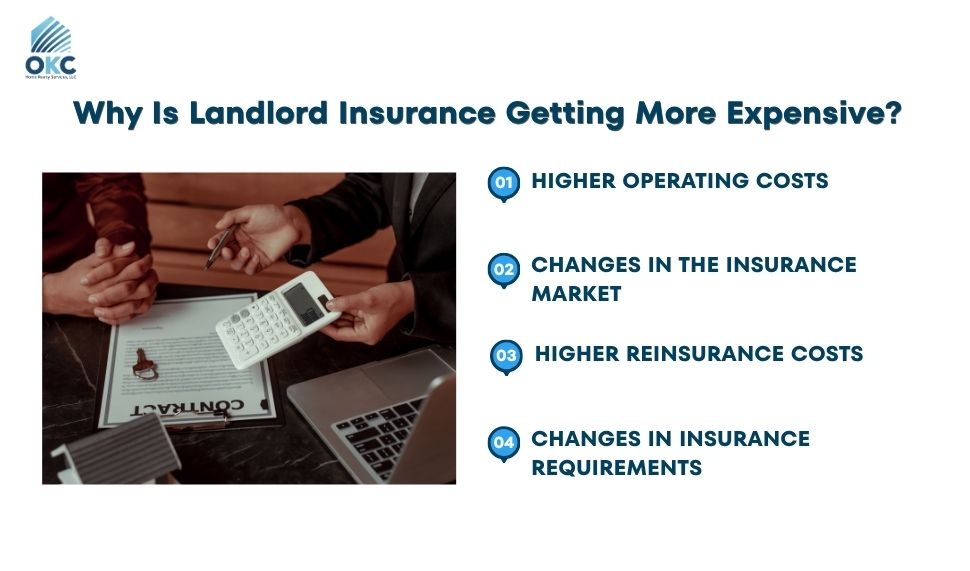
Landlord insurance prices can go up for several reasons. Understanding these factors can help you see why your premium may be higher than before.
Higher Operating Costs
Insurance companies have costs for staff, claims processing, technology, and other services. When these costs increase, insurers may raise premiums.
Changes in the Insurance Market
They regularly review their operating costs, claims, and risks over time. Changes in these areas can lead to higher premiums in some markets.
Higher Reinsurance Costs
Insurance companies buy reinsurance to help cover their large loss. When reinsurance costs increase, insurers may raise their own premiums to cover the added expenses.
Changes in Insurance Requirements
They may change their coverage requirements or the types of properties willing to insure. These changes can affect your coverage options and insurance costs.
Factors That Affect Landlord Insurance Costs
Several factors, including your property’s location, type, condition, and coverage, can affect how much you pay for landlord insurance. Understanding these factors can help you better manage your insurance costs.
- Property Location within Oklahoma: Where your rental property is located can significantly affect your insurance cost. Areas with higher risks of tornadoes, hail, wildfires, flooding, storms, or crimes may have higher premiums.
- Property Type: Single-family homes, duplexes, apartment buildings, and vacation rentals have different risk levels. Airbnb and short-term rentals may cost more because of frequent guest turnover and higher liability expenses.
- Property Age and Condition: Your property’s age and condition can affect your premium. Older homes may cost more to insure if they have aging roofs, electrical systems, plumbing, or HVAC equipment. Recent upgrades and well-maintained systems can help reduce your risk and lower your premium.
- Claims History: Previous insurance claims can affect your premium. Frequent or costly claims may lead insurers to view the property as a higher risk.
- Coverage Limits and Deductible: Higher coverage limits and additional protection, including loss of rental income or higher liability limits, can increase your premium. A higher deductible can generally lower your premium.
- Property Replacement Cost: Insurers consider how much it will cost to repair or rebuild the rental property after a covered loss. A higher replacement cost usually requires more dwelling coverage, which can raise your premium.
- Safety and Security Features: Smoke detectors, security systems, leak sensors, and storm protection can reduce the risks and may qualify for discounts, lowering your landlord insurance premium.
Read More About What Does Landlord Insurance Cover
Tips to Lower Your Landlord Insurance Cost
Once you understand what affects your premium, a few smart steps can help you keep your landlord insurance costs under control.
- Compare Multiple Quotes: Don’t settle for the very first quote you receive. Compare rates and coverage from several insurers to find a policy that offers the right protection for your rental property at a price that fits your budget.
- Bundle Your Policies: If you’ve multiple insurance policies, try keeping them with the same provider. Bundling may help you qualify for a lower overall rate.
- Review Your Policy Every Year: Your insurance needs can change over time. Reviewing your policy each year can help you avoid paying for coverage you no longer need or missing opportunities to adjust your policy.
- Consider a Portfolio Policy: If you own several rental properties, ask your insurer about a master or portfolio policy. Combining multiple properties under one policy may help simplify coverage and could reduce your overall insurance costs.
- Work With an Insurance Agent: A skilled agent can help you compare policies, understand your coverage, and identify potential ways to save money without losing important protection.
- Increase Deductible: A higher deductible can help lower your cost. For example, increasing it to $1,000 or $2,000 may lower your premium depending on your insurer and policy.
Should You Choose the Cheapest Landlord Insurance?
Not necessarily. The cheapest landlord insurance policy may save you money upfront, but it may also provide less coverage or come with higher deductibles and more exclusions.
Before choosing a policy, look beyond the monthly premium. Check the coverage limits, deductible, liability protection, loss-of-rental-income coverage, and exclusions to make sure the policy fits your property and needs.
The goal isn’t to find the cheapest policy. It’s to find the right balance between cost and coverage, so you’re protected without paying for coverage you don’t need.
Conclusion
The cost of landlord insurance depends on more than just the type of rental property you own. Location, property condition, coverage needs, deductibles, and changing insurance market conditions can all influence what you pay.
When budgeting for a rental property, consider insurance as part of your ongoing ownership expenses, along with common rental property expenses you’ll want to plan for.
Comparing quotes and understanding what you’re paying for can help you avoid unnecessary costs while making sure your rental has appropriate protection.
As your property and circumstances change, take time to reassess your insurance needs. Staying informed and reviewing your options can help you manage costs more effectively over the long term.
FAQs: Landlord Insurance Cost
Which state has the highest landlord insurance cost?
Florida has some of the highest landlord insurance costs in the country. Hurricane, wind, and flood risks can drive premiums higher. Landlord insurance in Florida averages around $2,650 per year, but costs vary based on the property and coverage.
Is it possible to deduct landlord insurance costs from taxes?
Yes. If you rent out a property, you can deduct the cost of landlord insurance from your rental income when calculating your taxes. However, tax rules may vary depending on your situation, so ask a tax professional first.
Are there any discounts available for landlord insurance?
Yes. Some insurance companies offer discounts that can help landlords save money. You may get a discount for bundling policies, installing security features, having a claims-free history, updating your rental property, or insuring multiple properties with the same company.
Discounts vary by insurer, so it’s worth asking what savings are available for your rental property.
Which state has the lowest landlord insurance cost?
Hawaii is generally considered one of the states with the lowest landlord insurance cost, at just $730 to $766 per year. Rates can vary depending on the property type, coverage, and other factors, so your actual premium may be different.
Is landlord insurance required for a rental property in Oklahoma?
No, landlord insurance is not generally required by Oklahoma law, but your mortgage lender may require it. It helps to protect your rental property, liability, and rental income.