(
(



Quick Answer
To increase rent without losing tenants, choose a reasonable amount, follow the applicable requirements, explain the change clearly, and keep the property well maintained. A thoughtful approach can help you increase rental income without creating unnecessary tenant turnover.
If you’re trying to figure out how to increase rent on a tenant, you may be stuck between two concerns. Your rental costs are rising, but you also have a reliable tenant you do not want to lose. Raising the rent too little may leave money on the table, while raising it too much could lead to vacancy, turnover costs, and the search for a new tenant.
For Oklahoma landlords, that decision can become even more important as maintenance, repairs, insurance, taxes, and other property expenses change over time. You need to know what your rental is actually worth today before deciding on a new rent amount.
So, how much is reasonable, and when is an increase worth it?
Why Do Landlords Increase Rent?
The main reasons for increasing rent usually fall into three areas: operating costs, local market conditions, and improvements that add value to the rental.
1. Rising Property and Operating Costs
Maintenance, repairs, insurance, property taxes, and other expenses can make a rental more expensive to operate. When those costs change, landlords may need to reassess the rent to make sure the property still performs financially.
2. Changes in Local Market Rent
Another common reason to raise rent is that similar rental homes now command higher prices. If nearby properties with comparable features are renting for more, your current rent may no longer reflect the property’s market position. Before adjusting the rent, it’s helpful to understand how to price a rental property based on current market conditions.
3. Property Improvements and Added Value
Significant improvements can also support a rent adjustment. New appliances, updated features, or better-maintained systems can give tenants more value and may support a higher rent.
But knowing why you want to raise the rent is only half the decision. The amount matters too.
How Much Can I Increase the Rent?
There is no universal percentage that every landlord should use. To decide how much to increase the rent, compare your current rent with similar properties and consider the property’s current value, condition, and rental demand.
What Is a Reasonable Increase in Rent?
A reasonable increase in rent keeps the new amount competitive without creating a large gap between what tenants pay and what similar homes offer. Compare several nearby rentals with similar size, location, condition, and features rather than relying on one listing.
For example, if comparable homes consistently rent for $1,500 and your tenant currently pays $1,400, the $100 difference gives you useful market context. It does not automatically mean you should raise the rent by $100. Consider the property’s condition, the tenant’s experience, and the cost of replacing a good tenant before setting the final amount.
This market-based approach helps answer how much can I increase the rent without relying on an arbitrary percentage.
Once you have a reasonable target, you also need to decide when to make the change.
How Often Does Rent Increase?
There is no universal schedule for rent increases. Many landlords review rent around lease renewal, but the timing depends on the lease terms and applicable requirements.
How often does rent increase? A landlord may review rent annually, at renewal, or when circumstances change. A review does not automatically mean the rent should increase.
Regular reviews help landlords keep rent aligned with the property’s current situation without assuming every review requires an increase.
What Oklahoma Landlords Should Know Before Raising Rent
Oklahoma landlords should verify the rules that apply to the specific tenancy before changing the rent. The lease and type of tenancy can affect when a new rent amount can take effect and what notice the tenant must receive. Review Oklahoma landlord-tenant laws before sending a rent increase notice.
Before sending the notice:
- Review the agreement: Check the rent, renewal, and other provisions that may affect a proposed change.
- Identify the tenancy: A fixed-term lease and a periodic tenancy can have different requirements, so follow the rules that apply to the arrangement.
- Confirm the notice process: Give the tenant the required notice and follow the applicable rules for delivering it.
Do not assume that a rent increase works the same way for every Oklahoma rental. If the lease still has time remaining, for example, the landlord should review the agreement before attempting to change the rent.
How Do You Raise Rent Without Losing Tenants?
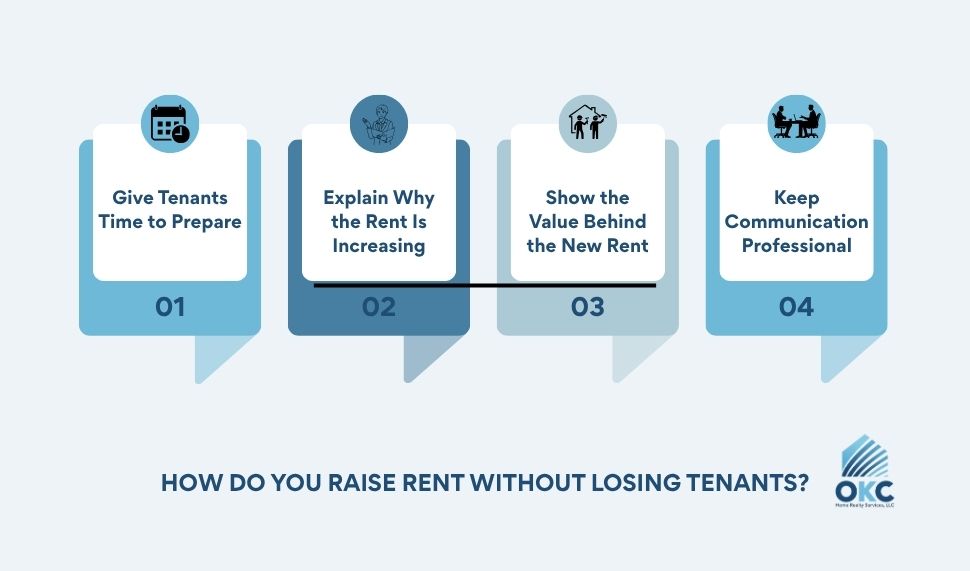
To raise rent without losing tenants, communicate the change clearly, give tenants time to prepare, and make sure the property still delivers value. The way you handle the increase can matter almost as much as the amount.
1. Give Tenants Time to Prepare
Follow the required notice rules, but avoid treating the deadline as your target. Giving tenants reasonable time to adjust their budget can make the increase easier to manage and gives them a chance to ask questions.
2. Explain Why the Rent Is Increasing
Keep the explanation simple and honest. You can point to changes in operating costs, the local rental market, or improvements to the property.
You do not need to justify every expense. Give the tenant enough context to understand that you made the decision deliberately.
3. Show the Value Behind the New Rent
A tenant is more likely to accept a higher rent when the property remains well maintained. Handle maintenance requests promptly, address recurring problems, and keep the home in good condition. Consistent property maintenance services can help protect the tenant experience and the condition of the rental.
For Oklahoma rentals, reliable heating and cooling can be particularly important during periods of extreme temperatures. Keeping essential systems working properly helps protect the tenant experience.
4. Keep Communication Professional
State the new rent amount, effective date, and other important details clearly. If the tenant has concerns, listen before responding.
A respectful conversation can help you understand the tenant’s situation without turning the rent increase into a confrontation.
Consider the Cost of Losing a Good Tenant
Before raising the rent, compare the extra income with the potential cost of replacing the tenant. A higher monthly rent does not always mean higher profit if the increase causes a good tenant to leave.
Consider the costs that can follow a vacancy:
- Lost rent: Even one month without rent can offset much of the additional income.
- Turnover costs: Cleaning, repairs, and preparing the home for a new tenant can add up quickly.
- Leasing costs: Marketing the property, screening applicants, and placing a new tenant can require additional time and money.
- Uncertainty: A new tenant may not provide the same payment history, property care, or reliability as the current tenant.
For example, increasing rent by $75 per month would add $900 over a full year. But if the tenant leaves and the property sits vacant for one month, you immediately lose one month’s rent. Add cleaning, repairs, and leasing costs, and the increase may take much longer to produce a real financial benefit.
Compare the additional annual income with the potential vacancy and turnover costs before finalizing the increase.
What Can You Offer Tenants When Raising Rent?
You can make a rent increase easier to accept by offering something that adds value or gives the tenant more flexibility. Consider these options when they fit the property and your situation:
- Offer a longer lease: A longer renewal can give the tenant more stability and give you predictable occupancy.
- Consider a rent concession: When appropriate, a modest concession can help offset the impact of the higher rent and encourage the tenant to renew.
Choose an option that makes financial sense rather than offering a concession simply to justify an increase.
What Should You Do If a Tenant Pushes Back on the Increase?
If a tenant pushes back, understand the concern and decide whether adjusting the terms makes financial sense.
- Understand the concern: Find out whether the issue is the new rent, timing, or the tenant’s ability to afford the change.
- Consider flexibility: If it makes financial sense, consider a longer lease, different timing, or a renewal incentive.
- Make the decision: If the proposed rent remains appropriate and you have followed the required process, you can keep the increase as proposed.
Keep the conversation respectful and focus on the rental terms rather than making it personal.
A Simple Checklist Before Increasing Rent
Before increasing the rent:
- Check the current lease and tenancy terms.
- Compare the proposed rent with similar local properties.
- Decide whether the increase makes financial sense.
- Confirm the applicable notice requirements.
- Communicate the new rent and effective date clearly.
- Consider maintenance needs and potential tenant turnover.
Conclusion
Learning how to increase rent on a tenant is not just about choosing a higher number. Oklahoma landlords need to consider the property’s market position, lease terms, applicable requirements, tenant experience, and the financial impact of turnover before making the change.
A thoughtful rent adjustment can protect your property’s income while giving a reliable tenant a good reason to stay. If you want help evaluating rental pricing, communicating a rent increase, or managing the process for an Oklahoma City rental, contact us to discuss how OKC Home Realty Services can help you decide with confidence.
FAQ
Can a landlord increase rent more than once a year?
It depends on the lease and applicable requirements. Review those terms before making another rent adjustment.
Does a rent increase affect a tenant's lease?
It can, depending on the lease terms and type of tenancy. Review the existing agreement before changing the rent or renewal terms.