(
(



Evicting a tenant is rarely anyone’s first choice. But sometimes, it becomes necessary, especially when rent goes unpaid or lease terms are violated. If you’re a landlord in Oklahoma, you may be wondering: How much does an eviction cost?
Quick answer: In Oklahoma, the total cost of an eviction can range from $1,500 to $7,500 or more. Court filing and service fees are only part of the expense. Attorney fees, unpaid rent, property damage, cleaning, and vacancy can significantly increase the total amount a landlord pays.
This article gives you a detailed, no-fluff breakdown of eviction costs in Oklahoma. We’ll cover every direct and hidden expense involved: legal fees, lost rent, damages, court costs, and more. We’ll also walk you through local regulations, the eviction process, and practical ways to reduce your financial risk.
Whether you’re managing a single-family rental, condo, duplex, or 4-plex across Oklahoma City or neighboring metro areas, this guide will help you make informed decisions and protect your investment.
Let’s dive in.
What Triggers an Eviction in Oklahoma?
Evictions don’t happen out of the blue. But before we talk about eviction costs, let’s quickly cover what causes most evictions in Oklahoma. Knowing the common reasons can help you prevent problems before they escalate.
Here are the most typical reasons for eviction:
- Non-payment of rent
- Lease violations (e.g., unauthorized pets, smoking, or guests)
- Criminal activity or property damage
- Holding over after the lease ends (also called a “holdover tenant”)
- Significant damage to the rental unit
According to Oklahoma law, landlords must follow the required legal steps under the Oklahoma Residential Landlord and Tenant Act, beginning with the correct eviction notice when required, even when the tenant clearly violated the lease. Skipping any step can delay the eviction process or lead to a dismissed case.
How Much Does An Eviction Cost in Oklahoma
When most landlords think of eviction costs, they imagine the court filing fee and maybe a lawyer. But the total cost of an eviction also includes service fees, lost rent, property damage, and other direct and indirect expenses. A simple eviction might seem inexpensive at first, but hidden costs can stack up fast.
| Cost Category | Estimated Amount (Range) |
| Court filing fee | $85 – $150 |
| Process server/service of notice | $50 – $100 |
| Attorney fees (if hired) | $300 – $1,500+ |
| Lost rent (1–3 months) | $750 – $3,000+ |
| Property clean-up and damage repair | $250 – $2,500+ |
| Locksmith or rekeying costs | $75 – $150 |
| Time and travel expenses | Variable |
| Total Estimated Cost | $1,500 – $7,500+ |
Let’s walk through each cost in more detail.
1. Filing Fees and Court Costs
Oklahoma landlords must file a Forcible Entry and Detainer (FED) action in the local county court. The court filing fees vary by county and must generally be paid when starting the eviction case.
- Filing fee: Around $85 to $150, depending on the county.
- Service fee: After the required eviction notice period and court filing, the tenant must be served with a summons. This can be done by the sheriff or a private process server, costing $50–$100.
In Oklahoma County, for example, the filing fee is typically $85, and sheriff service is about $50.
Pro tip: Keep in mind, if the tenant contests the eviction, you may need to pay for additional filings, appearances, or even a jury trial.
2. Attorney’s Fees
You’re not required to hire a lawyer in Oklahoma, but legal help can make a significant difference. An uncontested eviction may involve lower legal fees, while a contested eviction involving counterclaims or claims of improper notice can require more time and preparation.
- Uncontested evictions: Many attorneys charge a flat rate between $300 and $500.
- Contested cases: If the case gets complicated, Attorney fees can climb to $1,500 or more when the case requires additional work or court appearances.
Also, if your lease doesn’t have a legal fees clause, you may not be able to recover attorney costs, even if you win.
Pro tip: Always include a legal fees clause in your rental agreement and consult with a legal professional familiar with Oklahoma landlord-tenant law to ensure you’re following proper procedures and minimizing risks.
3. Lost Rent
This is often the highest hidden cost.
While you’re going through the eviction process, usually 30–60 days or longer, you’re still not getting rent. Plus, you might not recover that lost income unless the tenant pays up later (which is rare).
- Monthly rent loss: $750 to $1,500 (typical Oklahoma rent)
- Eviction time frame: 1–3 months
- Estimated total: $750 to $3,000+
In many cases, landlords never recover this money, even if they win a judgment, because tenants don’t have the funds to pay it.
According to RentCafe, the average rent in Oklahoma City is approximately $1,036 as of early 2025. That means a two-month eviction can cost $2,072 in lost income alone.
4. Damage to the Property
Unfortunately, some tenants leave a mess, or worse, intentional damage. According to data from property management companies in Oklahoma, post-eviction clean-up and repairs often cost between $250 and $2,500+, depending on:
- Trash removal
- Pest control
- Wall/door repairs
- Carpet replacement
- Appliance damage
- Plumbing issues
Even if you collect a security deposit, it often doesn’t cover the full cost. In Oklahoma, the maximum security deposit is not capped by law, but many landlords use the equivalent of one month’s rent.
Pro tip: Take pre- and post-move-in photos to document everything. Photos and signed checklists are your best defense if you end up in court.
5. Cleaning and Lock Changes
Once the eviction is finalized, you’ll need to secure and clean the property. Oklahoma landlords cannot change the locks before an eviction is complete, but once the sheriff executes the writ of possession, you can legally rekey or change locks before re-renting.
- Locksmith/Rekeying: $75–$150
- Professional cleaning: $100–$300
- Trash hauling/dumpster fees: $50–$500
These property turnover costs vary based on the unit’s condition and how quickly you want to prepare it for the next renter. Some landlords also install security cameras or motion lights after a troublesome eviction.
6. Vacancy and Turnover Costs
After an eviction, property turnover costs can include lost income, marketing, tenant screening, and the time needed to find a new tenant.
- Vacancy time: 1–4 weeks (or more)
- Tenant screening and marketing: $100–$400
- Additional lost rent: $750–$1,500+
If you’re managing the property yourself, you’ll also spend your own time visiting the property, filing paperwork, cleaning, and showing the unit.
7. Emotional and Time Cost
This one’s harder to measure but just as important. Evictions can take an emotional toll, especially if they drag on or get messy. If you’re self-managing, it’s hours of unpaid work.
- Missed work
- Sleepless nights
- Stressful court appearances
- Coordinating repairs, sheriff, locksmiths, etc.
All this time could’ve been spent managing your properties more effectively or enjoying your life.
Oklahoma-Specific Eviction Timeline
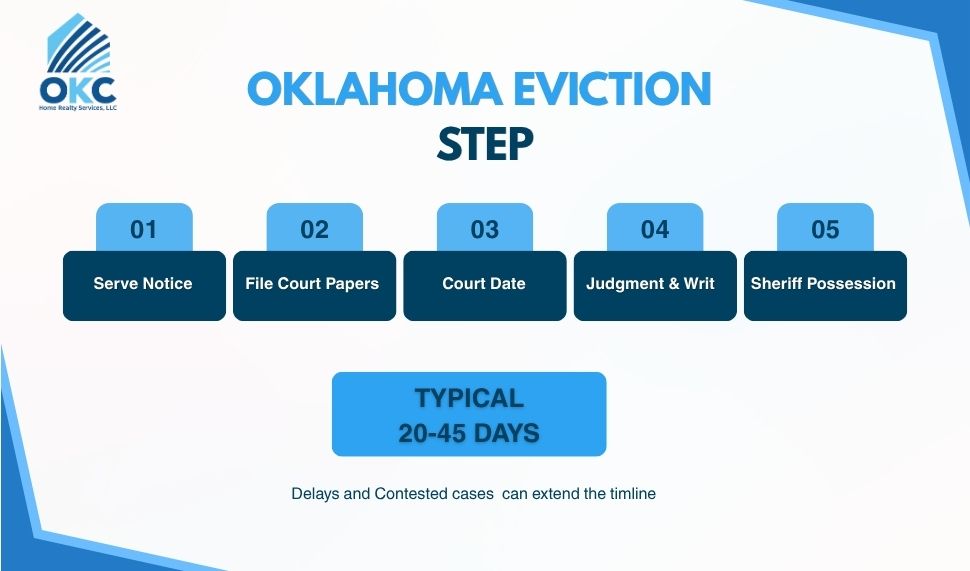
Let’s take a quick look at the general eviction timeline in Oklahoma, so you know how long each step takes:
| Step | Estimated Time |
| Serve notice to quit | 5–15 days, depending on the reason |
| File court papers | 1–3 days |
| Court date (after filing) | 5–10 days |
| Judgment and writ of execution | 3–7 days |
| Sheriff lockout/possession | 5–10 days |
Total estimated time: 20 to 45 days, assuming no major delays. Delays also happen if court dockets are backlogged.
Can You Recover the Costs?
Technically, yes, but realistically, often no.
If you win your case, the court may grant you a monetary judgment covering back rent, eligible legal fees, other recoverable costs, and property damage. However, securing that judgment is only half the battle. Collecting on it is an entirely different challenge.
To make sure you’re not leaving recoverable money on the table, review this comprehensive guide that explains exactly when landlords can charge tenants for eviction fees; knowing your legal entitlements from the outset can meaningfully shape your recovery strategy.
But many tenants facing eviction are in financial distress, with little to no assets to their name.Even with a valid judgment in hand, you may still need to garnish wages if the tenant is employed, place a lien on future assets, or hire a collection agency to pursue what you’re owed. And even then, collections can drag on for months or years, with no guarantee that anything comes through at all.
Can You Deduct Eviction Costs From Taxes?
Some eviction-related expenses may be deductible as rental property expenses. The IRS generally allows landlords to deduct ordinary and necessary expenses paid to manage, maintain, or protect a property held for rental income.
Depending on the circumstances, deductible expenses may include:
- Legal and professional fees related to the rental property
- Court filing and service fees
- Cleaning and maintenance after the tenant leaves
- Repairs needed to return the property to rentable condition
- Advertising and tenant-screening expenses
- Qualifying travel or mileage related to managing the eviction
However, not every eviction loss can be deducted immediately. Major improvements that increase the property’s value or extend its useful life generally must be depreciated instead of claimed as a current repair expense.
Most cash-basis landlords also cannot deduct unpaid rent they never received because that rent was never reported as taxable income. The IRS confirms that expenses related to managing income-producing rental property may be deductible, while unpaid rent generally does not qualify as a bad-debt deduction for cash-basis taxpayers. IRS rental-expense guidance, IRS Publication 527, IRS bad-debt guidance
Keep receipts, attorney invoices, court records, contractor bills, and other documents supporting each expense. Because tax treatment depends on the individual expense and the landlord’s tax situation, consult a qualified tax professional before claiming an eviction-related deduction.
Alternatives to Traditional Eviction
Before jumping straight to eviction, it’s worth considering other options. Reaching a voluntary agreement before a court case is filed may help you avoid filing fees and other court-related expenses.
1. Cash for Keys
Offer the tenant money to leave voluntarily. It may sound unfair, but it can cost less than eviction.
- Typical offer: $300 to $1,000
- Benefit: They leave peacefully and sooner
This avoids court and gives you control over the timeline.
Pro tip: Always use a written agreement, signed by both parties, and document the unit condition before and after move-out.
2. Payment Plan
If the tenant hits a temporary rough patch but wants to stay, work out a short-term payment agreement. Get it in writing and set firm deadlines. If they default, you can proceed with eviction.
3. Lease Termination Agreement
Mutually agree to end the lease early. This can help both sides move on without legal costs.
Just make sure you document everything with a clear, signed agreement.
How Landlords Can Prevent Costly Evictions
Most evictions begin with unpaid rent, repeated lease violations, or poor communication. Landlords cannot eliminate every risk, but they can reduce the chance of a problem reaching court by following consistent management practices.
- Screen applicants carefully: Verify income, employment, rental history, credit information, and relevant background details using the same written criteria for every applicant. Screening must comply with Fair Housing requirements.
- Set clear expectations: The rental agreement should explain rent deadlines, late fees, permitted occupants, guest rules, maintenance responsibilities, pets, and the consequences of lease violations.
- Address late rent immediately: Use consistent payment reminders, maintain an accurate rent ledger, and communicate with the tenant as soon as a payment is missed.
- Document lease violations: Keep copies of notices, emails, photographs, inspection reports, and tenant communication. Early documentation can prevent disagreements and support the landlord if legal action becomes necessary.
- Maintain the property: Responding promptly to legitimate repair requests can reduce disputes and encourage tenants to follow their responsibilities.
- Review the tenancy before renewal: Consider the tenant’s payment history, property condition, and repeated violations before extending the lease.
These practices cannot guarantee that an eviction will never happen, but they can reduce avoidable disputes, limit financial losses, and prevent legal fees from accumulating.
Expert Perspective: What Oklahoma Property Managers Say
We spoke with several licensed property managers in Oklahoma City and Tulsa to get their take:
“We budget about $2,500 to $3,000 for a standard eviction, but if it drags out or gets contested, the costs double quickly. Most landlords don’t realize that until it’s too late.”
— Amanda R., Property Manager, OKC
“Our firm always tries ‘cash for keys’ first. If it works, we save weeks of time and court stress. The upfront payout often beats waiting for a sheriff lockout.”
— James L., Tulsa Real Estate Investor
Their advice? Be proactive. Screen tenants carefully, maintain good documentation, and act quickly when issues arise.
Final Thoughts: Is Eviction Worth the Cost?
Here’s the bottom line: the true cost of eviction in Oklahoma can range from $1,500 to $7,500 or more. The final amount may include filing fees, attorney fees, lost rent, and property-related expenses, and it can increase when the case takes longer.
For many property owners, especially those with just one or two units, an eviction can wipe out profits for the year.
That’s why it’s critical to:
- Screen tenants carefully
- Use rock-solid lease agreements
- Document everything
- Act quickly when issues arise
Consider working with a reputable property management company like OKC Home Realty Services if you want to minimize risk, especially if you’re new to real estate or don’t have the time to handle things yourself.
FAQs
Can a landlord evict a tenant without a court order in Oklahoma?
No, a landlord cannot evict a tenant without a court order in Oklahoma. Doing so is illegal and considered a self-help eviction, which is strictly prohibited under the Oklahoma Residential Landlord and Tenant Act.
How long is the eviction process in Oklahoma?
The eviction process in Oklahoma typically takes 3 to 6 weeks, but it can be shorter or longer depending on the situation.
How to file an eviction notice in Oklahoma?
To file an eviction notice in Oklahoma, you first need to serve a written notice to the tenant, and then, if they don’t comply, you can file a lawsuit in court.
How much are eviction court filing fees in Oklahoma?
The filing fee depends on the amount claimed and the court where the case is filed. Oklahoma’s fee schedule lists a base fee of approximately $45 for certain eviction claims of $5,000 or less and $85 for claims above $5,000 up to $10,000. Summons, service, law-library, and writ fees can increase the final court cost. Landlords should confirm the current amount with their county court clerk
How much does an eviction lawyer cost in Oklahoma?
The eviction lawyer cost depends on whether the case is contested. A straightforward, uncontested eviction may cost approximately $300 to $500 in legal fees, while a contested eviction involving additional hearings, counterclaims, or a jury trial may cost $1,500 or more.
Does a contested eviction cost more than an uncontested eviction?
Yes. A contested eviction usually costs more because it may require additional court appearances, legal preparation, evidence, motions, and attorney time. A longer case also increases lost rent and other property turnover costs.
Who pays the costs of an eviction in Oklahoma?
The landlord normally pays the filing fees, service fees, and attorney costs upfront. A court may include legally recoverable costs in its judgment, but receiving a judgment does not guarantee that the landlord will successfully collect the money from the tenant.
What hidden expenses increase the total cost of an eviction?
Hidden eviction expenses can include unpaid rent, vacancy loss, property repairs, professional cleaning, trash removal, lock changes, storage of abandoned belongings, advertising, tenant screening, travel, and the landlord’s time. These indirect expenses often cost more than the original filing fees.
Can a landlord use the security deposit to cover eviction-related losses?
After the tenancy ends, an Oklahoma landlord may apply the security deposit toward accrued rent and qualifying damages caused by the tenant’s noncompliance. The deductions must be itemized, and landlords should not assume that every court or attorney expense can automatically be deducted
Is cash for keys cheaper than filing an eviction?
Cash for keys can sometimes cost less than a formal eviction because it may reduce court expenses, lost rent, and vacancy time. The landlord should use a written agreement explaining the payment, move-out deadline, key return, and required property condition.