(
(


Real estate taxes vs property taxes can be confusing because landlords and business owners often hear the terms used interchangeably. At first glance, they seem to mean the same thing; both relate to taxes on what you own. But are they truly identical, or is there a meaningful difference that could affect how much you pay?
Understanding the distinction is more important than many property owners realize. While real estate taxes apply specifically to land and permanently attached structures, property taxes are a broader category that may also include personal property taxes on vehicles or business equipment, depending on your location.
In this article, I’ll break down what each term means, how they’re calculated, where they differ, and provide practical insights to help you better understand your tax obligations and avoid costly misunderstandings.
What are Real Estate Taxes?
Real estate taxes are taxes imposed on land and any permanent structures on it, such as houses, commercial buildings, or other fixtures. They are typically assessed and collected by local government authorities, including counties, cities, or municipalities. The revenue from these taxes funds essential public services, including schools, road maintenance, emergency services, and community amenities like parks and libraries. Because these taxes are based on the value of the property, they are a key factor in a homeowner’s annual expenses.
The amount owed is determined through a property tax assessment, where a local tax assessor reviews the property’s assessed value, property valuation, and local tax rate to understand how taxes are calculated. The assessed value is then multiplied by the local tax rate to determine the tax bill. For example, a home assessed at $300,000 with a 1.5% tax rate would have an annual real estate tax of $4,500. Real estate taxes are typically paid annually or semi-annually, and understanding them is crucial for budgeting, long-term financial planning, and evaluating the total cost of owning property.
What are Property Taxes?
Property taxes are a broader category of taxes that can apply not only to real estate but also to other types of personal property, such as vehicles, boats, or business equipment, depending on local or state laws. Like real estate taxes, property taxes are collected by state and local governments and are used to fund public services, including schools, infrastructure, emergency services, and community programs. For most homeowners, when people talk about property taxes, they are usually referring to the taxes on their land and buildings, which are essentially the same as real estate taxes.
Property taxes, in a broader sense, may use different calculation methods depending on the type of asset being taxed. While real estate follows market-based assessments, personal property taxes on vehicles or business equipment may be valued using depreciation schedules, standardized valuation tables, or original purchase price adjustments. As a result, the calculation method for property taxes can vary significantly based on the nature of the asset and local tax regulations.
Key Differences Between Real Estate Taxes and Property Taxes
While the terms are often used interchangeably, real estate taxes and property taxes are not always the same. Understanding their key differences can help you better interpret your tax bill and manage your financial responsibilities.
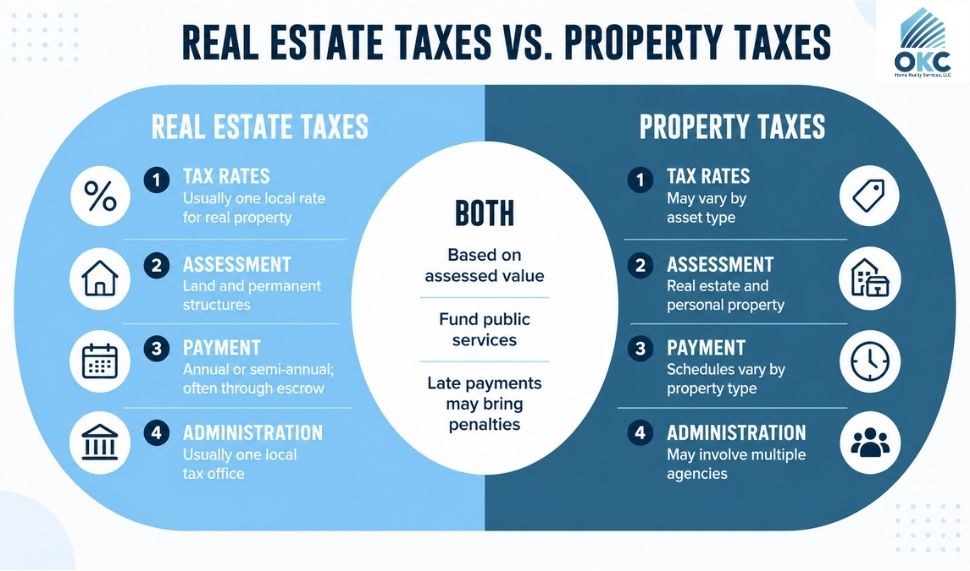
Here are the main areas where real estate taxes and property taxes differ:
1. Tax Rates
Real estate tax rates are set by local government entities, such as counties, cities, or school districts, based on the revenue needed to fund public services like schools, infrastructure, and emergency services. These rates are typically expressed as a percentage of the property’s assessed value or as a mill rate (amount per $1,000 of assessed value). In most cases, real estate taxes have a uniform rate for all real property within a jurisdiction, meaning that all homes or buildings in the area are taxed at the same rate. Rates can still vary depending on location, local budgets, and property classifications such as residential or commercial, but within each category, the rate is generally consistent.
In contrast, property tax rates can vary depending on the type of property being taxed. While real estate usually follows the standard local rate, personal property, such as vehicles, boats, or business equipment, may be subject to different rates or separate rules set by state and local authorities. Some jurisdictions also apply preferential rates or special classifications for certain types of property, such as residential, commercial, or industrial assets, which can affect the total tax owed. This variability makes property tax rates more complex than real estate tax rates, requiring property owners to be aware of the rules for each asset they own.
2. Assessment
Assessment refers to the process of determining the taxable value of a property. For real estate taxes, local government assessors evaluate the market value of land and any permanently attached structures, such as homes or commercial buildings. This assessment may be conducted annually or at scheduled intervals, depending on the jurisdiction. Factors such as location, property size, improvements, comparable sales, and market conditions typically influence the assessed value.
For broader property taxes, the assessment process can vary depending on the type of asset. Personal property, such as vehicles or business equipment, may be assessed using standardized valuation guides, depreciation schedules, or reported purchase values. In some cases, business owners are required to self-report assets for tax purposes. Because assessment methods differ by asset type and local regulations, understanding how your property is valued is essential for ensuring accuracy and identifying potential grounds for appeal.
3. Payment
Real estate taxes are typically paid on an annual or semi-annual basis, depending on local regulations. For many homeowners, these payments are included in their monthly mortgage through an escrow account managed by the lender. The lender collects a portion of the estimated annual real estate tax each month and pays the tax bill on the homeowner’s behalf when it becomes due. If a property is owned outright, the owner is responsible for paying the tax bill directly to the local tax authority by the specified deadline.
Property taxes in the broader sense may follow different payment structures depending on the type of asset being taxed. Personal property taxes, such as those on vehicles or business equipment, are often billed separately and may have different due dates. In some jurisdictions, payment schedules can vary, and penalties or interest may apply if taxes are not paid on time. Keeping records of taxes paid can also help property owners stay organized and avoid confusion during financial planning or tax preparation.
4. Collection and Administration
Real estate taxes are usually collected by a single local government entity, such as a county, city, or municipal tax office. These offices handle billing, tracking payments, and enforcement for all real property within their jurisdiction. Homeowners typically receive annual or semi-annual tax bills that detail the assessed value of their land and structures, and late payments can result in penalties, interest, or even tax liens. Because one agency is responsible, the process for real estate taxes is generally straightforward and standardized.
Property taxes, in the broader sense, may involve multiple government agencies depending on the type of property being taxed. While real estate falls under local tax offices, personal property, such as vehicles, boats, or business equipment, may be administered by separate departments or even state-level offices. Each organisation may have its own reporting requirements, billing cycles, and enforcement procedures. This makes the administration of property taxes more complex than real estate taxes, requiring property owners to navigate multiple points of contact and ensure compliance with different rules and deadlines.
How Taxes Are Calculated
Real estate taxes and broader property taxes are usually calculated using a simple formula: taxable value multiplied by the local tax rate. The details can vary by location, but the basic idea is the same. The government first determines the taxable value of the property, then applies the tax rate set by the city, county, school district, or other local taxing authority.
For real estate taxes, the process usually starts with the property’s assessed value. This value may be based on market value, recent sales, property size, location, improvements, and local assessment rules. Once the assessed value is set, exemptions or deductions may be subtracted if the owner qualifies. The remaining taxable value is then multiplied by the local tax rate.
A basic real estate tax formula looks like this:
Assessed Value – Exemptions = Taxable Value
Taxable Value × Tax Rate = Annual Tax Bill
For example, if a home has an assessed value of $300,000 and the owner qualifies for a $25,000 exemption, the taxable value would be $275,000. If the local tax rate is 1.5%, the annual real estate tax would be: $275,000 × 1.5% = $4,125
That means the owner would owe about $4,125 for the year, before any special assessments, local fees, or adjustments.
For broader property taxes, the calculation may work differently depending on the asset. A vehicle, boat, or business equipment may not be valued the same way as land or a building. Some local agencies use depreciation schedules, standardized value tables, reported purchase prices, or business asset reports to determine the taxable value. This is why property taxes can be more complex than real estate taxes when personal property is involved.
For landlords, this calculation matters because taxes directly affect ownership costs, rental cash flow, and long-term profit. A higher assessed value or higher tax rate can increase annual expenses, while exemptions, appeals, or accurate records may help reduce unnecessary tax costs.
How Real Estate Taxes vs. Property Taxes Vary by State
Real estate and property tax rules depend on state and local law. In most states, real estate taxes apply to land and buildings, while broader property tax rules may also cover vehicles, business equipment, or other taxable personal property.
| State | Real Estate Tax | Personal Property Tax |
| Oklahoma | County assessors appraise taxable real property, including land, homes, and rental properties. | Some personal property, such as business assets or certain manufactured homes, may be assessed separately. |
| Texas | Local taxing units set rates, and appraisal districts determine property values. | Usually applies more to business personal property than household personal items. |
| California | Real estate assessments are affected by Prop 13, which generally limits annual assessed value increases. | Personal property rules usually apply more to business or special property types than standard vehicles. |
| Virginia | Local governments tax real estate, and rates vary by county, city, or town. | Many localities tax vehicles, trailers, boats, and similar movable assets. |
| New York | Property tax is mainly based on real property, such as land and permanent structures. | Personal property, like cars and jewelry, is generally not subject to property tax. |
| Florida | Local counties and taxing districts assess real estate taxes. | Standard vehicles are generally not taxed as local personal property. |
Because rules vary by location, property owners should review local assessment notices and contact the county assessor, treasurer, or tax office if something looks unclear.
Tips for Managing Real Estate and Property Taxes
Effectively managing real estate and property taxes requires proactive planning, organization, and a clear understanding of the rules for each type of property. By staying informed and taking the right steps, homeowners and property owners can reduce their tax burden, avoid penalties, and take full advantage of available exemptions or deductions.
For Real Estate Taxes:
- Review your property assessment annually: Check your assessed value for errors and request a reassessment or appeal if it seems too high.
- Keep thorough documentation: Maintain records of renovations, improvements, or damage, which can affect assessed value and support appeals.
- Utilize exemptions and deductions: Apply for homestead exemptions, senior or veteran relief programs, and any available energy-efficient property incentives.
- Use an escrow account or pay on time: Ensure timely payments to avoid late fees or interest charges.
- Budget for taxes: Include property taxes in your monthly mortgage payments or set aside funds to prevent large, unexpected bills.
For Broader Property Taxes (Personal Property, Business Assets, Vehicles):
- Understand personal property rules: Know the specific tax rules, rates, and exemptions for vehicles, boats, or business equipment in your jurisdiction.
- Identify the responsible agency: Different types of property may be assessed and collected by separate authorities.
- Keep track of deadlines and payment rules: Avoid penalties by understanding when and how each tax is due.
- Maintain accurate records: Document all taxable assets, including purchase dates and values, to simplify reporting.
- Consult local authorities or tax professionals: Seek guidance on complex property tax rules, especially for business assets or multiple properties, to optimize your tax liability and ensure compliance.
Important Factors That Affect Your Tax Bill
Your real estate tax and property tax bill can feel confusing, but understanding what drives those numbers can help you plan more effectively and avoid costly surprises. Whether you own a home, rental property, commercial building, or taxable personal property, several key factors determine how much you’ll owe each year.
Here are the main elements that influence both real estate taxes and broader property taxes:
1. Your Property Location
Where your property is located makes a big difference in your tax bill. Different counties, cities, and school districts have varying tax rates. If you live in an urban area or a region with higher funding needs, your real estate and property taxes might be higher compared to a rural area.
2. Your Property’s Assessed Value
Your real estate taxes are based on the assessed value of your property, determined by your local tax assessor. Factors such as property size, recent renovations, location, and comparable home sales can influence this value, and in turn, how much you pay.
For broader property taxes, personal property like business equipment or vehicles may also be assessed, often using depreciation schedules or purchase price rather than market comparisons. In both cases, a higher assessed value generally means a higher tax bill.
3. Your Property Type
Whether your property is residential, commercial, or industrial can change your tax rate. The classification determines which rate applies and can significantly impact your annual tax bill.
For broader property taxes, personal property such as business equipment or vehicles may also be classified differently and taxed under separate rules or rates, depending on your jurisdiction.
4. Local Budget and Funding Needs
Your real estate and property tax rate is also influenced by how much your local government needs to fund schools, roads, emergency services, and other public programs. If budgets go up, you might see your taxes increase, too.
5. Exemptions and Deductions You Qualify For
You might be eligible for exemptions or deductions that can lower your overall tax bill. Programs like homestead exemptions, senior or veteran relief, or energy-efficiency incentives can reduce the amount you owe, but the rules and benefits depend on your property type and local jurisdiction.
6. How Your Property Is Assessed
For business or personal property, the assessment method matters. Some assets are valued using depreciation schedules, purchase prices, or self-reported estimates. How your property is assessed will affect your total tax obligation, so it’s worth understanding the process.
When to Consider Appealing Your Real Estate or Property Taxes
Sometimes, you may feel that your real estate or property taxes are too high because your property or assets are overvalued. In these situations, filing an appeal can potentially lower your tax bill and save you money. This applies not only to homes and commercial buildings but also to business equipment, vehicles, or other taxable personal property.
Here are some signs it might be time to appeal:
- Your Assessed Value Seems Too High: Compare your property or personal assets’ assessed value to similar properties or assets in your area. If yours is significantly higher, it could be over-assessed.
- Recent Market or Asset Changes: For real estate, declining home values in your neighborhood may not be reflected in your assessment. For personal or business property, depreciation or changes in asset value may not be properly accounted for.
- Errors in Your Property or Asset Record: Mistakes in square footage, lot size, or equipment valuation can lead to higher taxes than you should owe.
- Discrepancies in Comparable Properties or Assets: If similar homes, buildings, or business assets are assessed at lower values, this could justify an appeal.
Before filing, gather supporting evidence such as recent sales data, appraisals, or documentation of your assets’ condition. Contact your local assessor’s office to learn about deadlines and procedures. While appealing doesn’t guarantee a reduction, it’s a smart step if you believe your real estate or property taxes are inaccurate.
Common Misconceptions About Real Estate and Property Taxes
Real estate and broader property taxes can be confusing, and several myths often lead to misunderstandings. Knowing the facts can help you avoid mistakes and better manage your tax responsibilities for both land, structures, and personal or business property.
Here are some common misconceptions and the truth behind them:
1. “Property taxes are optional.”
This is false. Failing to pay real estate or property taxes can result in a lien on your home, business property, or personal assets — and may even lead to foreclosure or seizure. Paying on time is essential to protect all taxable property you own.
2. “Real estate taxes include personal property.”
Not quite. Real estate taxes apply only to land and permanently attached structures. Personal property, such as vehicles, boats, or business equipment, is usually taxed separately under broader property tax rules.
3. “Tax rates are the same everywhere.”
This isn’t true. Tax rates for both real estate and personal property vary by jurisdiction, property type, and local budget needs. Two identical homes or two similar business assets in different counties can have very different tax bills.
4. “Exemptions automatically apply.”
Exemptions and deductions, for both real estate and personal property, usually require you to apply. Homestead exemptions, senior or veteran relief programs, or certain business asset exemptions will not be applied automatically.
5. “You can’t appeal your assessment.”
Many assume their assessed value is final. In reality, if you believe your home, commercial property, or personal/business assets are over-assessed, you have the right to appeal and potentially lower your tax bill.
6. “Your tax bill is always fair and accurate.”
Assessments can overvalue or undervalue both real estate and other taxable property. Errors in square footage, property features, or business asset records can lead to incorrect taxes. Always review your assessment notices each year to ensure accuracy.
Take Charge of Your Property Taxes and Boost Your Profits
So, are real estate taxes the same as property taxes? Not exactly. Real estate taxes specifically apply to land and permanently attached structures, while property taxes are a broader category that can also include personal property such as vehicles, boats, and business equipment. Although the terms are often used interchangeably, understanding the distinction helps you better manage your finances, identify applicable exemptions, monitor assessments, and avoid costly mistakes. By staying informed about how your property is assessed, how rates are determined, and when you can appeal or apply for deductions, you can take control of your tax responsibilities and make smarter decisions as a homeowner, investor, or business owner.
If you own rental property and want expert guidance managing expenses like real estate taxes, maintenance, tenant placement, and overall property performance, OKC Home Realty Services is here to help. We specialize in helping property owners in Oklahoma City maximize returns while minimizing stress. Whether you’re new to investing or managing multiple properties, our experienced team can handle the day-to-day operations so you can focus on growing your portfolio.
Contact us today and let us help you protect your investment and increase your profitability with professional property management you can trust.
Are real estate taxes the same as property taxes?
Real estate taxes and property taxes are often used interchangeably, but they are not always exactly the same. Real estate taxes usually apply to land and buildings, while property taxes can be a broader term that may also include personal property.
What is the difference between real estate tax and property tax?
The main difference is scope. Real estate tax applies to real property, such as land, homes, and buildings. Property tax can include real estate, but it may also include movable personal property like vehicles, boats, or business equipment.
What do real estate taxes cover?
Real estate taxes usually cover land and permanently attached structures, such as homes, rental properties, commercial buildings, and improvements. These taxes are often used by local governments to fund schools, roads, emergency services, parks, and other public services.
How are real estate and property taxes calculated?
Real estate and property taxes are usually calculated based on the assessed value of the property and the local tax rate. The formula is generally: assessed value multiplied by the tax rate. Rules can vary by city, county, and state.
Do landlords need to understand real estate and property tax differences?